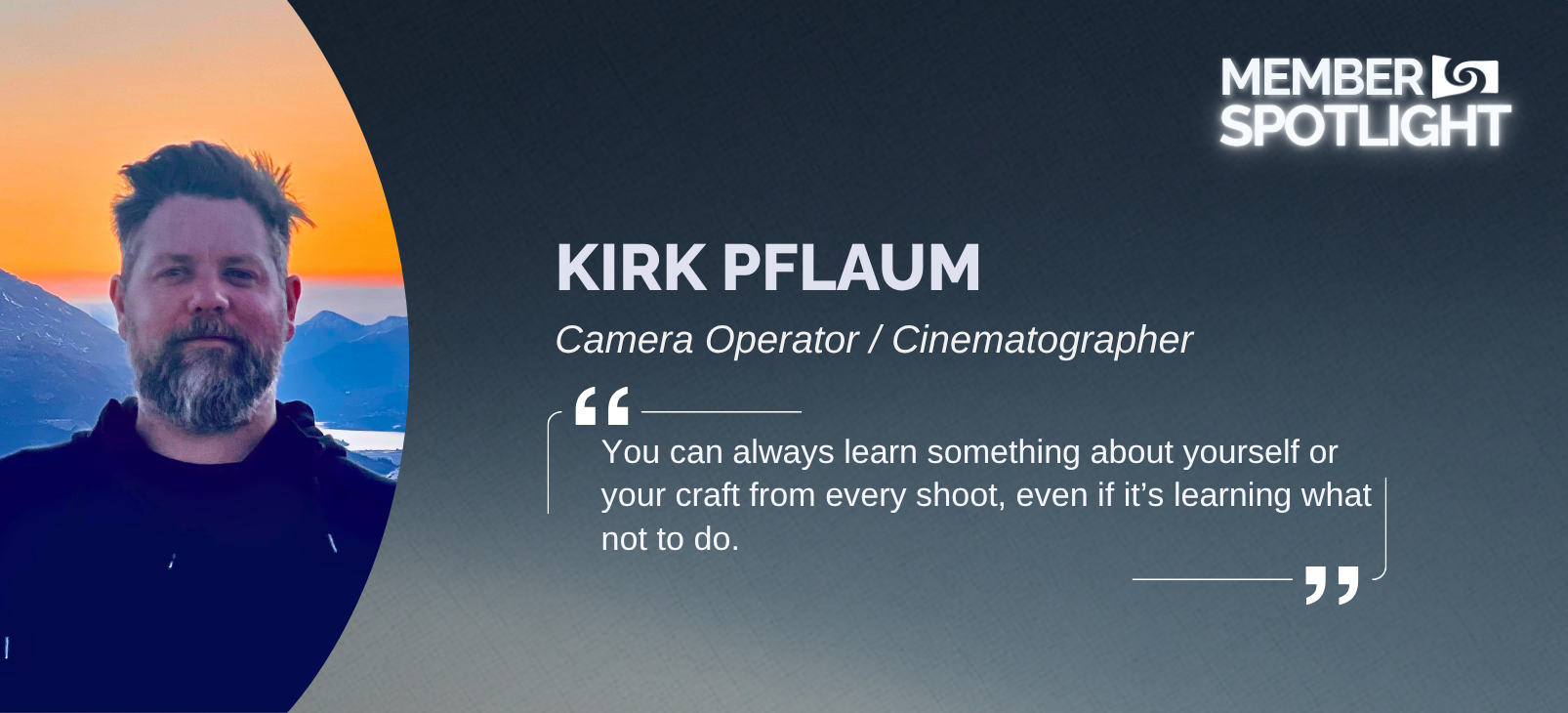
Member Spotlight: Kirk Pflaum
Kirk Pflaum on camera craft, the people who keep him in film, and why your job shouldn’t define your worth.
Published on:
August 25, 2026

For Kirk, filmmaking has always been as much about the people and the process as the finished image. A cinematographer, camera and Steadicam operator, he still finds plenty to learn on every shoot, including what not to do. In this Member Spotlight, Kirk discusses finding your own measure of success, separating self-worth from work, the importance of the people you meet along the way, and navigating an industry that continues to shift around him.
What was your very first job on set - and what did you learn from it?
The first job I had was work experience at CTV (Canterbury Television) in 2000 where most Friday’s I’d come into the studio and get to operate a camera on one of their magazine shows and also their music show, Cry TV. Then on Saturdays helping set up the OB van to film field hockey and run the replay system.
Was a great overall learning experience in general, seeing how all the people and systems work and run together, especially under the pressure of being live, or as live. Great people, who were often very generous with their time and knowledge, some, who unfortunately lost their lives in the 2011 earthquake, rest in love and peace to all of them, I am grateful for what you taught me.
What/who inspired you to start working in film?
I’ve always found the medium of film quite fascinating, and back when we’d get great BTS features on VHS or DVD’s, they pulled back the curtain on even more of the magic, making me even more curious.
It’s ability to transport you into another world, but also a unique way to explore this world and life, but not always literally. A way to explore our shared human experiences and provide a form of self expression as well as a creative outlet. Being a visual medium allows connection across many different languages and cultures, past and present and its powerful ability to give a voice to those without one is an important aspect I find inspiring as well.
What advice you’d give to those starting working in the industry?
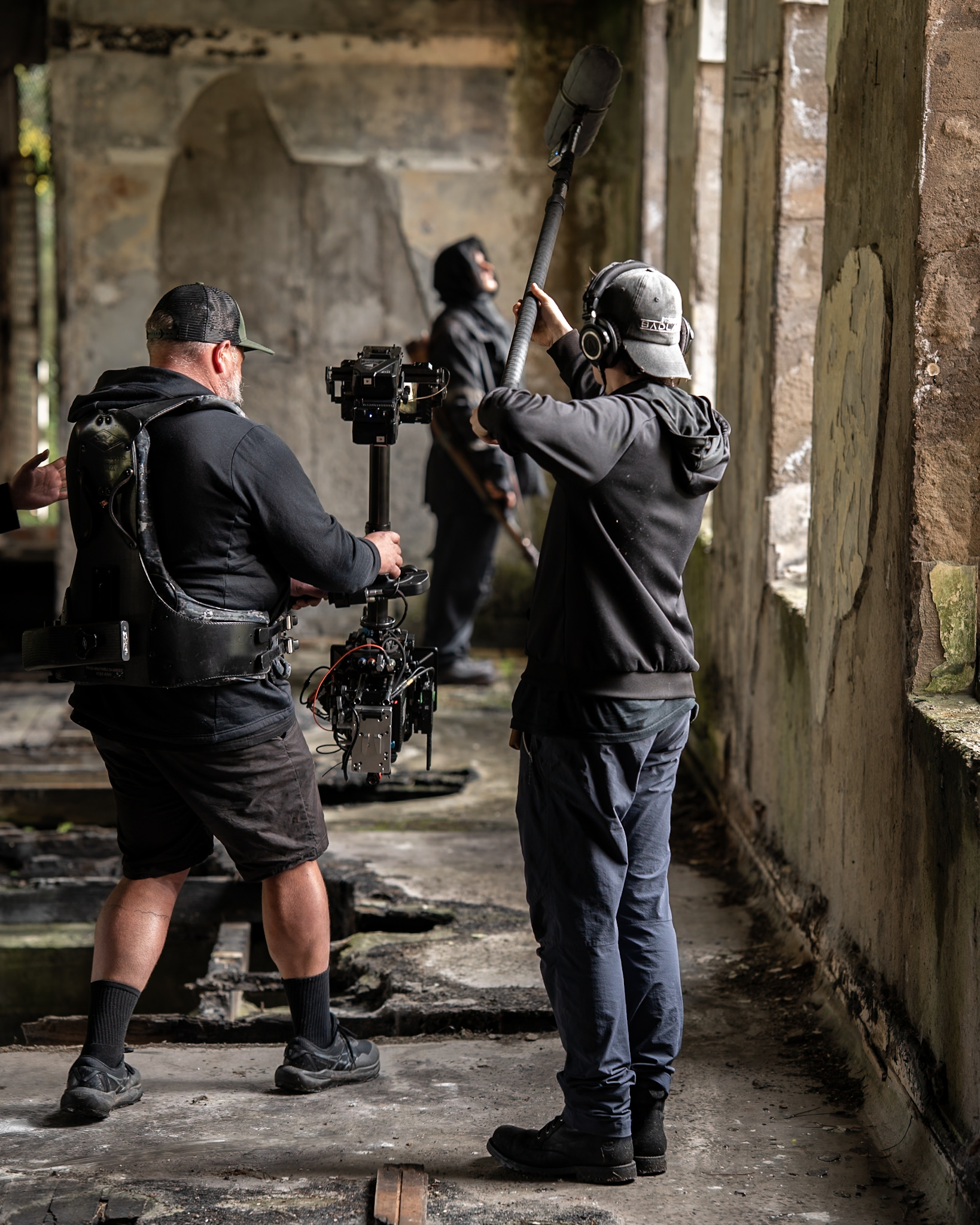
I think it’s ok to not know what you want to do, and that there is no rush. Whether you take the film school route or just start PA/Running on set, I’d recommend getting hours in on set, wherever you can, in different departments, even if you know what you want to do eventually.
The people you met and learn from, build up goodwill with, and the understanding you’ll gain of all the facets of production - this will help you and your craft immensely, especially if and when you want to step into an HOD role or go on to direct your own films at a bigger scale with crew. Whatever path you do take, if you remain keen, willing to learn, attentive, admit when you screw up - you’ll go far.
What keeps you passionate about working in film?
The people. Not every script or job will blow your socks off, pay that well, or even get seen, but one of the best things is the wide range of people you’ll get to meet, work with, learn from, create with, and the day to day journey and challenges you’ll take with them. You’ll make amazing friends and another family for life.
You can always learn something about yourself or your craft from every shoot, even if it’s learning what not to do.
%20with%20DOP%20Micheal%20McDonough%20BSC%2C%20ASC.jpg)
What part of your job gives you the most satisfaction?
When I was focus pulling and now operating steadicam, it’s very satisfying when I nail a technically challenging shot. As a camera op or DP, helping elevate the actors performance or the directors vision is always the aim.
Also seeing audiences reactions and them being moved emotionally, or inspired by the work I’ve helped make is a rather potent drug too.
What’s one lesson the screen industry has taught you?
It’s been a really hard lesson, probably one of the biggest lessons in my life which has taken me a long time to get my head and heart around, and that is: I am not my job.
It is often very easy for us creative types to tie all of our identity and self worth into what we do, how often we get to do it, and what other’s think about it. The external validation is nice, but it can’t be the only thing, it’s important to find and cultivate whatever that is for you outside of work too.
How do you define success in your work?
Some of the ways I measure success are things like being asked back and getting to work again and again with the great people you’ve spent years doing this crazy game with, or seeing an audience learn something, connect with, or be emotionally moved by something you’ve worked on.
Other people’s success can inspire and motivate you, but I think it’s important to remember not to compare yourself too much. There’s no one path, you have to find what success is and means for you.
How do you think the NZ screen industry could better support crew and what changes would you like to see in the next five years?
Consistency. But I’m not sure how to achieve this, it’s a big ask to get more shows and films produced and crewed here, especially local ones. There are a lot of factors out of my control ie funding, what audiences want, commercial viability, and the very shifting nature of the industry itself (especially with Streaming and AI nowadays).
Any New Zealand production is now competing for eyeballs from a multitude of often well funded streaming shows or even creators on Youtube and other social platforms, compared to the past when the only way to see overseas films and TV would be via our local cinema or our TV networks which had advertising, or even the broadcasting fee, to help fund our industry.
So this talk I hear about doing something similar to Australia and getting the streamers who sell subscriptions here to pay into a fund for the NZFC or NZOA sounds like it could be one of the answers? Becoming less heavily reliant on government funding for the arts and our local industry would be good too, so keeping the relationships and economics with international productions shooting here well cultivated as well.
So in saying that, on a personal level, I try focus on what I can control - working hard at my job, getting better at it, and do what I can to help make our shows and films look the best they can be, that can only help. I’m dabbling in screenwriting too so who knows - maybe one day i’ll get my own projects off the ground that can employ some of you all!
I also try use my time and skills to help out up and coming film makers when and where I can. I think it’s important to pay it forward.
.jpg)
How do you see technology (AI VFX Sustainability) shaping the future of our industry?
AI is definitely shaping our future and changing expectations what people expect for certain amount of time and cost. I think the cat is out of the bag now and it’ll always be there as a tool, one way or another, but how much and how prevalent it’s use will be I'm not sure.
I find myself pushing back on it somewhat at the moment as what I love about my job is being on set and collaborating with others, often in the moment - it’s a magic and art form you can’t just prompt alone at a computer, well, not the art I want to make anyway. AI seems to be an antithesis of collaboration. You also lose capturing all those happy accidents and moments that you can’t plan.
Plus what’s the rush? Film making and art isn’t about getting it all done in an instant. The process is very much a part of what makes it what it is.
If we’re going to use a shit tonne of energy and water using these AI tools, I think it’s better we use it for things we could have had yesterday, like cures for cancer or tech that helps environmental sustainability rather than for our art and self expression.
How has being part of the Guild supported you or your peers?
Being that we are all freelance contractors, the guild provides support and resources where others who are employed full time might get at a job that we don’t typically get.
It’s great knowing there is help or support out there and other’s experience to draw on if needed, even if it’s simply turning up to one of the meetings to chat over a beer and know we’re all often in the same boat. (And the sweet Bunnings discounts can’t go unmentioned either!)
Coffee order or go-to snack on set?
Long black, repeated ad-nauseum.
Favourite filming location in NZ?
Would have to say Te Waipounamu/South Island, specifically Canterbury and Central Otago. You can’t beat the natural beauty there, even if it makes the day tough work wise, it’s almost always worth it.
And not that you asked, the worst location: Antonio Hall on Riccarton Road in Christchurch… IYKYK…
A film or a show that inspired you to get into this industry?
Koyaanisqatsi, Apocalypse Now, Baraka, Titanic and The Matrix were five rather titular films showing me the magical potential of the medium. There’s been a lot more since, but seeing those all around the same time in high school really sparked the fire in me for sure.
What’s one skill or habit that helps you get through the long shoot days?
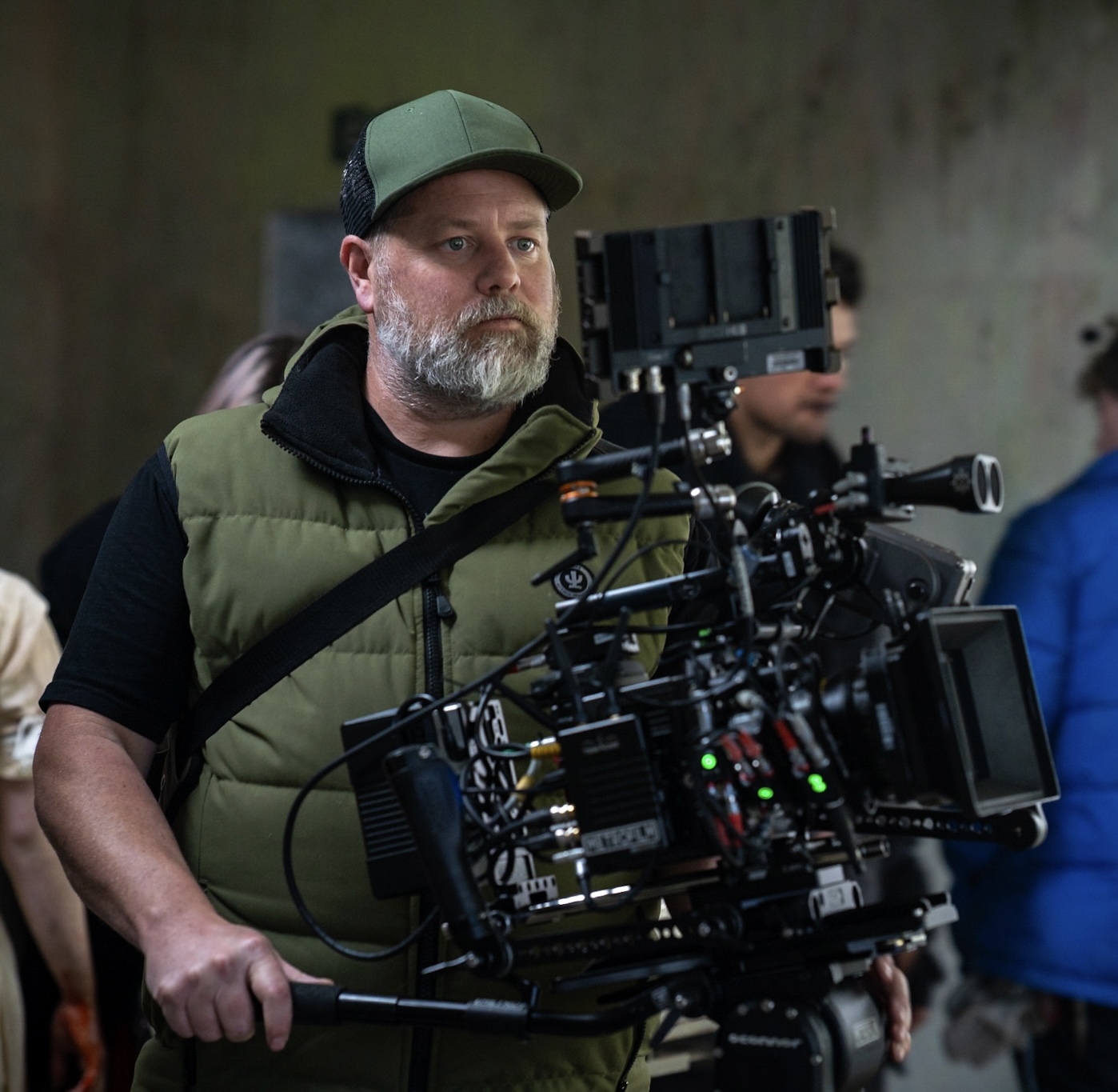
Again I have more than one, but all equally important:
The aforementioned long black.
Learn when and where to give a shit (or not) As in, do the absolute best job you can, and reach hard for your potential, but remember mistakes do happen, it’s not the end of the world, and other people’s stress and bullshit not yours to carry.
Last but never least… knowing my dog is eagerly waiting for my return once I’m wrapped!
If you weren’t in film, what would you be doing instead?
Good question, one I’m still trying to find an answer to… but whatever it is, it would still have to involve creating things in some way or another, often with other people, for other people.
No items found.