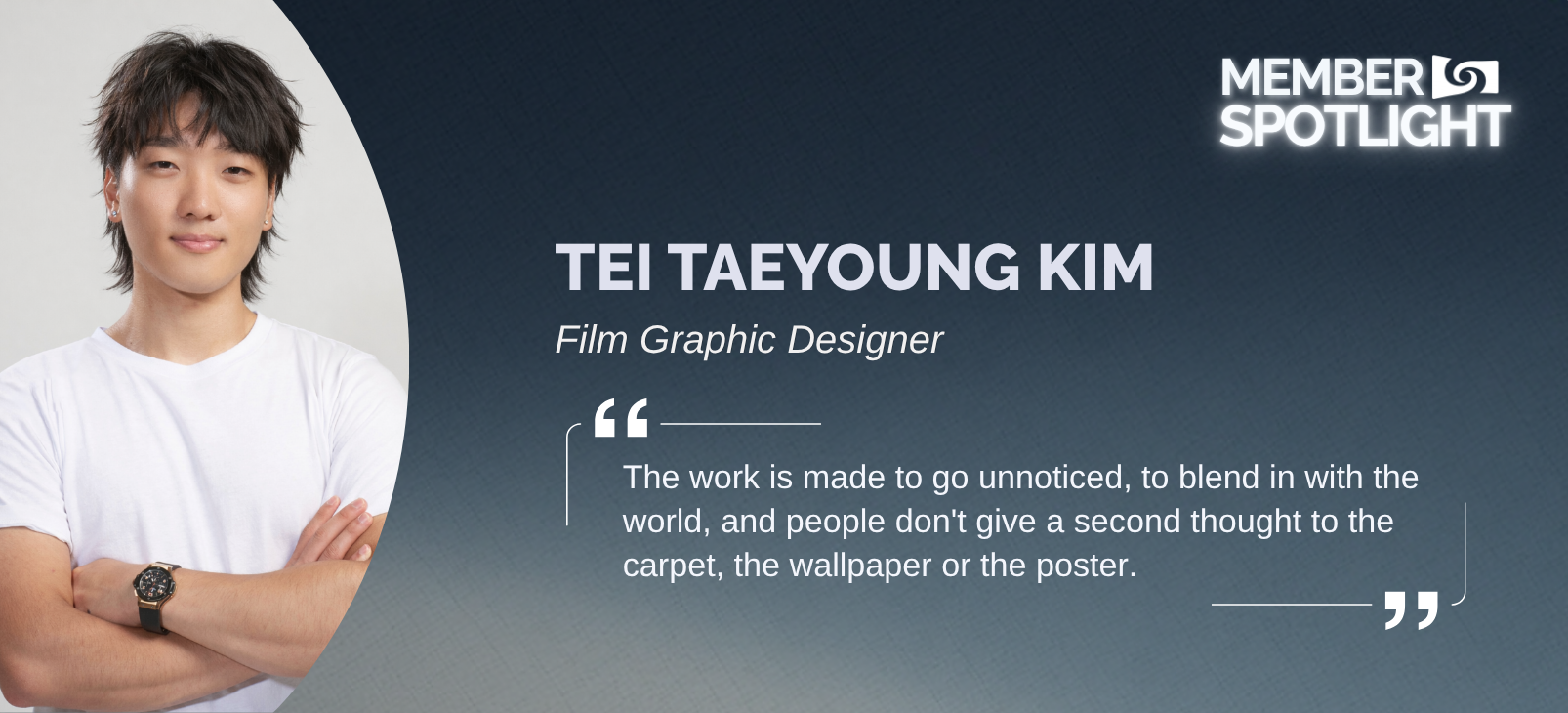
Member Spotlight: Tei Taeyoung Kim

Somewhere on a film set, there’s a perfectly ordinary-looking receipt for a purchase that never happened. A poster advertising an event that doesn’t exist. A police department with its own logo, stationery and paperwork. Someone had to design all of it.
That someone might well be Tei Taeyoung Kim.
Film graphics is one of those jobs where doing your work well often means nobody notices it. Tei has spent years inventing the small, convincing details that make a fictional place feel lived-in. It takes a surprising amount of research, design and practical problem-solving to make something look so unremarkable.
In our latest Member Spotlight, Tei gives us a closer look at this often-overlooked corner of the art department, including the mistakes that taught him the most, the people he’s learnt alongside and why he still loves seeing a finished set come together.
What brought you into the film industry, and how did you find your way into film graphics?
Like many others, I wasn’t looking to get into the film industry but dipped my toes in and it became, well, my life. Around 2018 I was chasing concept art and illustration as a career, but I met Yip Lee (an amazing illustrator and costume concept artist!) at a life drawing class, who asked me if I could do graphics work for The Letter for the King. I said yes, not knowing how to use Adobe Illustrator, which I needed for the job. As they say, you row when the water comes in. I took the weekend to learn it and walked in on the first day pretending to know what I was doing (I did not).
What was your first job in film graphics, and what did you learn from it?
The place I’d consider my first proper film graphics job would be the Sweet Tooth pilot episodes. I worked as a graphic designer alongside Polly Zee Walker (absolutely fantastic). I couldn’t begin to explain how much I learned from that job, all with the help of the colleagues around me. It was the job where I first had to take on sets alone, and where I made my first big blunder. I designed a hero sign for the top of a cab and only printed one side. It was double-sided. The blank side showed up in the reflections of the windows, and I thought that was the end of my career. It wasn’t. On that job I learned that when things go wrong, and they always do, no one is losing a limb, at least in the graphics world.

Who have been the biggest influences or mentors in your career?
Even though I’ve only worked with Polly once, I learned so much know-how as a film graphic designer from her. Greg Cockerill taught me all the day to day processes of being a film graphic designer, gave me room to practise and grow, and taught me about printing. And Sarah Dunn and Scott Satherley: I learn something new each time I work with any of the other NZ film graphic designers. They’re all crazy talented, and crazy in general. I don’t think I could ever do this job as well as they do.
You describe your work as “designing fictional worlds”. For someone unfamiliar with film graphics, what kinds of things are you responsible for creating on a production?
Imagine you’re walking into a police station. Things made by us would be the police logo signage hanging outside, the branding on the doors and windows, the pamphlets, posters, letters, invoices, cards and forms. Interior signage like door plaques, and wallpapers. Badges and patches on the costumes, the websites and screensavers on the monitors. The vinyl wrap on the police cars, numberplates, air fresheners, stickers, the list goes on. The same applies to period pieces, fantasy, sci-fi, etc. Anything to do with graphics generally gets made by us. Everything has to be made from scratch to fill in the fictional world the show or film is set in. Given time and budget, we can build a very convincing world, alongside the fantastic work of all the other departments, of course.
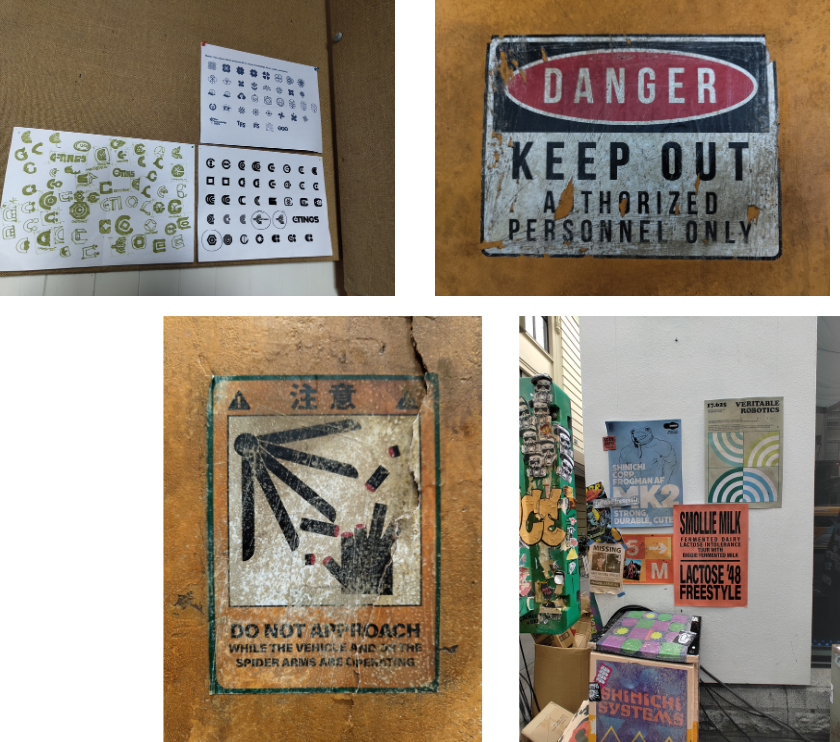
Your portfolio includes graphic design, illustration, prop design, concept art, textiles and costume graphics. How different can the work be from one production to another, and where do you usually fit within the wider art department?
The work, while within the confines of ‘graphics’, can vary quite a lot. For example, working in set dec means I’m mostly designing logos, branding and posters for paper graphics and signage, while working in textiles means I’m mostly designing patterns and screen prints. Depending on the production, I can be working for one department or all of them, though I’m generally within the Set Decoration department, or rarely, the ‘Graphics Department’ when the job is big enough.

On your website, you mention signage, documents, packaging and interfaces as some of the details that help make a story world feel real. What goes into designing something that feels like it genuinely belongs in that world?
Specifically within design, it’s definitely the details. What people call ‘micro design’. The little headers, the logos and branding underneath the main content, the things that make it look like this came from somewhere. Details that allude to a bigger world outside the confines of the set. Though generally, what makes a graphic feel like it belongs in that world isn’t really the design alone, but the execution after the design: the material it’s printed on, the treatment of the graphic like trimming, ageing or painting over it, and those items being seen in the set as part of the set together.
What’s one lesson the screen industry has taught you?
Take that time off, see your family and friends. Work will always come around. Also, always get a couple more copies printed, AND CHECK IF THE SIGN IS DOUBLE-SIDED!!! (See question 2.)
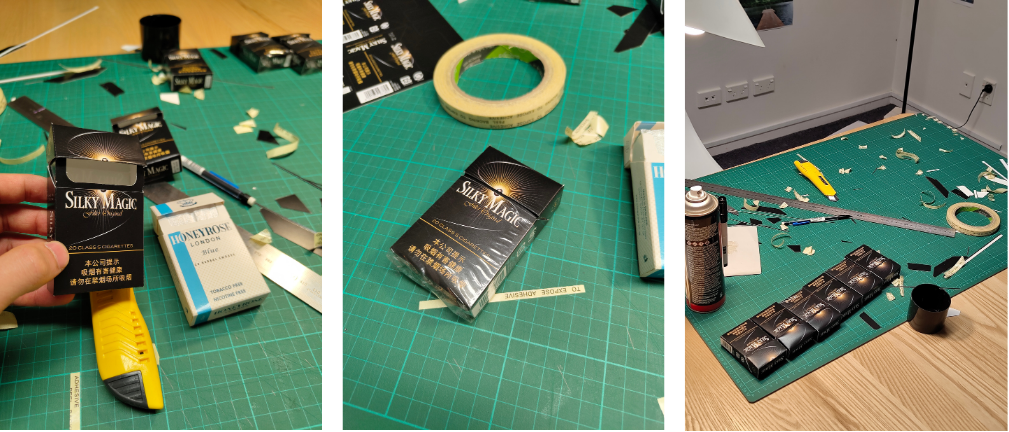
What keeps you passionate about working in film?
The ever shifting boom and bust of contracting in film. It gives such a zest to life, a rush that has me in a chokehold. And of course, the satisfaction of seeing it all come together, knowing the effort you put in, combined with so many others’, has brought the scene to life.
You described film graphics as an “often unmentioned section of the film production circus”. Why do you think this part of filmmaking often goes unnoticed, and what do you think people might be surprised to learn about it?
I believe it’s partly because there’s only a handful of film graphic designers around, and because the other parts of the film magic are just more prominent. People look at a set and see the work of the art director, set designers, chippies, painters and set decorators, but no one thinks, ‘Damn, that sign was designed by someone.’ The work is made to go unnoticed, to blend in with the world, and people don’t give a second thought to the carpet, the wallpaper or the poster. What might surprise people is that we can’t use real brands or existing designs because of copyright, so every label, logo and receipt in the world of the show is made from scratch. Though going unnoticed does help me hide when people call out, ‘Wow, that poster looked bad.’
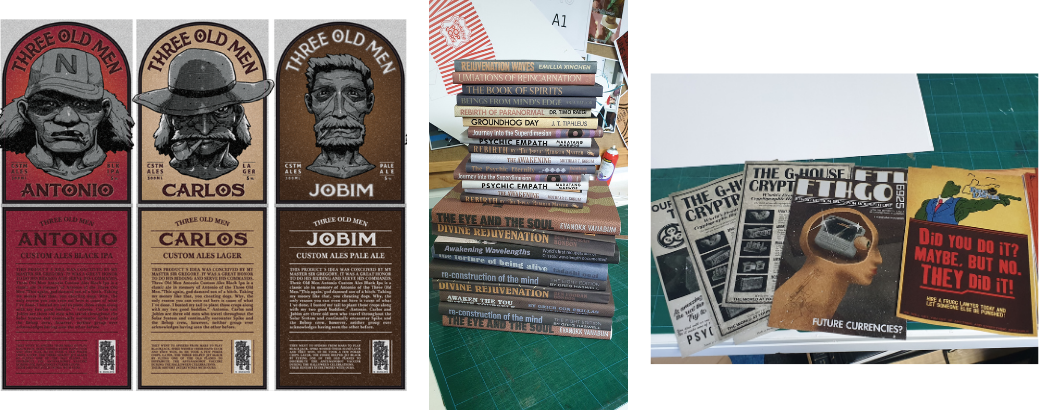
What part of your job gives you the most satisfaction?
Seeing the completed sets. It’s magical. I’ve only contributed such a minuscule detail to the space, and yet with everyone else’s work, the world comes alive.
What advice would you give to those starting work in the industry?
As long as you’re willing to do the work, say you can do it, then learn how to do it. Say yes to the graphics job and learn Illustrator over the weekend. The industry (and the internet) is a treasure trove of information, and often you just have to ask!
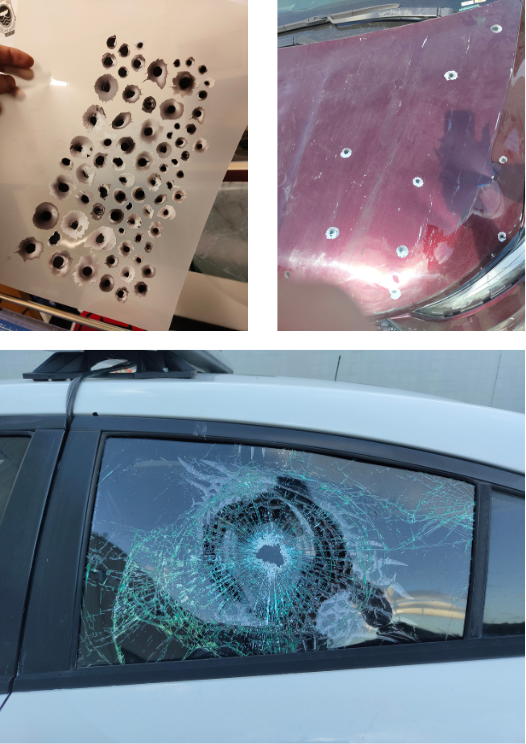
What does being a Screen Guild member mean to you, and what role do you think the Guild can play in supporting crew?
Collective bargaining on rates and contract terms. Negotiating rates to match inflation in the NZ film industry feels like a losing battle, especially in roles like film graphics where there’s only a handful of us. Our typical rates have stayed the same for many years, and we often don’t hear back when we try to negotiate fair pay. It’s disheartening to see experience and skill met with disregard, while understanding that everyone is struggling in this economy.
Favourite filming location in NZ?
Anywhere in Bethells! Or anywhere down a spooky winding road with no street lights.
Coffee order or go-to snack on set?
You see, as an offsetter who usually don’t get to see the onset snacks: boiled eggs with Kaitaia Fire on them. Every damn production has had that Kmart egg cooker since… Mulan? And it’s been a nutritional saving grace, until you get told to stop eating eggs by production.
If you weren’t working in film, what would you be doing instead?
I might be on the streets. I don’t know what else I would do. In this industry I’m currently able to feed myself (and my cat), but anywhere else? Complete mystery.