AI and the Future of Film Production

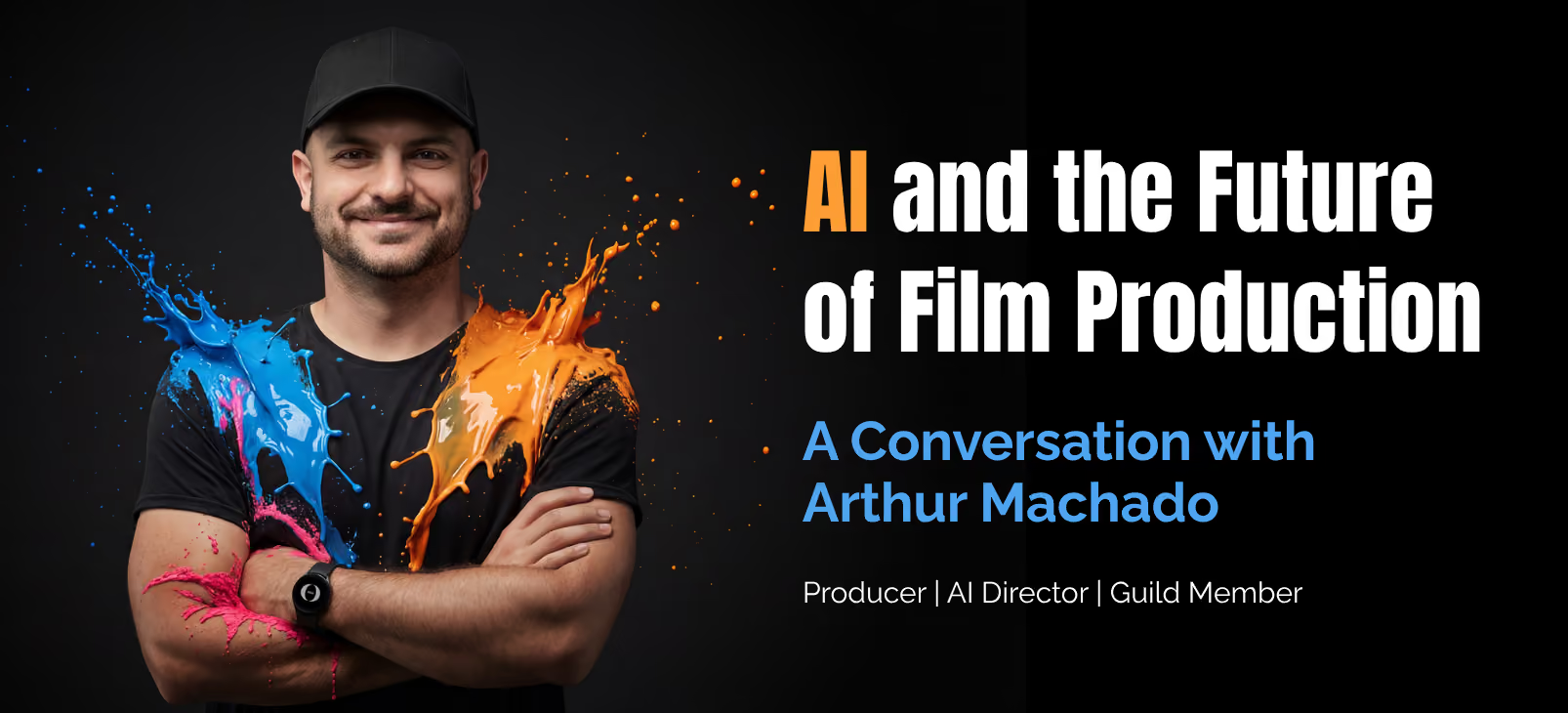
From storyboards to documentaries, AI director and Christchurch-based producer Arthur Machado explains why he believes AI won’t replace film crews - it’ll become part of them.
For some, it’s an exciting creative tool. For others, it raises genuine concerns about jobs, creativity and the future of filmmaking. Conversations around AI often become polarised long before people have the chance to explore what it actually looks like in practice.
Rather than adding another voice to the debate, we wanted to hear from someone working with AI every day.
How did your journey take you from traditional production to AI directing?
I’ve always worked in advertising production. Originally from Brazil, I spent fifteen years producing major commercial campaigns before moving to New Zealand,where I continued working as a film producer in Christchurch.
As the local market became increasingly challenging, AI emerged at the same time. Curious about the technology, I began experimenting with early versions of Midjourney and GPT long before they were production-ready. I even launched a small side project creating AI-generated jigsaw puzzles, not as a business, but as a way to understand and explore what these tools could do.
As AI evolved, I gradually introduced it into my production workflow, using it for concepts, storyboards and planning, while also creating experimental AI short films in my spare time. Those projects attracted attention overseas and eventually led to international work as an AI director and starting my own gen AI studio, Odd Global.
Today, I work with clients across the US, Brazil, Canada, Europe, APAC and more, giving me a unique perspective on how different markets are approaching AI.
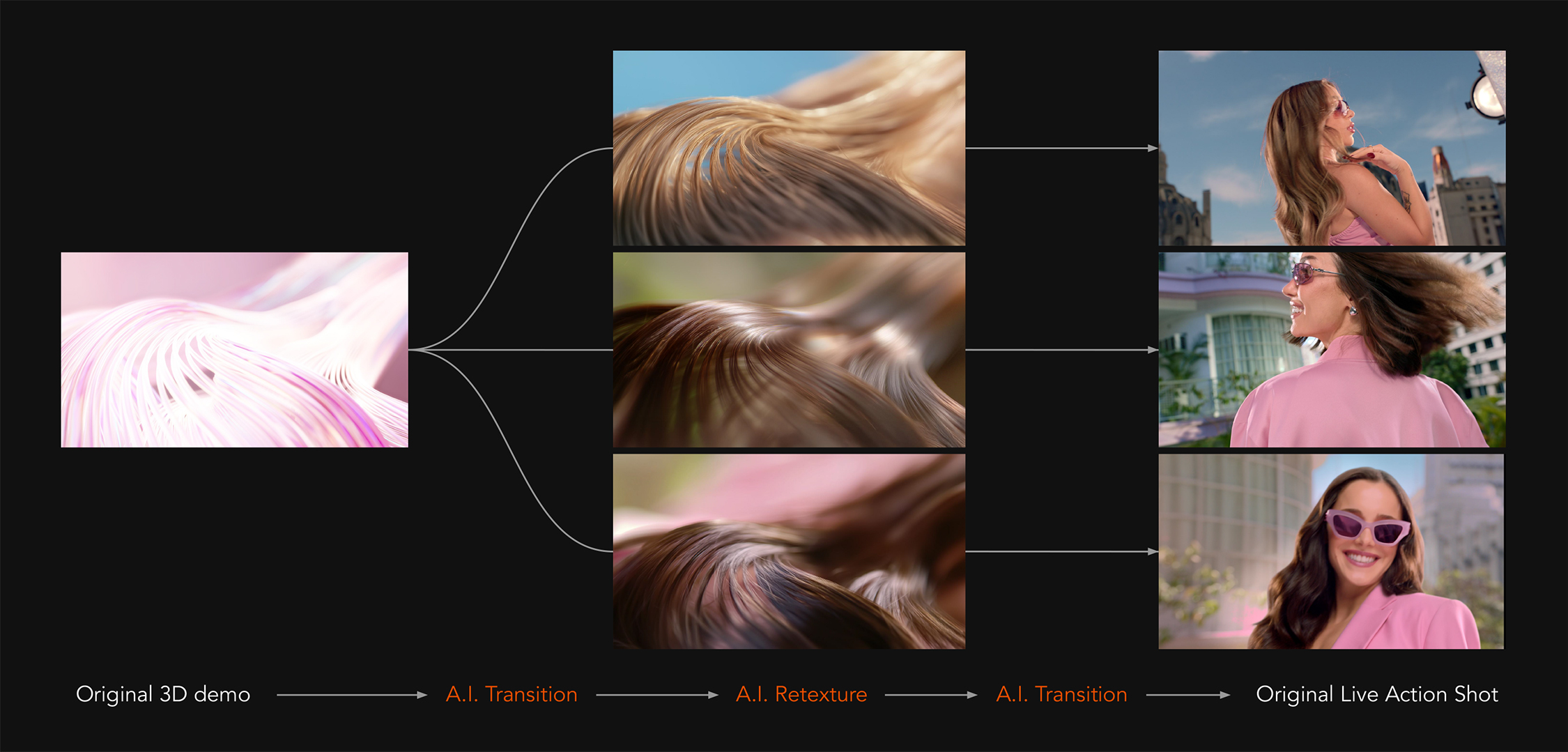
What I’ve learned is that AI isn’t replacing the film industry. It’s becoming another production tool alongside live action, visual effects and 3D. Most of my work now involves joining existing crews and using AI where it genuinely adds value, whether that’s in pre-production, behind the scenes or creating specific post-production assets.
Working internationally has given you a front-row seat to how different markets are responding to AI. What changes have you noticed over the past few years
One thing I’ve noticed is that the conversation around AI is evolving worldwide. In many places, the initial fear has begun to settle, and people are starting to understand where AI genuinely adds value and where it doesn’t.
For us in New Zealand, that presents an opportunity to learn from what’s worked elsewhere what’s worked elsewhere and from what hasn’t.
As one example, I recently helped an industry body develop a custom AI tool built on trusted New Zealand production knowledge to support producers in their work. Alongside it, we put together practical AI guidelines to help people engage with the technology responsibly, rather than simply saying, "Don't use it."
My hope is that people see AI for what it is: a tool. Instead of asking whether it should exist, we should be asking how it can genuinely support the work we already do.
Many people across the screen industry remain sceptical about AI. Different concerns are emerging across different crafts - from writers questioning its creative limits to photographers wondering how it might reshape their profession. What would you say to those who still see AI primarily as a threat?
I’d risk saying that most people worried about full replacement haven’t actually tried the tools. They’re afraid of the theory behind them.
Scriptwriters are probably the group I worry about the least. AI can certainly help with writing tasks, but it’s still very poor at generating original ideas or compelling stories. A social media caption? Sure. A film script, a TV commercial or a feature? Not even close.
Photographers are a much more interesting example because AI is already producing incredibly convincing images. My advice to photographers is simple: try it.
There’s a concept I come back to all the time: you can’t direct something you don’t know.
When you’re using AI, you’re directing it. Just as a film director works with a cinematographer, production designer and other department heads, you’re guiding the tool towards a creative outcome. The difference is that AI doesn’t offer creative judgement back. It only responds to the quality of your direction. If you don’t know what makes a good photograph, you won’t know how to ask for one. And if you don’t know what “good” looks like, you’ll be easily fooled by mediocre results.
I’m currently working on some beauty pack shots with a director in Brazil who’s also an experienced beauty photographer. Looking at AI-generated images, he immediately spotted problems I’d completely missed: double reflections, inconsistent colour temperatures, tiny lighting details that only someone with years of photographic experience would notice.
That’s exactly why expertise still matters. Almost every creative role can benefit from AI somewhere in the workflow. But the people who understand the fundamentals of their craft are still the best people to do the work.
AI is a tool that needs guidance more than any other.
Imagine we have this conversation again in five years. What do you think will surprise us most about the direction AI is taking?
We’ll definitely be surprised by how quickly the tools improve. But I think the bigger shift will be in the way we work.
Until about a year ago, I was trying to replicate a traditional production workflow - generating storyboards first, then animating them shot by shot. That’s already changing. Today, I can generate an entire sequence from a single key visual and move straight into producing B-roll. It’s not just about better quality; it’s about entirely new workflows and new ways of telling stories.
The biggest change, though, is that there won’t be fewer productions. I actually think we’ll see more.
Right now, what limits production is time, capacity and budget. AI increases production capacity by making existing workflows more efficient. A live-action project can move faster because pre-production becomes more efficient. Research, planning, storyboards, editing interviews, preparing assets, all of those stages can be completed in less time.
Live action isn't going anywhere. A film like Avatar needs proper VFX, 3D and large production crews. A documentary or corporate video still needs real people, real locations and a real crew. And a traditional feature film or series will still be shot the way it always has been, with real actors, giving real performances. So much of storytelling comes down to a human face and the emotion behind it, the timing of a performance, the chemistry between a cast, spontaneity; that's not something that will become synthetic. AI doesn't replace those productions, it helps them move faster and do what was previously impossible.
That means teams can finish one project sooner and move on to the next, or even run multiple productions at the same time. People often imagine there’s a fixed pie, that if one project gets cheaper or faster, there will simply be less work for everyone else. I don’t think that’s true. As our capacity grows, I believe the number of productions will grow with it.
So you’re saying AI has the potential to create more work across the industry, rather than less?
I genuinely believe that. For a long time it was just a theory, but now we’re starting to see real examples. We’re already seeing productions delivered more efficiently with the same crews, not because people are earning less, but because less time is being wasted on repetitive tasks.
Nobody enjoys spending a week organising footage if it can be done in two days. The work still needs to be done; AI simply helps remove some of the friction so people can spend more time creating and less time processing.
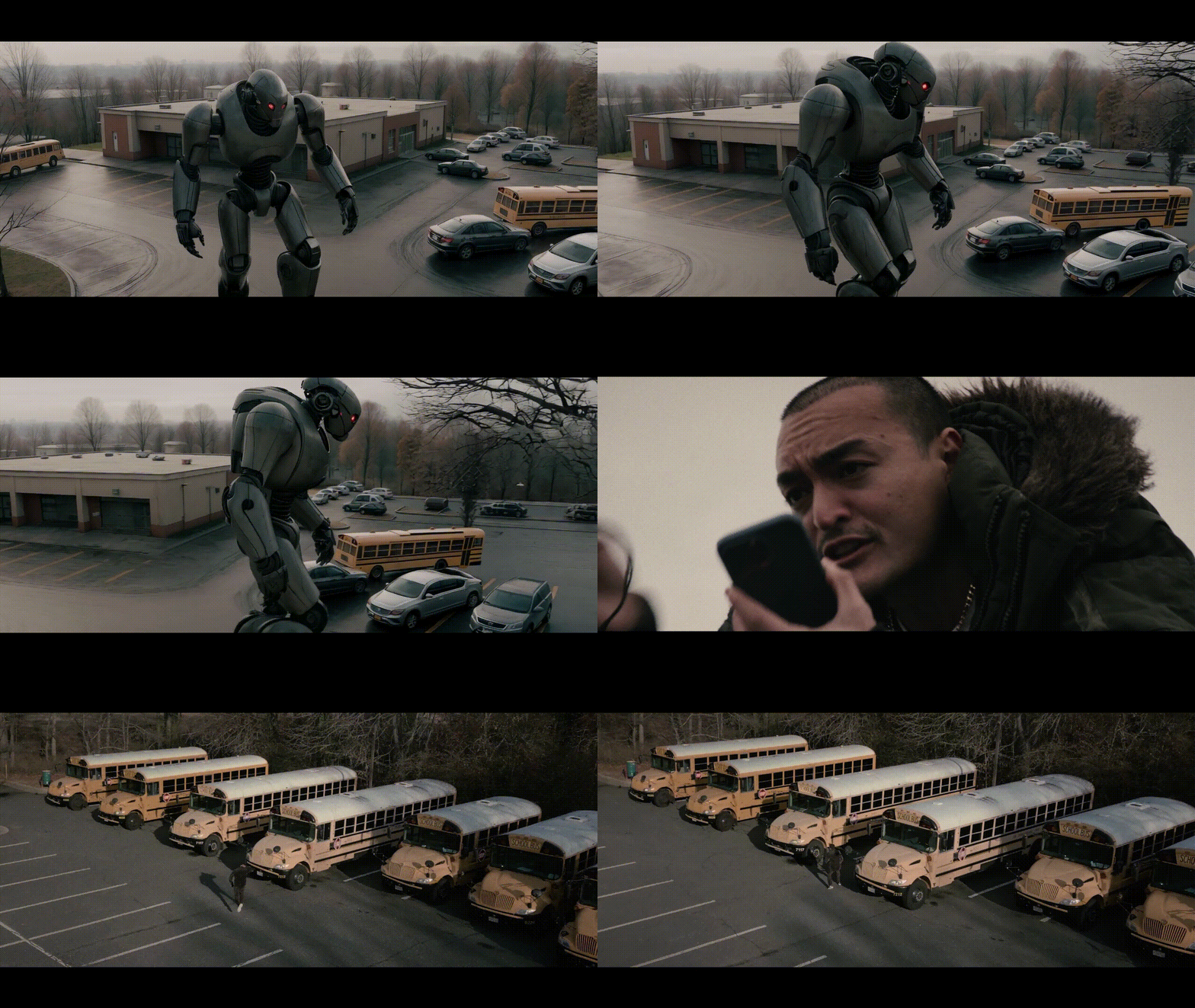
Another good example is some recent AI-led productions I've been involved with for major TV networks and streamers, which needed crews of around 30 people over three months or more. And not all of those roles were AI-related. We had directors, producers, production coordinators, post-coordinators, illustrators, editors, VFX artists, voice actors, score producers and sound engineers. The crew isn't too different from a traditional production or post-production project, but we delivered in a much shorter time, and we're already discussing a follow-up engagement with the same crew for continued work.
You recently spoke on an AI panel at Doc Edge. Can you tell us a little about the experience?
Doc Edge was fascinating because it introduced a completely different perspective on AI. In advertising and entertainment, the conversation often revolves around jobs and production. In documentary, it wasn’t about replacement at all. It was about truth.
People weren’t asking, “Will AI take my job?” They were asking, “Is this real? Can audiences trust what they’re seeing?” That immediately shifted the discussion from technology to ethics. Documentary filmmaking has always been about doing more with less. Crews are small, budgets are tight, and filmmakers constantly look for ways to tell bigger stories with limited resources.
Historical reenactments are a perfect example. Building period sets, sourcing vintage vehicles and costumes can be prohibitively expensive and sometimes simply impossible. AI gives filmmakers another option, not to replace the documentary itself, but to recreate moments that would otherwise never make it to the screen. What AI does change is that it makes it easier to create convincing fake content at scale. That raises the stakes, but it doesn’t remove accountability. If AI creates something misleading, it didn’t decide to do that. Someone directed it. Someone remains responsible.
When I was asked how I’d introduce AI into documentary today, my answer was simple: pre-production and post-production first. Research, organising information, transcribing interviews, translation and localisation are all time-consuming tasks that AI handles remarkably well. I’d be much more cautious about using AI for on-screen content unless there’s a genuine creative reason. For me, that’s where AI fits naturally into documentary: helping filmmakers spend less time on repetitive work and more time telling important stories.
If there’s one thing you’d like people across the screen industry to take away from this conversation, what would it be?
I clearly have a lot to say about AI. But if there’s one message I’d like people to take away, it’s this: The goal isn’t to use AI for the sake of using AI, but to find where it can genuinely be useful. To take the fear out of it and help people see it as an opportunity. Instead of asking, “Is AI coming for my job?” I’d encourage people to ask, “How could this help me do what I already do better?”
Even if you’re working in a highly technical role on set, there’s almost certainly something in your own area worth exploring. It’s a tool, not a threat.

Editor’s Note: The views and opinions expressed in this article are those of the author and are shared as part of the Screen Guild’s commitment to encouraging informed discussion across the screen industry. Publication does not necessarily reflect or represent the views or position of the Screen Guild.
Related articles