Greenlit: Making Sustainability Work on Set
Big Impact, Small Budget: Rose Archer on Greenlit and the Cannes Shortlist
Published on:
June 24, 2026

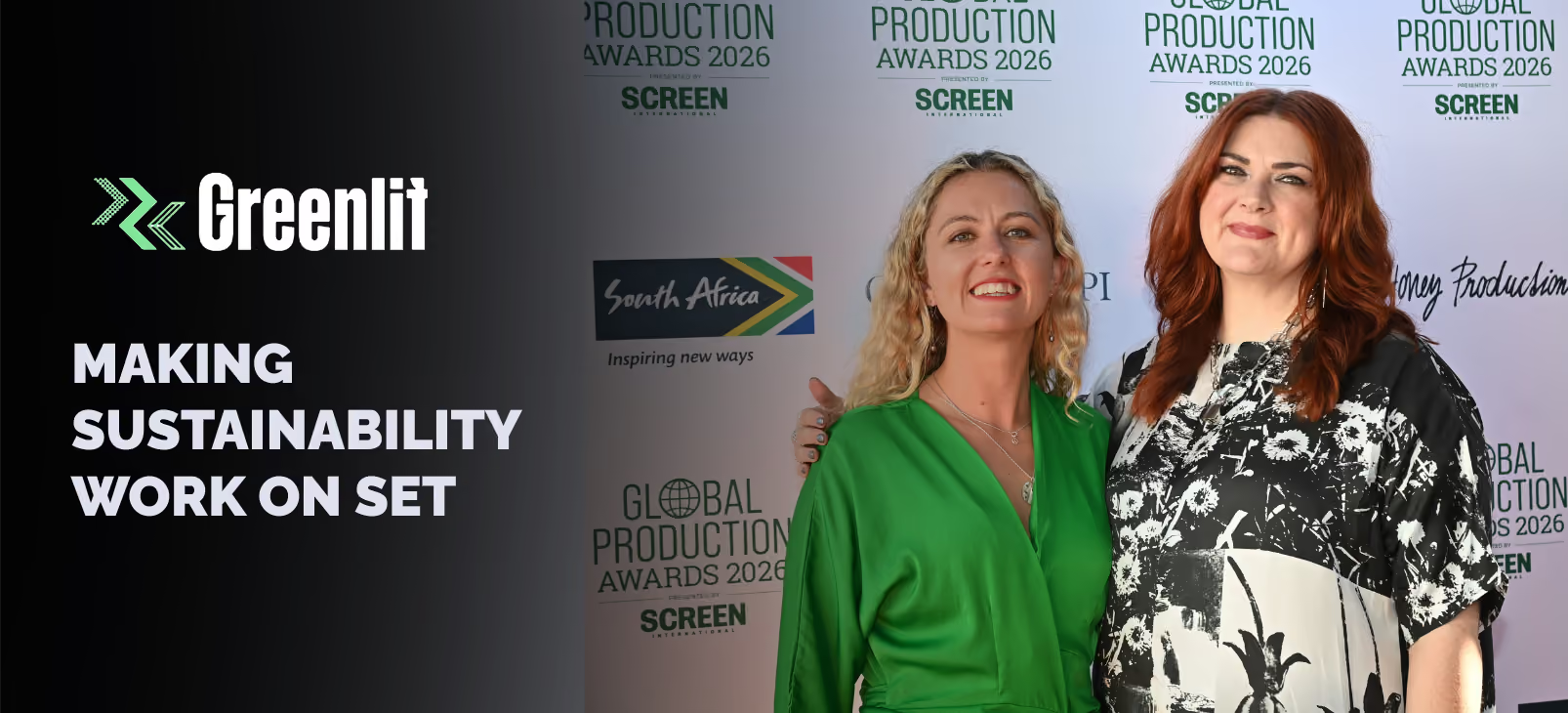
Following international recognition at the 2026 Global Production Awards in Cannes, Rose Archer on what practical sustainability looks like on set and how Greenlit is helping productions across Aotearoa get started.
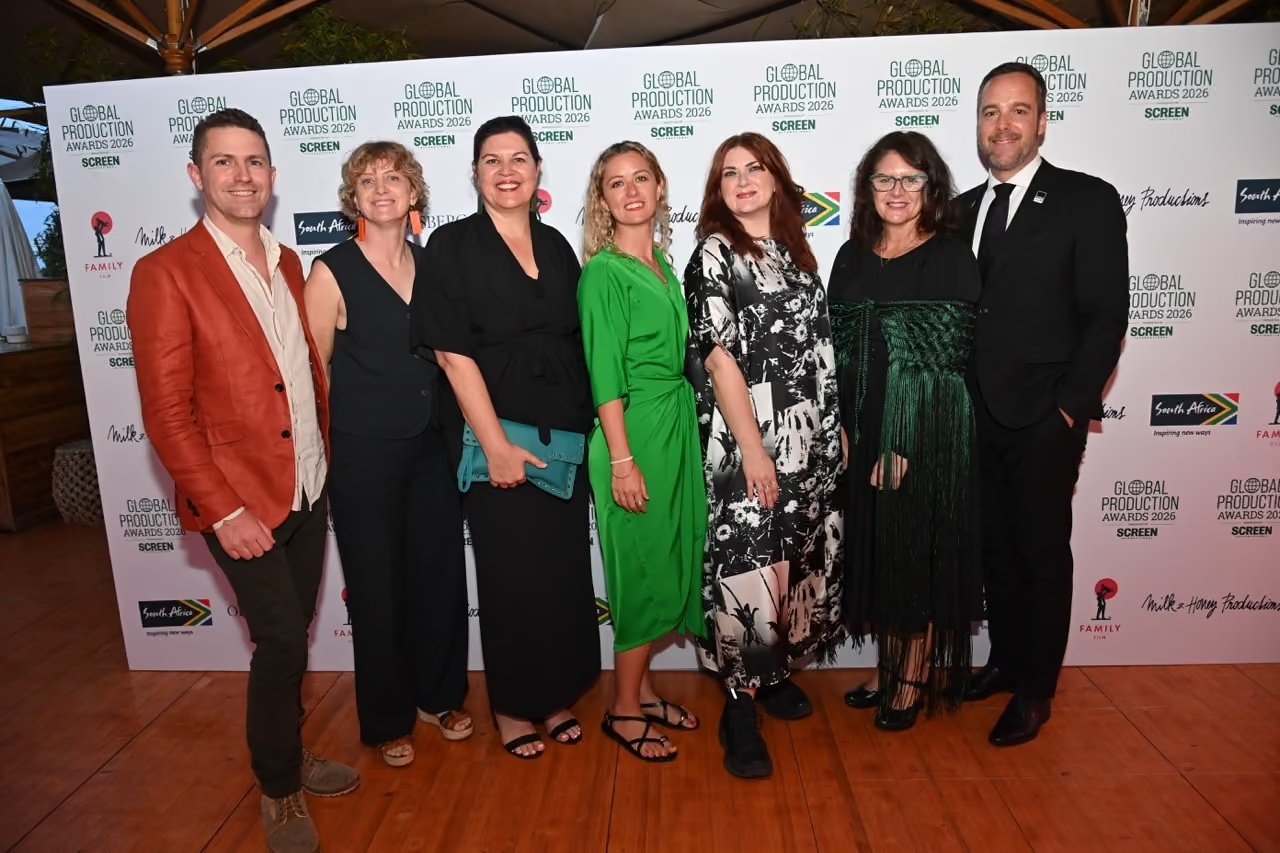
Mum, I'm Alien Pregnant was shortlisted for the Sustainable Production Award (Film) at the 2026 Global Production Awards in Cannes. What did that recognition mean to you?
It meant a huge amount, not just for me personally but for the whole team. Sustainability on set can sometimes feel like an uphill battle, so to have that work recognised on an international stage really validates the effort. It also sends a message to the wider industry that this work matters and that people are paying attention.
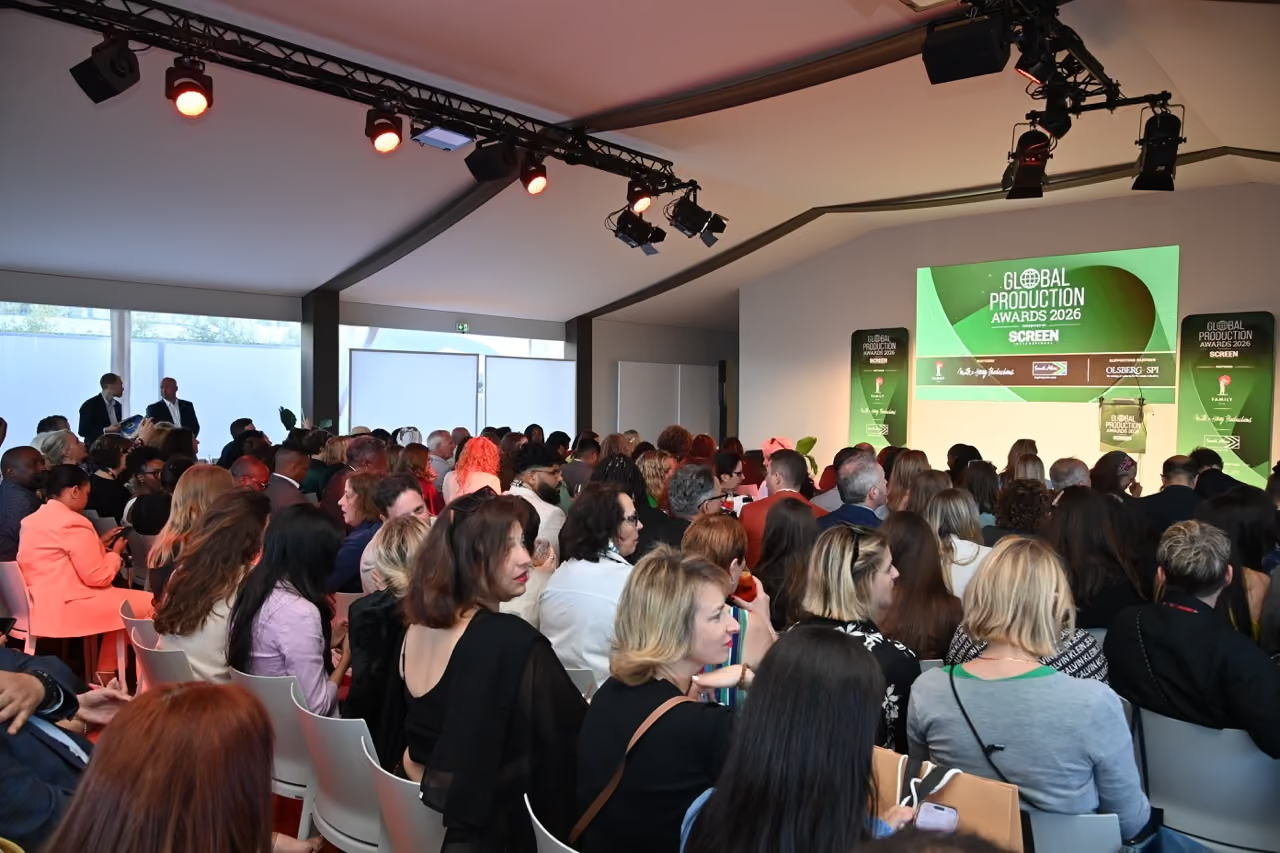
What was it like being in Cannes and seeing a small Aotearoa production recognised alongside much larger international productions?
Pretty surreal, honestly. We're on a shortlist alongside Jurassic World Rebirth and Frankenstein - these are massive studio productions with resources we can only dream of. But I think that's actually what makes our nomination meaningful. It shows that sustainability isn't about having a huge budget - it's about making intentional choices. A small, independent production in Aotearoa can absolutely lead the way, and being in that room in Cannes was a really powerful reminder of that.
Sustainability was brought into Mum, I'm Alien Pregnant during development. Why does that timing matter?
It makes all the difference. When you bring a sustainability manager on during development rather than in preproduction or later, sustainability gets built into the DNA of the production. You're at the table when key decisions are being made - about locations, about workflows, about how departments will operate. By the time you're on set, sustainability isn't something extra that's been bolted on. It's just how the production runs. That early buy-in from the producers was genuinely one of the most important factors in what we were able to achieve.
The production came in around 20 tonnes CO2e lower than projected. What do you think helped achieve that result?
I think it was a combination of things rather than any one silver bullet. Plugging into grid power instead of running generators was a big one - in Aotearoa, 85 to 88 percent of our grid electricity comes from renewable sources, so that's a massive carbon win every time you can make it work. Right-sizing our generator for the days we did need one also helped. And then there were the smaller, cumulative choices - crew education around efficient driving, heating and cooling, reducing unnecessary transport. Hiring local cast and crew kept the overall number of flights down. The combination of these efforts makes the difference.
The report shows commuting was the largest part of the production's carbon footprint. Did that surprise you, and what does it tell us about where productions can make meaningful change?
It's not uncommon for commuting to be the biggest contributor, but it's a really important finding because it's something the industry doesn't talk about enough. We tend to focus on generators and waste, which are absolutely important, but when you look at the data, getting people to and from set every day is where a huge portion of your emissions sit. We encouraged carpooling on Mum, I'm Alien Pregnant through a Slack channel and by mapping out who lived near each other, and we had some uptake. But it's genuinely challenging - people's schedules are different, pickup times vary, and crew value their independence. This is one of those areas where there are several potential benefits from one strategy - to crew welleing from saving money on fuel and time on driving, to the production on needing to orgnise fewer parks, and to the social cohesion of a crew through people getting some social time together on the drive to and from work.
The report highlights practical choices like carpooling, using grid power where possible, reuse through the Glen Innes Zero Waste Hub, and commercially composted slime. Which examples best show what practical sustainability can look like on set?
I love the slime story because it's so specific to this film and it shows what's possible when a department really gets creative. The art team worked hard to find compostable options for the slime - kombucha SCOBYs, yoghurt, agar - and around 80 percent of it was commercially composted at the end of the production. That's a great example of sustainability not being about saying no, but about finding a different way to work that are healthier for cast, crew and the environment.
The Zero Waste Hub partnership is another favourite because it was a genuine win for everyone. The art department borrowed items for the shoot, which saved the production money on purchases and disposal, and many of those items were actually improved by our crew - fixed up or painted for staging - before being returned. That's circular thinking in action, and it didn't cost more. It cost less.
What surprised you most about how the crew responded to having sustainability built into the production?
How positive people were about it. There can sometimes be a perception that sustainability is going to slow things down or create extra hassle, but what we found was the opposite. Many crew members told us how much they appreciated having a sustainability manager on set. It gave them support to make better choices without feeling like it was all on them individually. People were genuinely engaged - contributing ideas, asking questions, embracing the approach. That said, we're not pretending it was perfect. Things still ended up in the wrong bins sometimes, and there's ongoing work needed around waste education. But the overall culture was really encouraging.
The report links sustainability with crew culture, 9-hour work days and a culture of care. How do those things connect?
They're deeply connected. When people aren't exhausted and burnt out, they have the capacity to care - about each other, about the work, and about how that work impacts the world around them. The 9-hour days and the culture of care that the production team cultivated on Mum, I'm Alien Pregnant created an environment where people were more willing to engage with sustainability, not less. I think there's a really important lesson there for the industry: sustainability isn't separate from wellbeing. They're part of the same conversation about how we want to work.
What would you say to productions that assume sustainability is too expensive, too complicated, or only realistic for bigger budgets?
I'd say look at what we did on Mum, I'm Alien Pregnant . This was a small-budget, independent production and we were nominated alongside some of the biggest films in the world. Many of the things we did saved money - borrowing from the Zero Waste Hub, right-sizing generators, plugging into grid power, selling items at the end of the shoot. Sustainability doesn't have to mean spending more. Often it means being smarter about the resources you already have. And it doesn't have to be all or nothing. Start with what you can, measure it, learn from it, and build from there. That's exactly what Greenlit is here to help with.
What would you like more productions and crew in Aotearoa to understand about sustainable production, and how can Greenlit help them get started?
I'd like people to understand that every production can do something. You don't need to be perfect and you don't need to do everything at once. What matters is that you start, that you're honest about what works and what doesn't, and that you share what you learn so the next production can go a bit further.
I've now moved from sustainability managing film productions into the role of Executive Director for Greenlit, and we are super passionate about supporting productions across the industry to implement sustainability successfully. That's really what Greenlit is all about. We've got tools like the Greenlit Carbon Calculator and the Sustainability Action Plan to help productions implement and measure their sustainability impacts, we offer training and resources, and with Green Spotlight we're now sharing real case studies from productions in Aotearoa so people can see what practical sustainability looks like on the ground. If you're a production thinking about this for the first time, get in touch. We're here to help you get started.
Interested in sustainable production?
Later this year, Greenlit will run sustainability manager training and is currently inviting expressions of interest from people who may like to take part.
Learn more and register your interest HERE
View Mum, I'm Alien Pregnant sustainbility report HERE
No items found.