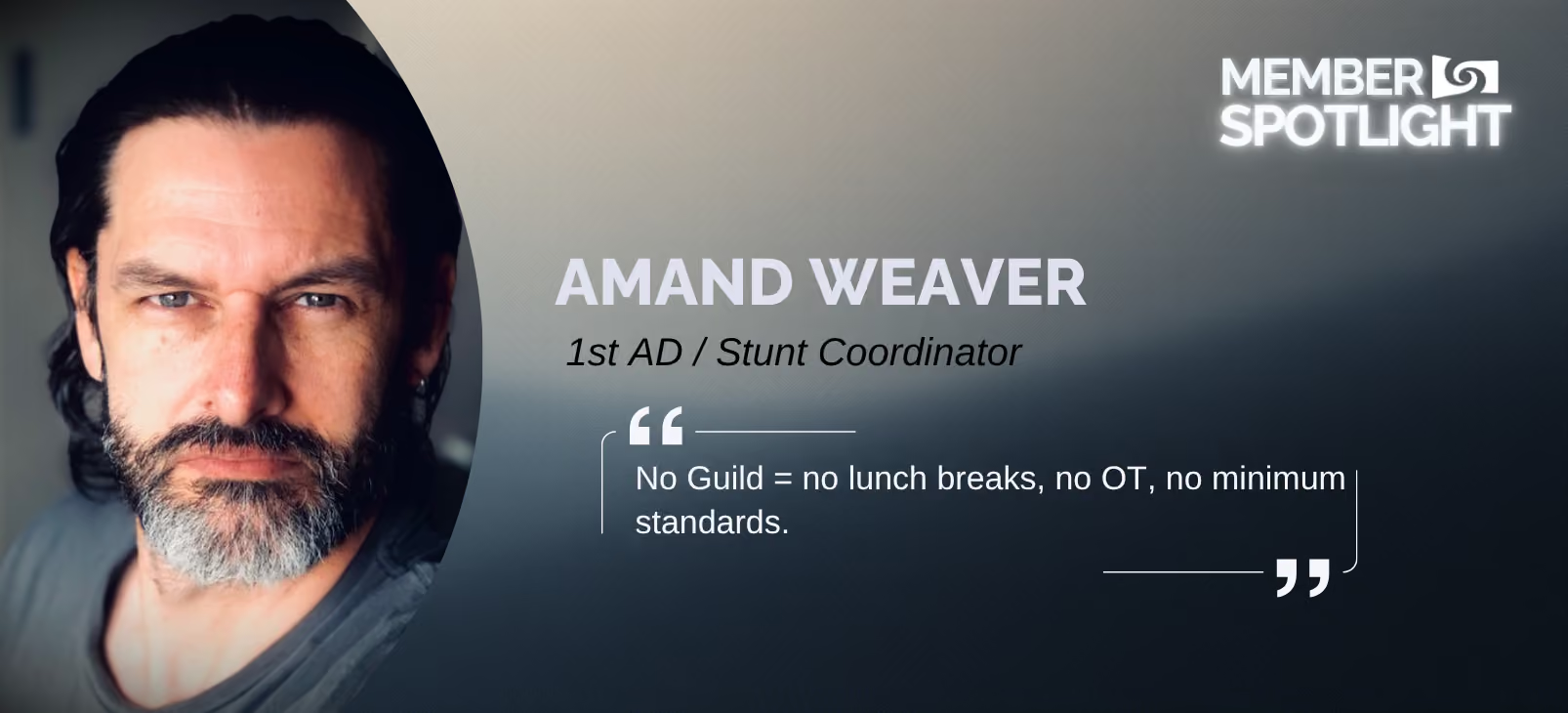
Member Spotlight: Amand Weaver
What keeps someone in the film industry for over 40 years? Amand shares his answer.
Published on:
June 9, 2026

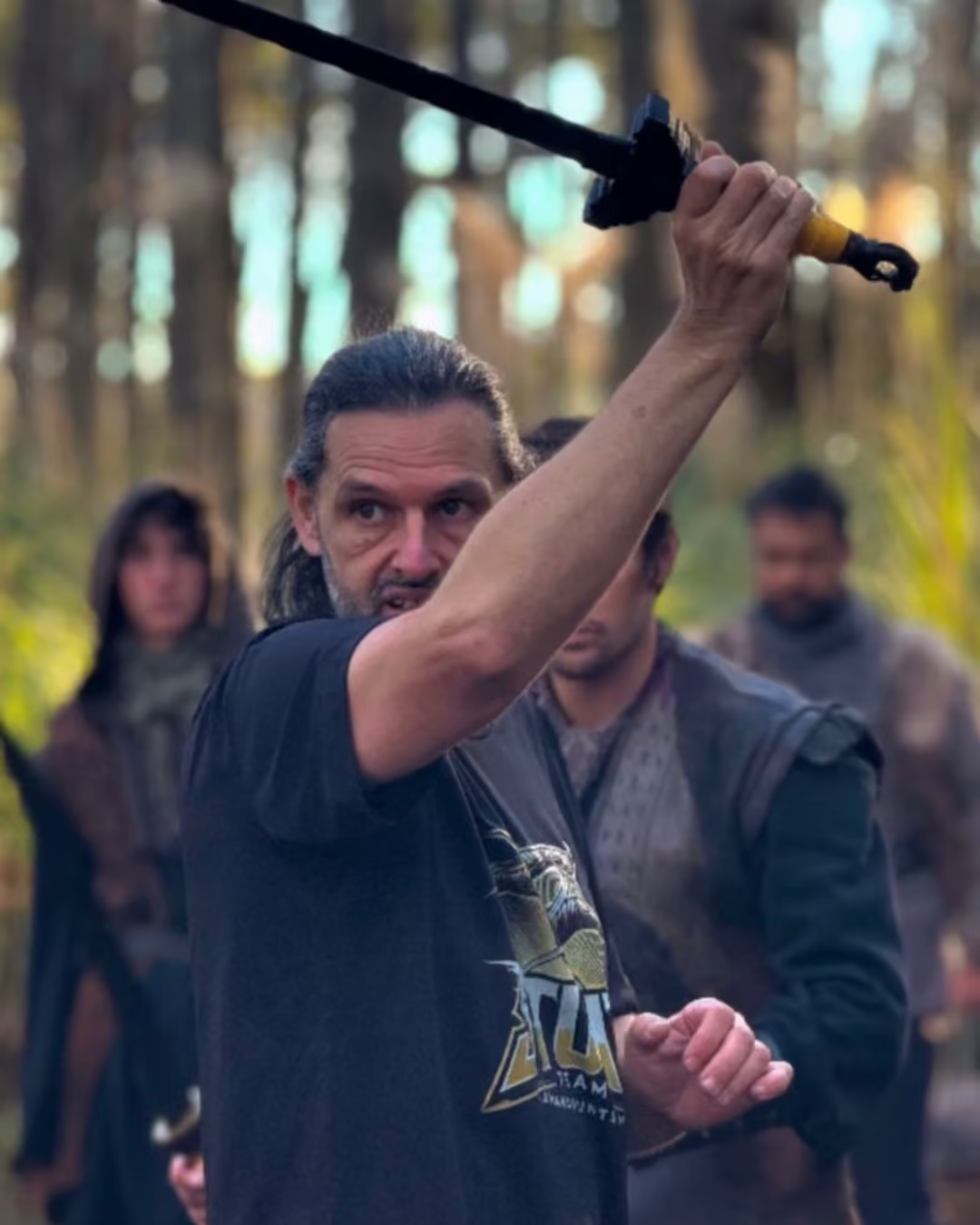
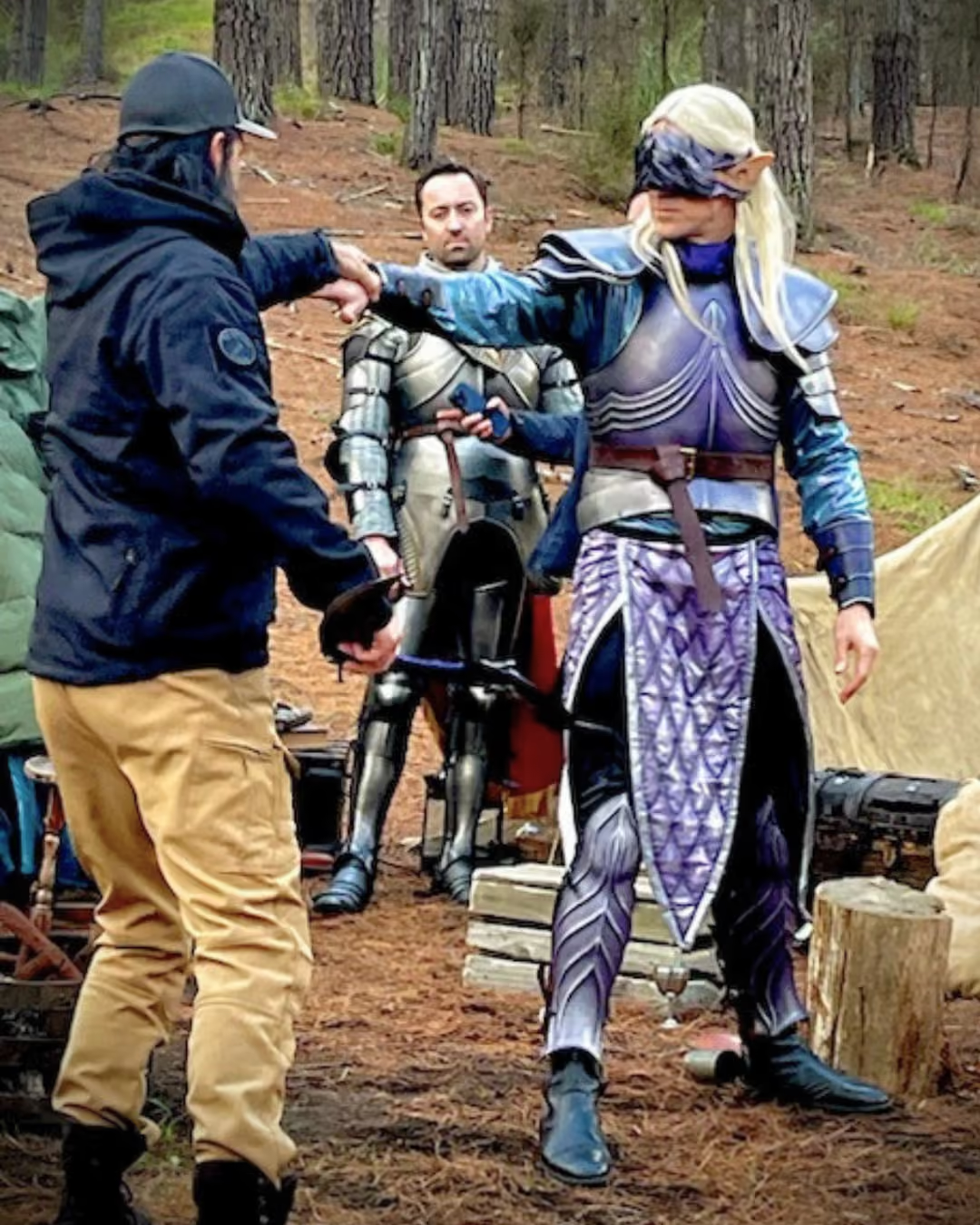
Amand’s career in the screen industry has taken him from performing in front of audiences and cameras to assistant directing, stunt coaching, and stunt coordination. Along the way, he developed a strong appreciation for the teamwork, trust, and creativity that bring productions to life.
Today, he combines his performance background with a passion for action, safety, and cinematic storytelling, helping performers build confidence and create moments that feel exciting, believable, and safe.
What was your very first job on set, and what did you learn from it?
My first role in film was as one of the Bournvita boys in the iconic 80s TV commercial Better by Far.
What or who inspired you to start working in film?
Working on Bournvita, I got to meet the amazing Alma Woods from my childhood show Chic Chat. One of my best friends at school was also in the commercial and went on to become the Maggie Boy.
What advice would you give to those starting out in the industry?
Look, listen, learn.
So many young filmmakers these days come from a background of either film school or their own creativity, which is fantastic, as those opportunities weren’t around when we were growing up. But what is missing from that process is the old-school apprenticeship style of living, breathing and growing up on film sets.
There’s a bit of a generational divide where departments have become quite disconnected, as those early development stages get skipped, where you learn how the departments interact and cross over to achieve a final goal.
The ability to continue to look, listen and learn from everyone around you, not just your department, throughout your career creates a better team player and a smoother creative process.
Who have been the biggest influences or mentors in your career?
I had the amazing fortune of growing and learning in an era with some amazing mentors.
On camera, working for years on Pacific Renaissance with Lucy Lawless, Ted Raimi and Kevin Smith helped me understand the nuance of different styles of performance.
Rob Tapert, Chloe Smith and Rick Jacobsen have been a huge influence from the PR days right through to now. Luke Hanson and Axel Paton influenced my move to work as an AD after Xena, where I then worked a lot for Republic Films with Simon Mark-Brown, Neil Stichbury and Luke Nola.
Working for Republic, I was mentored by Sandy May, Chris Graves, Chris Short and Terri Kilmartin, until Stitch and Simon started handing me the 1st AD reins.
There are so many more people who have offered me patience and guidance: Dayna Pomare, Mark Harris, Chris Webb, Mark Harlen, Joe Nolan, Jen Butcher, Brian Kassler, Ben Cooke, Augie Davis, Nooroa Poa, Shayne Blaikie, Jon Costello, Jerry Mauger, Paul Grinder (R.I.P.) and Thad Lawrence have all been amazing supporters and promoters of me.
What keeps you passionate about working in film?
As someone who is neurodivergent, the creativity and energy of being on a film set is what calms me and invigorates me at the same time.
What part of your job gives you the most satisfaction?
Creating something from nothing and then seeing the completed product.
What’s one lesson the screen industry has taught you?
No matter how much you want to keep going, there will always be times where you just need to stop and rest.
How do you define success in your work?
By being asked back, or by securing the next job.
How do you think the NZ screen industry could better support crew?
We need to look at encouraging more overseas crews to recognise that there is a lot of talent in New Zealand, not just in below-the-line roles, but in HOD and decision-making roles.
So many times, you see crew coming here and HODs climbing on the shoulders of NZ crew because they are out of their depth. Our HODs rival the best in the world and deserve to be respected and prioritised by overseas productions that come here.

What changes would you like to see in the next five years?
I would like to see more financial security for NZ crew, with holiday pay, KiwiSaver, ACC and other protections added into contracts.
I’d also like to see some sort of payroll assurance, where a base percentage of predicted wage costs is held at the start of any long-term production.
Crew commit large chunks of their time to productions, signing contracts and turning down other work, when these productions can just pull the plug and leave them unpaid, freeze work for extended periods leaving crew with no source of income, or simply default on pay.
So much of this industry is built on the trust that you will get paid after putting so much energy, time and often money into a project, with no guarantee that will happen.
How does working in Aotearoa compare to other places you’ve worked?
Outside of Aotearoa, I have only worked in the islands, so there is not a fair comparison to be made.
What do you think makes NZ crew unique?
The only real way to summarise that question is: we are Kiwi.
Talent and skill-wise, we are on par with the rest of the world, no question. But it’s that little slice of Kiwi we bring to a set that just makes things more welcoming.
How do you see technology, including AI, VFX and sustainability, shaping the future of our industry?
They are definitely boundary-pushers, and for the creative process that can be amazing if used correctly. It is when the creative input is ignored or wasted that the sustainability will collapse.
AI needs input to be able to generate output. If the creativity that can only come from human experience is ignored and producers begin to rely on AI, the soul is gone.
The creative process doesn’t stop. It begins with an idea that a writer expands on, to a director who personalises it, to an actor who adds humanity, to a DOP or gaffer who lends life, and designers who create worlds.
How has being part of the Guild supported you or your peers?
The Blue Book. Without this, all members, regardless of affiliation or guild in this country, would be continuously screwed over. It’s not perfect, but without it there are no other rules for how we get employed, no governmental controls or anything.
So every crew member should be supporting the Guild to support each other.
What kind of Guild initiatives or training would you like to see more of?
I would love to see the Guild have a larger influence and presence at educational facilities.
Teaching young creatives the importance of structure and safety, especially Set Safe, so that even if they are creating their own work, they actually understand H&S compliance, the true worth of their time, and the worth of using their own gear.
That way, they don’t come into this industry with stars in their eyes and potholes under their feet.
What’s one thing you wish every crew member knew about the Guild?
No Guild = no lunch breaks, no OT, no minimum standards.
Honour the work of those that came before you and support those that work to protect it.
Coffee order or go-to snack on set?
Large long blacks and plenty of sweets.
Favourite filming location in NZ?
Milford Road.
A film or show that inspired you to get into this industry?
Black and white westerns.
What’s one skill or habit that helps you get through long shoot days?
The blessing of neurodivergence and all the undefined cognitive assistance it brings.
If you weren’t in film, what would you be doing instead?
As someone who is reaching an age where this is more and more a foreboding crossroad, I honestly can’t tell what else I would be doing.
I’ve lived and breathed this life for the last 42 years, and frankly, the thought of it is terrifying.
No items found.