Te Puna Creative Hub: Where Screen, Creativity and Community Connect
Te Puna is carving out a new role in West Auckland’s screen sector, supporting projects from early development through to launch.
Published on:
July 1, 2026

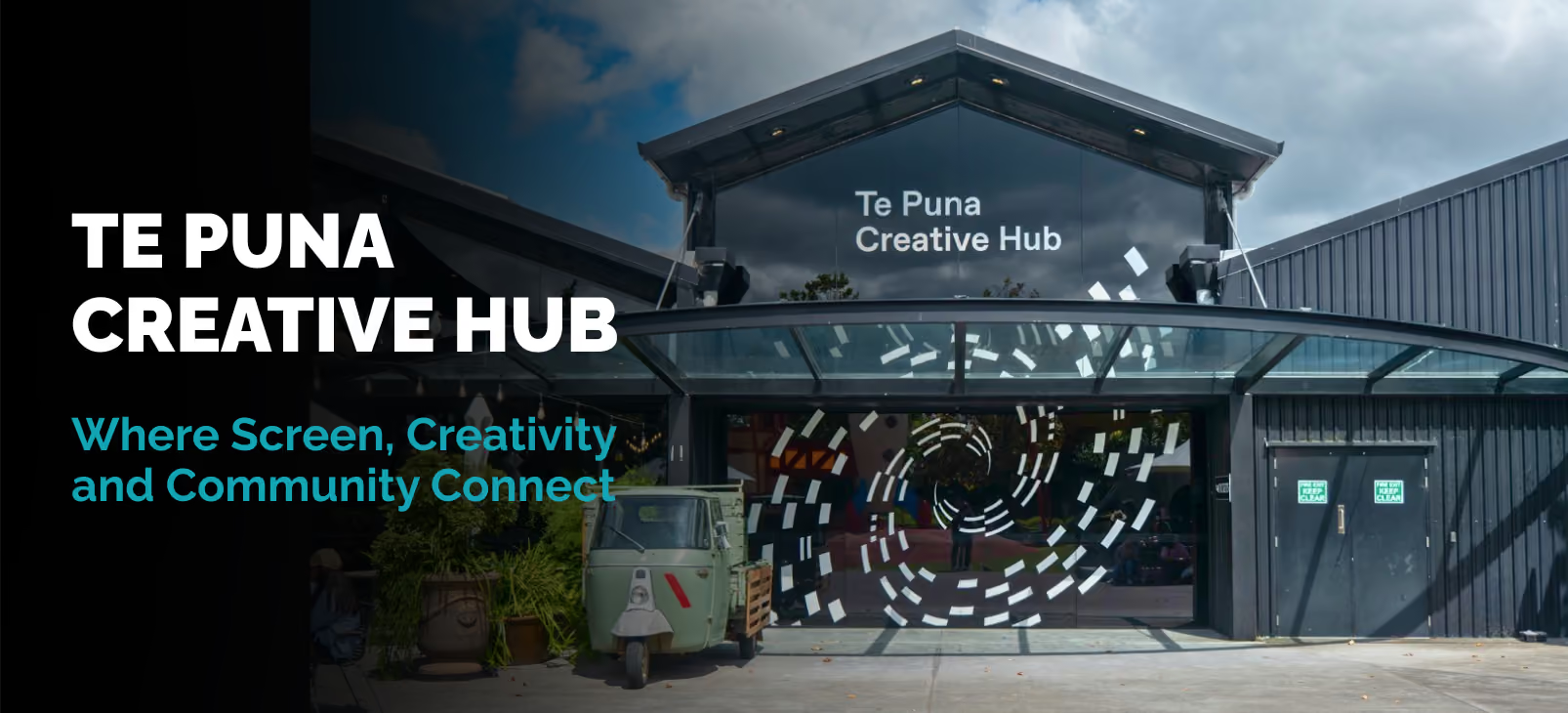
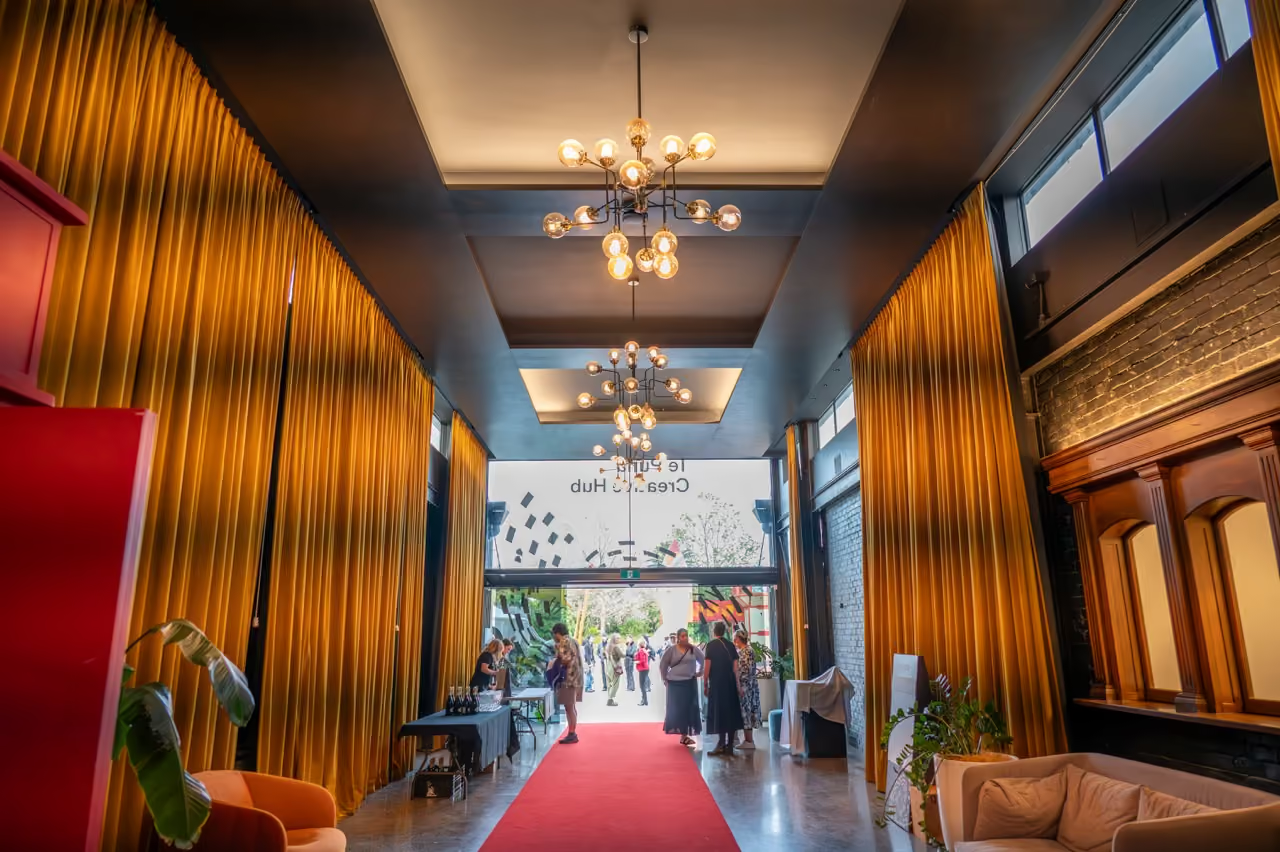
Located in the heart of Henderson, Te Puna Creative Hub brings together production spaces, co-working, training and a growing community working across screen, music, digital content and creative technology. Positioned close to Auckland Film Studios and other West Auckland screen businesses, the hub is building its role as a practical base for projects at different stages and scales.
We spoke with Kirsty Donoghue, Manager of Business Development at Te Puna Creative Hub, about how the facilities are already being used, what production teams need to know, and the kind of screen and creative community Te Puna hopes to grow.
How would you describe Te Puna Creative Hub in practical terms?
Te Puna Creative Hub is a creative facility in West Auckland that brings together hireable event and production spaces, co-working, and a growing community of tenants working across screen, music, digital content, and creative technology.
In practical terms, for screen professionals, we offer a black-box studio, a flexible theatre, and a co-working space, all under one roof. It's designed for anyone making things: independent filmmakers, production companies, content creators, musicians, dancers, digital artists, and game developers.
We're not a single-use facility - we've been intentional about building something multifunctional that works across different scales of production and different disciplines.
How do you see Te Puna Creative Hub fitting into the wider West Auckland production ecosystem?
Being at the heart of Henderson, close to Auckland Film Studios and a cluster of screen and creative businesses in Te Puna Creative Innovation Quarter, means we can function as a real part of that production ecosystem.
We see Te Puna Creative Hub as the connective tissue, the place where emerging practitioners rub shoulders with established companies, where a production can work through development before heading to a larger studio, or where a smaller project can be produced start to finish.
We want to be the place that lowers the barrier to entry for creative work, while also being genuinely useful to professionals.
What kinds of screen and creative tech activity are already coming through the hub?
We've had a good spread already. From development, test shoots, docos, short films, and web series, productions have used our spaces for shoots.
We've hosted immersive-experience developers testing out concepts, content creators running multi-camera setups, and digital artists doing installation work.
On the creative tech side, we've had groups coming in for game development meet-ups, hosted AI conversations and learning pathways, and created a space where immersive tech can be showcased.
What's been really encouraging is seeing how different creatives find ways to use the spaces that we hadn't entirely anticipated. That flexibility is something we built in deliberately, and it's being tested in the best possible way.
What kinds of shoots or production activity are the best fit for the Takawai Black Box Studio?
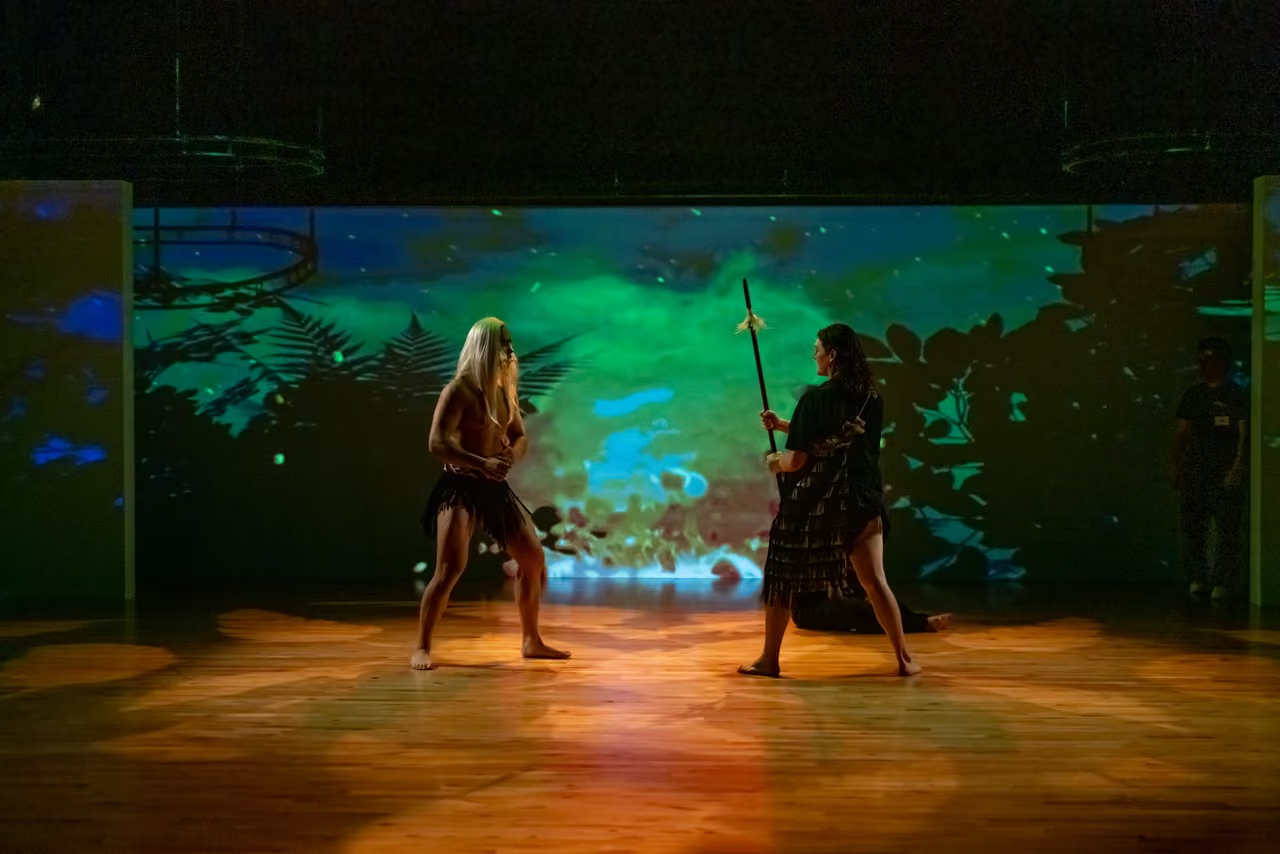
Takawai works really well for productions that need a controllable, contained environment, such as drama shoots, music videos, VFX testing, interview and documentary setups.
Because it's a black box, with a green screen and built-in lighting rig, you can configure it to suit the project rather than the other way around.
It's also a strong option for green screen setups, and immersive or experiential content where you need that total environmental control.
What kinds of screen-related uses could Kōmanawa Theatre support?
Kōmanawa is one of those spaces where the brief really does open up once people walk in.
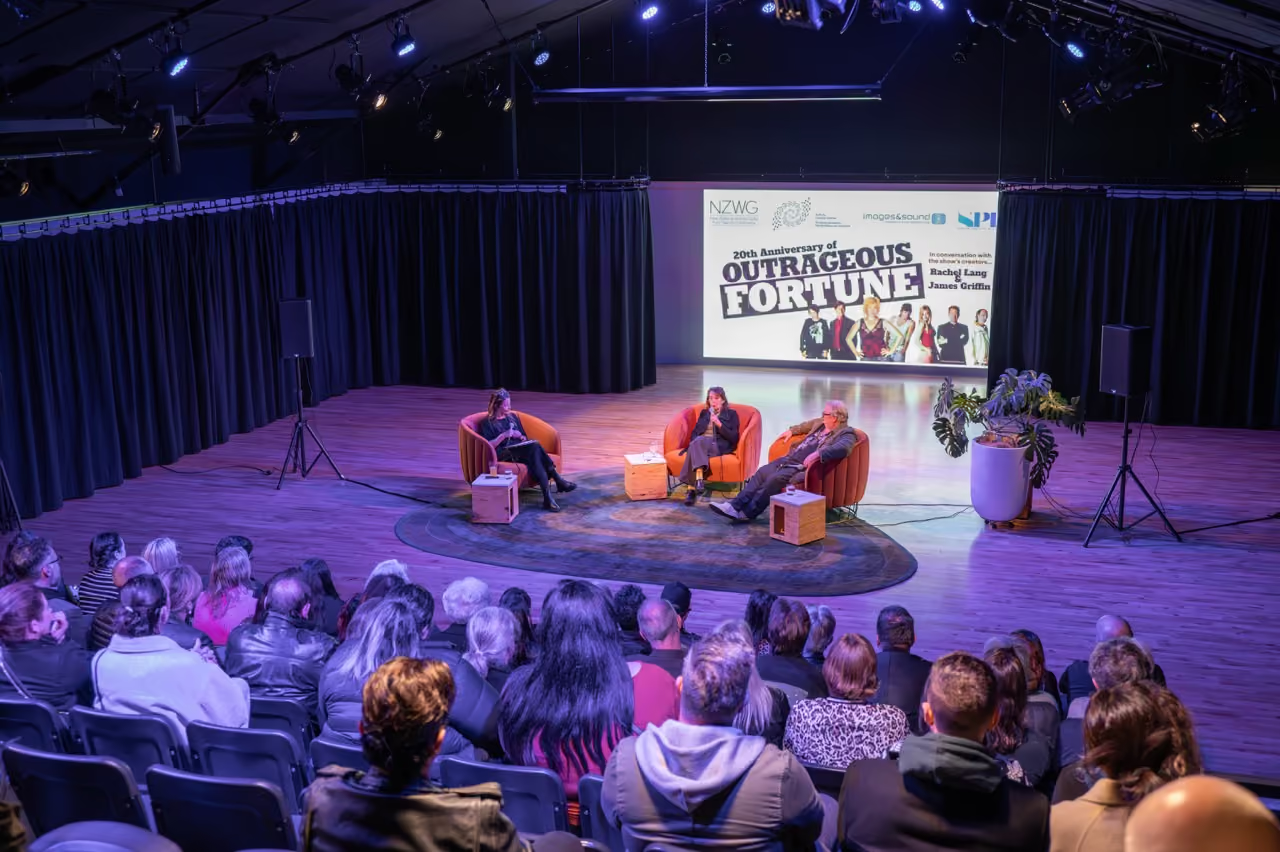
For screen, it works well for events, workshops, table reads and script development sessions, rehearsals for screen adaptations, pitches, industry screenings, Q&As and panel events, and live-to-camera or multi-camera productions where you need an audience or performance context.
It also lends itself to hybrid events - where you're producing something for a live audience and a digital one simultaneously.
We've been thinking about it as a space for the development end of screen production as much as the production end itself - the conversations and creative work that happen before the camera rolls.
What's usually included when teams hire Te Puna Creative Hub, and where do they need to bring their own people and gear?
Hire typically includes the space, basic furniture and fit-out, venue infrastructure, Wi-Fi, and access to our team for support and coordination.
For production-specific technical requirements - camera packages, lighting rigs, sound equipment, specialist operators - teams generally bring those in themselves or through their own suppliers.
We're not a rental house, but we've built the spaces so that professional gear can be brought in and integrated cleanly.
What's the capacity, and what technical infrastructure does the facility have?
Takawai Black Box can comfortably accommodate a small-to-mid-size crew alongside talent, equipment, and office space. We're talking a professional production team of 15 to 30 people, depending on configuration and the size of the build.
Kōmanawa seats 159 in a traditional configuration but can flex for production uses.
In terms of technical infrastructure, we have rigging and hanging points to service an audience event, power distribution suitable for production lighting loads, and connectivity for sound and comms. We're not a fully kitted studio in the traditional sense - the bones are right, and we've been designed to accommodate professional gear.
%20Large.avif)
What should producers and production managers know about access, parking, loading, and practical logistics?
Practically speaking, we have good vehicle access, including a loading area suitable for gear trucks, and parking for crew.
Green room options are available and can be configured depending on the scale of the production - we have breakout spaces that work well for talent holding, hair and makeup, and small production offices, and we have kitchen facilities.
Come and walk the space with us, because the practical questions are always easier to answer in person.
What kind of industry community are you hoping to grow at the hub?
We have been really thoughtful about our community. There’s already a strong nucleus of screen and creative tech businesses here. What we're hoping to grow is a community where there's genuine cross-pollination.
We'd love to see more screen production companies and creative technology businesses become part of Te Puna Creative Hub.The goal is a community that's genuinely useful, not just a collection of businesses that happen to share a building.
Where do you see the strongest connection with future screen industry skills through Te Puna's training programmes?
The training we're developing sits right at the intersection of where screen and technology are converging, and where the skills pipeline in New Zealand needs to be developed. We see Te Puna as a place where that practical learning can happen alongside professional activity.
There's something really powerful about training in a space where real productions are happening - it closes the gap between education and industry in a way that a classroom alone can't. We want to be a place where people come in as learners and leave ready to work, with contacts and experience.
What would success look like for Te Puna Creative Hub over the next few years, from a screen industry perspective?
Success for me looks like Te Puna Creative Hub becoming a name that screen professionals in New Zealand associate with community and opportunity.
I'd love for us to be the place where Tāmaki screen work has had some part of its life, whether that's development, production, or launch.
More concretely, I'd like to see our tenant community grow to the point where there's meaningful collaboration happening between businesses in the building, and where the training we're offering has contributed measurably to the regional skills base.
And I'd like us to be genuinely integrated into the West Auckland production ecosystem.
No items found.