Inside Kōawa Studios: A New Production Hub for the South Island

For years, the South Island has offered world-class locations without the studio infrastructure to match. Kōawa Studios is changing that.
Named after the Māori word for watercourse, symbolising connection and flow, Kōawa brings together education, creative production, and technology, reflecting the increasingly blended nature of the screen industry.
Based in Ōtautahi Christchurch and developed by the University of Canterbury, the facility is designed as a right-sized, end-to-end production hub supporting film, television, and emerging digital formats. We spoke with Samantha Witters, Director of Kōawa Studios, to learn more about the facility, its capabilities, and how it supports production in the South Island.
For those who may not be familiar with it yet, can you tell us what Kōawa Studios is and how the facility came about?
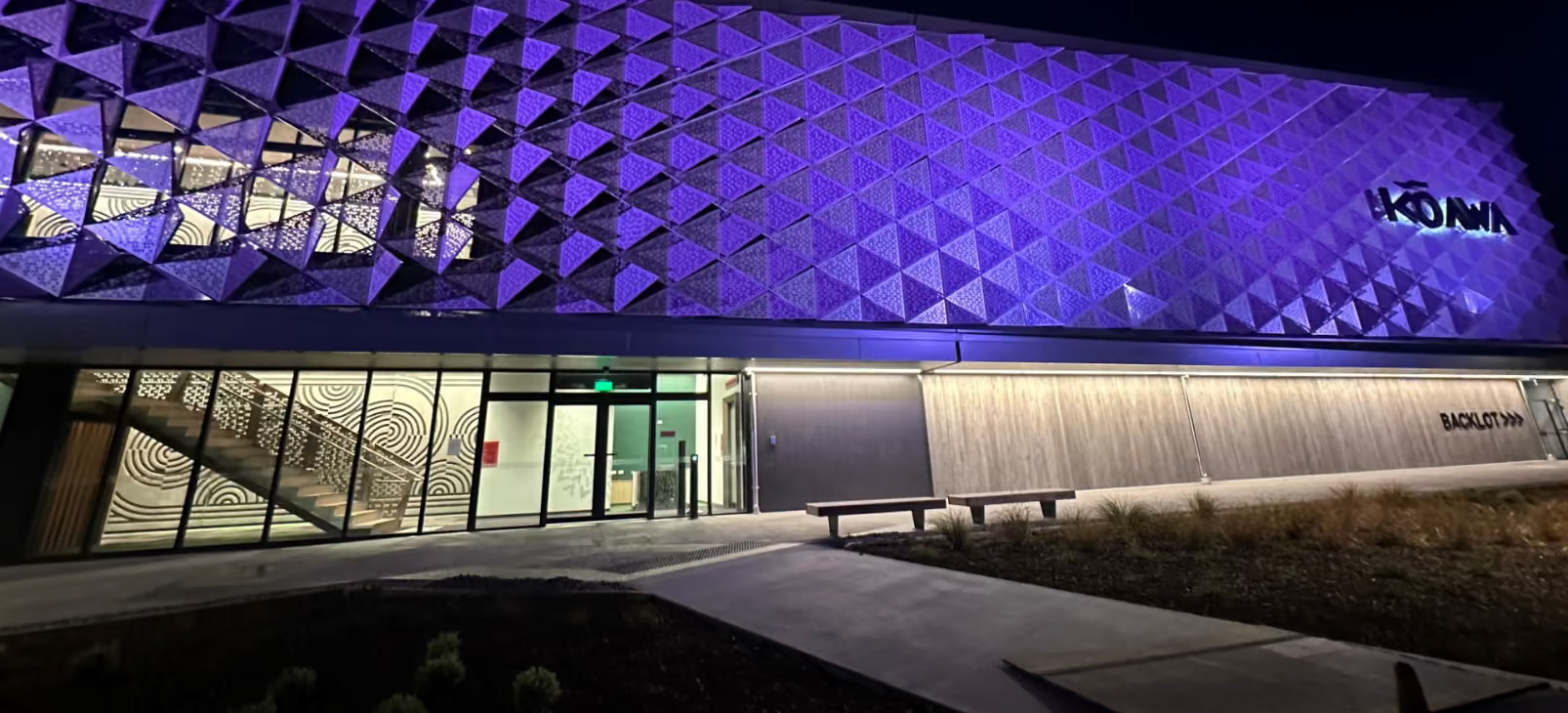
Kōawa Studios is a purpose-built digital production facility in Ōtautahi Christchurch, created as part of the University of Canterbury’s push into the future of screen, animation, gaming, and immersive media. UC recognised that these worlds are converging quickly, and that the industry needs graduates who can move confidently between creative storytelling and the technology that brings it to life.
The studio gives students access to real-world tools and workflows, while also providing the South Island with much-needed screen infrastructure. It is a bridge between education and industry, a place where talent can grow, productions can land, and new ideas can take shape.
It is described as a “right-sized, end-to-end digital production facility.” What does that mean in practice for productions working there?
It means the space is big enough to handle serious work, but not so large that it becomes unwieldy or expensive. It can accommodate a TVC and mid-budget New Zealand film. Productions have access to everything they need, including stages, post-production, and digital workflows, all in one place.
It is streamlined and efficient, allowing teams to move quickly from shoot to edit without the usual friction. It is also uniquely positioned, with the studio just 10 minutes from an international airport and a thriving city, and within two hours of some of the best locations in the world.
The site spans 11 hectares. How is the space structured and what types of production activity does it support?
The campus is set up like a creative village. There are sound stages and production spaces, post-production suites, creative technology labs for games, immersive media, and research and development, a secure backlot for outdoor builds and vehicle work, maker spaces for art department and fabrication, and training and education areas connected to the University of Canterbury.
It is built to support everything from film and television to music videos, podcasts, virtual production, motion capture, sound production, and emerging digital formats.
Stage 1 has recently been completed. What does that include?
Stage 1 and the completion of Stage 2 provide productions with the essentials. This includes a fully serviced sound stage, editorial and post-production suites, production offices and meeting rooms, workshop and maker spaces, high-speed secure data workflows, and a theatrete with a 170-seat Dolby Atmos cinema.
It is ready for teams to walk in and get started.
The studio combines production and post-production in one location. How does that workflow benefit productions?
It keeps everyone close. Directors, editors, and VFX teams can collaborate in real time, which speeds up the process and keeps the creative vision aligned. For digital-heavy projects, it is a significant advantage, as teams can test, refine, and adjust without delays.
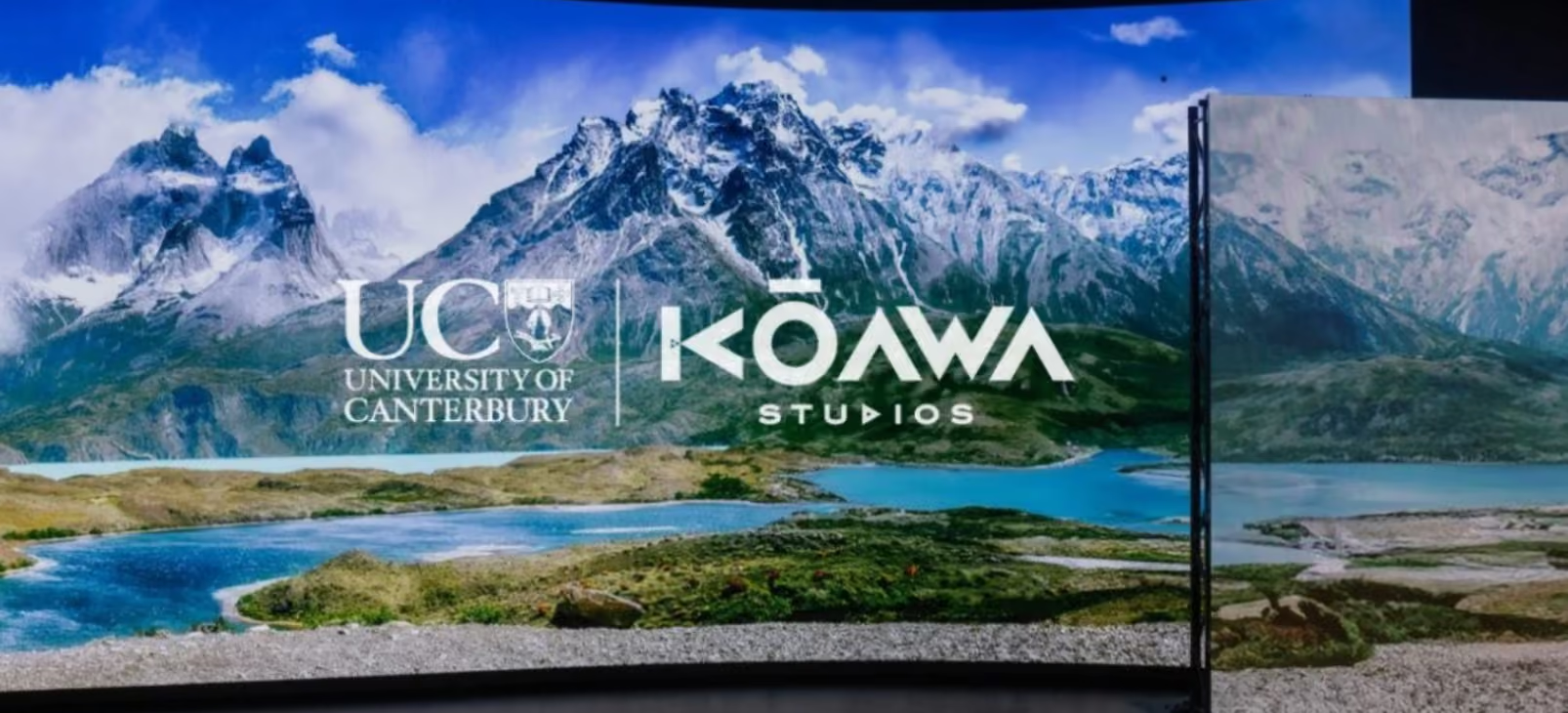
The example of Holy Days, which shot simulated travel scenes using virtual production on campus before moving to Akaroa for location work, is a strong example of how Kōawa can support a production from start to finish.
There is also a secured backlot area. What kinds of shoots is that space designed for?
The backlot supports a range of uses, including exterior set builds, vehicle scenes and stunt work, controlled day-for-night or weather-dependent shoots, commercials and short-form content, and productions that require privacy or security.
It allows teams to create outdoor environments without leaving the studio grounds.
Christchurch has been building momentum as a production destination. What advantages does the region offer?
Christchurch offers a wide variety of landscapes within close proximity, competitive production costs, and strong support from organisations such as ChristchurchNZ and Screen Canterbury. There is also a regional screen grant, a growing creative technology community, and a collaborative local culture.
It is a city that is well set up to support productions and help them succeed.
What role do facilities like Kōawa play in making the South Island a more viable production base?
Kōawa fills a long-standing gap. The South Island has always had exceptional locations, but not enough studio infrastructure to anchor productions. Kōawa provides a reliable base, supports year-round activity, and makes it easier for both local and international projects to choose the region.
Kōawa sits within the University of Canterbury. How does that connection support collaboration between industry and emerging talent?
It creates a natural pipeline. Students gain hands-on experience with real productions, while industry benefits from access to emerging talent and new ideas. Learning and professional practice happen side by side, which strengthens both.
The studio is also contributing to building a permanent crew base in the region.
Are there opportunities for crew training, research, or technology development through the studio?
Yes. Kōawa supports crew training and upskilling with industry involvement, research into virtual production, real-time engines, and immersive media, and technology development alongside creative technology companies.
It also offers student placements and internships, positioning the studio as both an innovation space and a production hub.
What kinds of productions is Kōawa best positioned to support right now?
Kōawa is well suited for mid-sized features, documentary and scripted series, commercials and short-form content, virtual production and real-time workflows, games cinematics, immersive media, and hybrid digital and physical projects.
It has been designed to be versatile and adaptable.
What gap in New Zealand’s screen infrastructure does Kōawa aim to fill?
Kōawa sits between smaller independent spaces and the country’s largest studio complexes. It offers modern, mid-scale, digitally enabled infrastructure, while providing the South Island with a dedicated production base.
It adds capacity, supports innovation, and contributes to a more balanced national screen ecosystem.