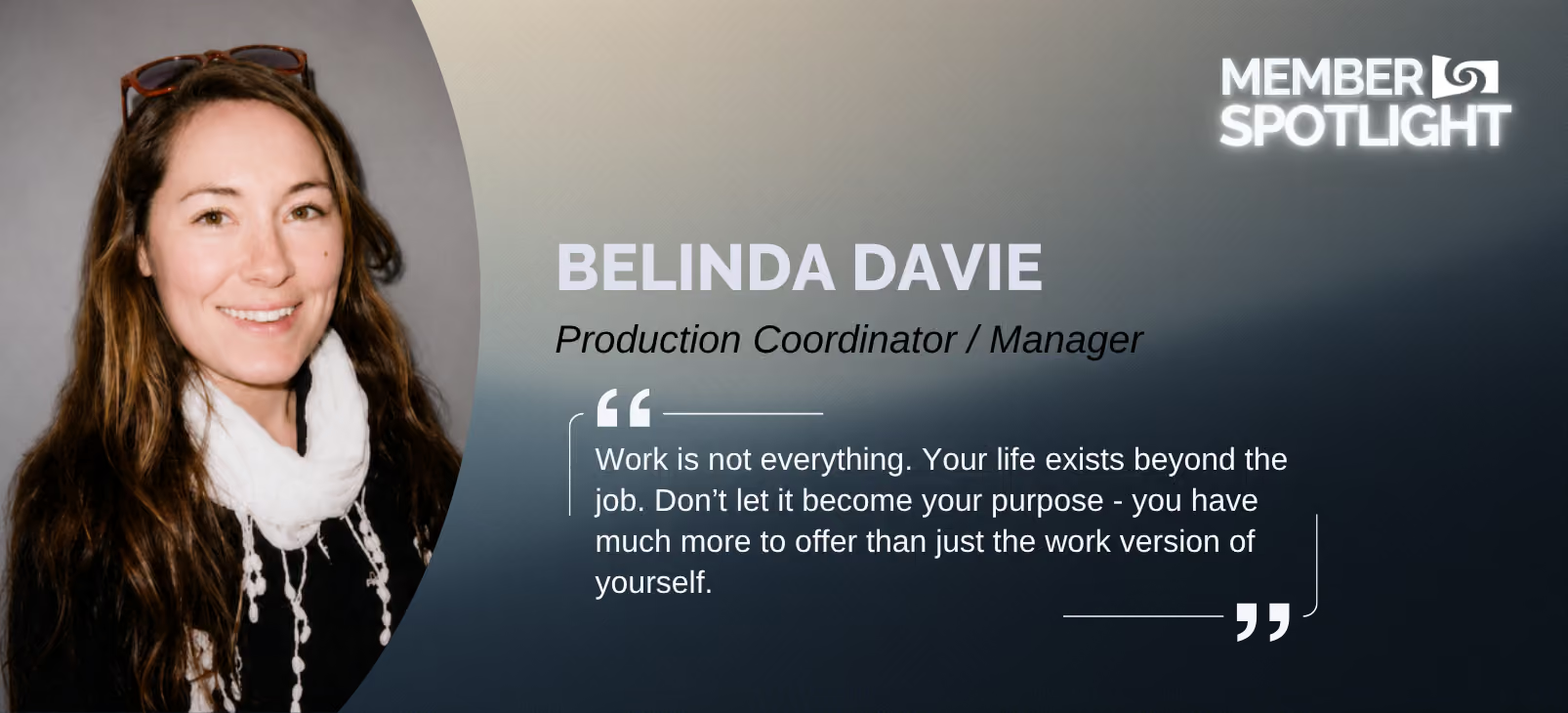
Member Spotlight: Belinda Davie

Belinda has worked across production, lighting and transport coordination, giving her a broad perspective on how great crews come together. We spoke with her about the lessons she’s learned along the way, the people who’ve influenced her, and what makes a career in film sustainable.
What was your very first job on set – and what did you learn from it?
I can’t recall the exact job that came first, but we were frequently recruited as PAs during broadcasting school. We worked on NZ On Air-funded music videos with an innovative art department, a small crew, and an even smaller budget.
I learned that it’s not always about the paycheck (there probably was pizza, but no actual paycheck for us as students), and that those opportunities sometimes led to another – paid – job.
What inspired you to start working in film?
I made an incredibly lo-fi (and embarrassing to think about now!) short film in high school as part of a media studies class. I loved the whole process of filmmaking and the collaboration involved - writing, shooting, editing, and taking on all the different behind-the-scenes roles.

What advice would you give to those starting out in the industry?
Work hard, be humble, and pick your moments to ask questions. Find someone who inspires you and ask if you can shadow them or buy them a coffee and pick their brain. Be eager, but don’t be annoying. Make things in your own time with friends. Enter the 48Hour Film Competition. Find the department or departments, you love most.
Who have been the biggest influences or mentors in your career?
Pip Gillings - one pretty strong woman who has seen a lot and continues to hustle for the good of the New Zealand film industry. Also has cool dogs.
Kylie Gaudin - a sister from another mister, a real good egg, and someone who has worked in production for a long time. She also knows how to balance work and life and exercises the power of saying no.
Judy Dale - another sister from another mister. An incredibly hard worker with a kind soul. Judy has been a Producer at Rebel Fleet for a few years now.
Anne Williams - a tutor at broadcasting school who still keeps in touch.
What keeps you passionate about working in film?
I enjoy collaborating with other departments and achieving something together. Even if we’re not directly working together day to day, having other people around who are hustling for the same reasons while remaining decent humans is a good buzz.
What’s one lesson the screen industry has taught you?
Just one?
Work is not everything.
Your life exists beyond the job, so don’t let it become your purpose. You have much more to offer than just the work version of yourself.
Find other interests and passions beyond working really hard for someone else. When a job wraps and you find yourself back at home with loads of free time and away from the hordes of crew, you might not know what to do with yourself for a little while. It can be a rough adjustment coming back to the reality of determining your own schedule.
Get back into healthy non-work hobbies as soon as possible afterwards. Go and see your family and friends. Go for a swim. Try something you haven’t tried before.

How do you think the New Zealand screen industry could better support crew?
Parity between on-set and off-set crew. Paid overtime.
Out-of-town deals for more off-set crew being considered as part of production budgets.
Inclusion in crew meals. Some productions don’t feed off-set crew on the theory that we have the freedom and time to leave and get our own lunch. Often, that’s simply not the case.
And calling out unprofessional behaviour and conduct.
What changes would you like to see in the next five years?
Hopefully sooner than five years, I’d like to see a formalised and enforced process for engaging crew that follows the SIWA rules, along with appropriate penalties for companies that shirk those rules.
It’s the only way companies will know they can’t mess crew around. And paid overtime for off-set crew.
Incentives for productions to hire South island filmmakers when filming in the South Island. Crew who don’t live local to the main filming centres, being offered work in Auckland, Wellington or Queenstown - only if they can be local, but large productions shooting in smaller cities and towns and bringing everyone with them. I get it, I understand the importance of continuity and it’s easier to go with what you know, but… it’s a kick in the teeth when you have the experience on that level of film and can’t get a look in, when you’re right there.

How does working in Aotearoa compare to other places you’ve worked?
I’ve worked in Fiji, which was amazing for many reasons, but it lacked the infrastructure for filmmaking, which made things really difficult.
The Kiwi crew hand-carried hundreds of AA batteries just to make sure we had enough for the shoot.
What do you think makes New Zealand crew unique?
For the most part, New Zealand crew have a great work ethic, the ability to innovate in a pinch, are highly collaborative, and understand deadlines.
How do you see technology (AI, VFX, sustainability) shaping the future of our industry?
AI: Reluctantly.
I’m still on the fence about AI in general. I’d hate to see more people out of work because we’ve pivoted towards relying on non-human innovation.
Sustainability: I’m keen to see sustainability considered during the pre-pre-production stage. It isn’t just about rubbish and putting things in the right bins. It’s about how an entire production is planned, how sets are built, and allowing enough time to repurpose construction materials properly rather than dismantling everything with machinery and sending it to landfill.
The same goes for film, television, and events. It’s a tricky challenge, particularly in regions without purpose-built commercial composting facilities.
I still have much more to learn in that area.
How has being part of the Guild supported you or your peers?
Without saying too much, having Kelly, Christian, and Wookie on our side in a current situation has been priceless.
What kind of Guild initiatives or training would you like to see more of?
Understanding SIWA and our rights as screen workers. We don’t have a union as such, but we do have an agreement that stands up in court.
What’s one thing you wish every crew member knew about the Guild?
You can approach the Guild if you’re experiencing unfair treatment at work or need advice about your rights. Because we’re contractors rather than employees, I think many people, especially those starting out, aren’t always sure what they’re allowed to ask for or what they’re entitled to.
Coffee order or go-to snack on set?
Almond flat white. Surprises.
Favourite filming location in New Zealand?
Ōtepoti Dunedin.

A film or show that inspired you to get into the industry?
Raising Arizona and Fargo - the Coen Brothers.
What’s one skill or habit that helps you get through long shoot days?
Endurance, or maybe resilience.
My experience has primarily been in production or coordinating another department, where the work is office-based, behind one or two screens, and breaks are often cut short. At some point, staying late simply becomes a case of diminishing returns. It’s important to work hard, but also know your limits. There’s no point pushing into unpaid overtime (production life) if it’s something you can do tomorrow with a clearer head.
If you weren’t working in film, what would you be doing instead?
It’s been quieter than ideal in the industry recently, so I’ve been working in events between film and television jobs.
I also dream of starting a flower farm.