Member Spotlight: Fiona Sole

A wig that looks completely natural on screen might have taken hundreds of hours to create. Every hairline, knot and carefully chosen strand is the work of a specialist whose craftsmanship often goes unnoticed. And sometimes the brief calls for something rather less conventional, like a judge's wig for a cat.
With more than 30 years in the screen industry, wig maker Fiona Sole has worked on productions including The Lord of the Rings, The Hobbit, Mulan and Minecraft. Her work combines traditional craftsmanship, technical precision and some wonderfully inventive problem-solving.
In our latest Member Spotlight, Fiona opens up about the art of wig making, the unusual challenges that come with the job, and the realities of building a specialist business in New Zealand. Tight production schedules, the loss of experienced artists and the need to pass on skills to the next generation are all part of a much bigger conversation about the future of specialist crafts in our screen industry.
What/who inspired you to start working in film, and what first sparked your interest in wig making?
I've loved film from a young age, particularly practical special effects and the magic of how things are created behind the scenes. I grew up watching the big action films of the 80s and 90s, when practical makeup effects were evolving at a rapid rate. I was fascinated by the transformations and the craftsmanship behind them.
My mum had a book about the making of Andrew Lloyd Webber's Phantom of the Opera stage production. It had progress photographs of the Phantom's makeup being created, and I was absolutely obsessed with them. I was fascinated by the transformation and amazed that someone actually had a job putting that makeup on Michael every night.
I think that was one of the first moments I realised there was a whole world of creative work happening behind the scenes that I wanted to be part of. I knew that if I could find a job that wasn't considered "normal", I was going to pursue it!
My interest in wig making came much later, after working on The Lord of the Rings and The Hobbit. I became increasingly interested in the construction and craftsmanship behind the hair and wigs, and eventually found myself specialising in an area that I absolutely love.
What was your very first job in film – and what did you learn from it?
My first film job was at Wētā Workshop in 1999. The Lord of the Rings was greenlit the very day I started, so I certainly landed in the middle of something exciting!
I was initially put in the hair department knotting Hobbit foot hair (yes, that's a real job!). We also got to make some Orc wigs.
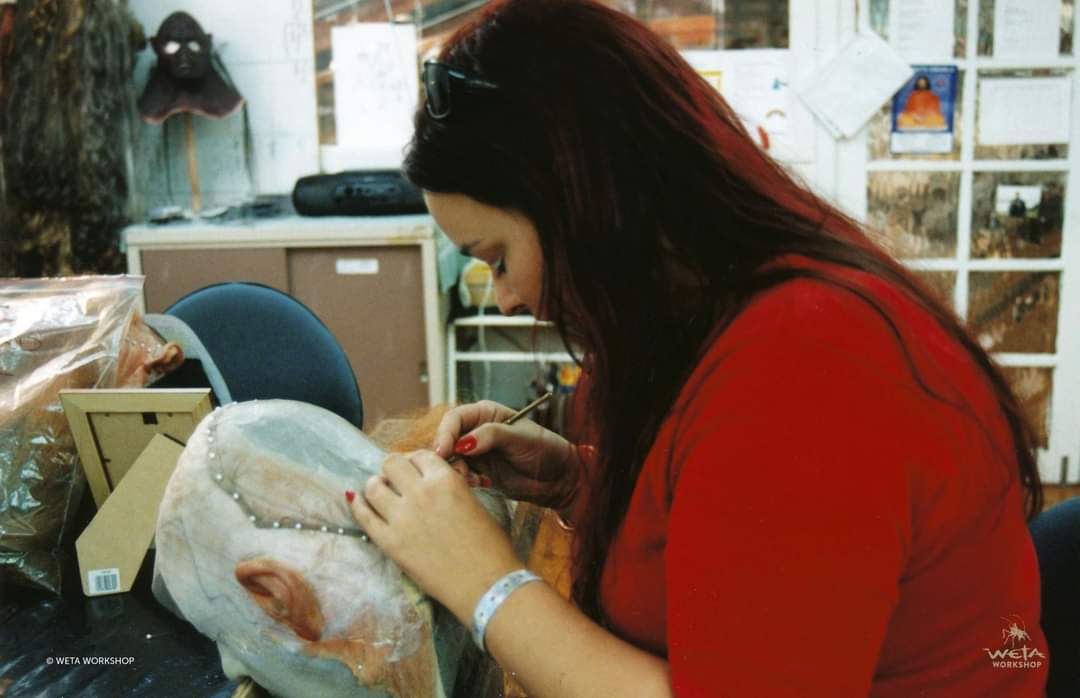
When production started, I moved into the prosthetics department as a junior on the prosthetics trucks. I worked my absolute arse off. I cleaned, ran around after the senior artists, helped apply Hobbit feet to stunt doubles and child actors, and cleaned the hero's feet at the end of the day.
I didn't have a clue what I was doing when I first started, but I made sure I never stopped moving!
I learnt very quickly that being a good junior wasn't about knowing everything. It was about having a good attitude, paying attention, being useful, anticipating what was needed and being willing to do absolutely anything. I think that work ethic has stayed with me throughout my career.
I also learnt that when a production wraps, there aren't necessarily more jobs waiting around the corner. There weren't many opportunities for prosthetics makeup application between productions, particularly in Wellington, and it could be a long time between jobs. That was an early lesson in the realities of working freelance in the screen industry.

Who have been the biggest influences or mentors in your career?
One person who had a real influence on me was Kylie Clarke, a wig maker I worked for in Sydney for around ten months after The Hobbit.
I absolutely loved working in her workshop. It gave me a real appreciation for the specialist craft of wig making and what was possible when you had a dedicated space, the right equipment and the freedom to concentrate on the work.
I came home dreaming of building something similar in New Zealand.
I've also picked up bits and pieces from the talented artists I've worked alongside over the years. Film is very much a collaborative industry, and I've always valued learning from people who are generous with their knowledge.
However, there weren't any other film-grade wig makers in New Zealand for me to learn from. I had to become quite resourceful. I started taking photographs of the insides of wigs I came across on jobs, studying their construction and filing the images away for future reference. Eventually, I could start identifying where a wig had come from just by looking at how it was constructed!
Wig making can be quite an isolating specialisation in New Zealand, particularly when you're working independently. There aren't many people, if any, doing exactly what I do, so a lot of my journey has involved finding my own way, developing my skills and building a business around the craft.
One positive of that isolation is that I haven't had anyone telling me certain things can't be done. I've had to find my own solutions to problems, and sometimes that has led me to approaches that perhaps haven't been tried before.
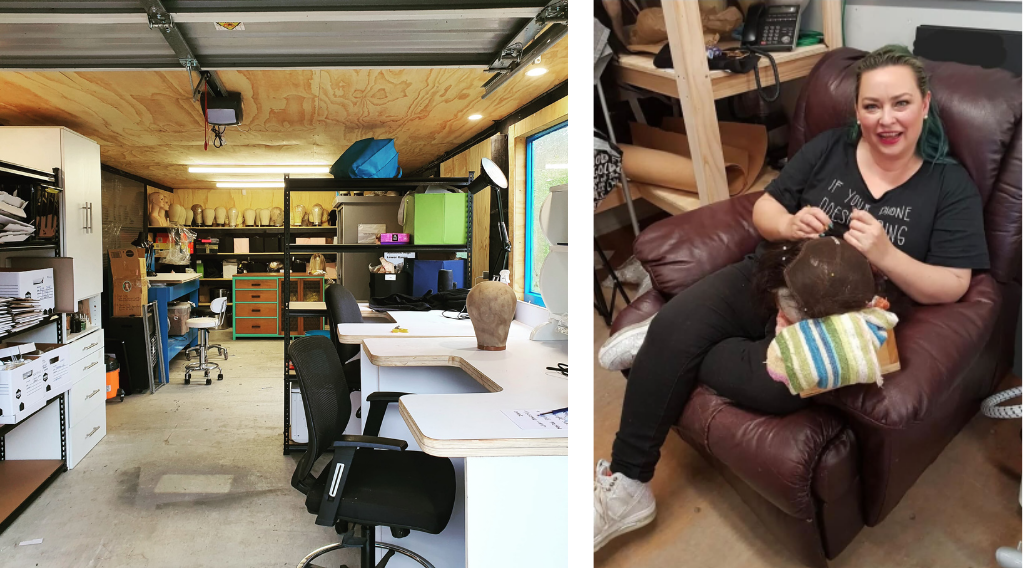
Can you walk us through the process of creating a wig for a film or television production?
It really depends on the character and the requirements of the production, but a fully handmade wig can take months from start to finish.
It generally begins with research and design. We look at the character, the period, the script, reference images and what the director and HODs of the hair and makeup departments are trying to achieve.
Then comes the technical side: taking head measurements, making a head mould (or bubble), creating a block to the correct head shape, designing and constructing the wig foundation, and sourcing and selecting the right hair.
For a traditional handmade wig, individual hairs or small groups of hair are knotted into a lace foundation by hand. This is incredibly time-consuming, but it gives us control over the direction, density, hairline and overall realism. The knotting alone can take around 80–120 hours, sometimes considerably longer, depending on the design and construction.
Once the wig is constructed, it needs to be cut, coloured, styled and fitted. There are usually adjustments along the way, and sometimes the design evolves as the character develops. This is where I start collaborating with other members of the makeup team.
We also need to consider whether stunt doubles or stand-ins will require matching pieces. With the speed of filmmaking these days, this has become a real challenge on some productions.
Pre-production time is increasingly squeezed to save money, and sometimes the people making scheduling or budget decisions don't fully understand how long a specialist wig takes to produce. You can end up having to compromise or adjust something that isn't ideal simply because there hasn't been enough time allowed.
Good wig making starts well before the first hair is knotted. Planning, communication and realistic timeframes are essential.
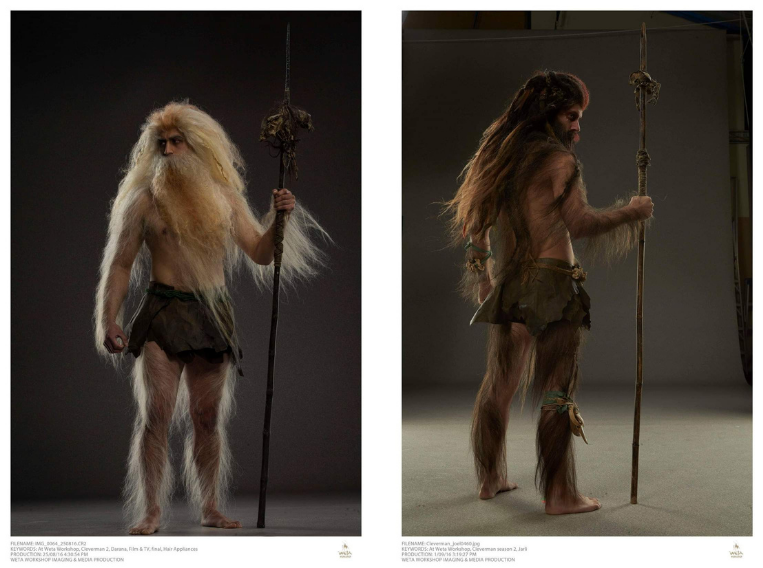
What are some of the biggest misconceptions about wig making in the screen industry?
I think one of the biggest misconceptions is that a wig is simply something you buy, put on someone's head and style.
I heard someone say a while ago that they "hate wigs, they always look bad". That person had a background in another department and very little knowledge of wig making.
It's a bit like saying you hate sets because they always look terrible. Well, badly constructed, cheap, quickly made, low-budget sets can look terrible! But you don't tend to notice the high-quality, beautifully constructed ones, do you?
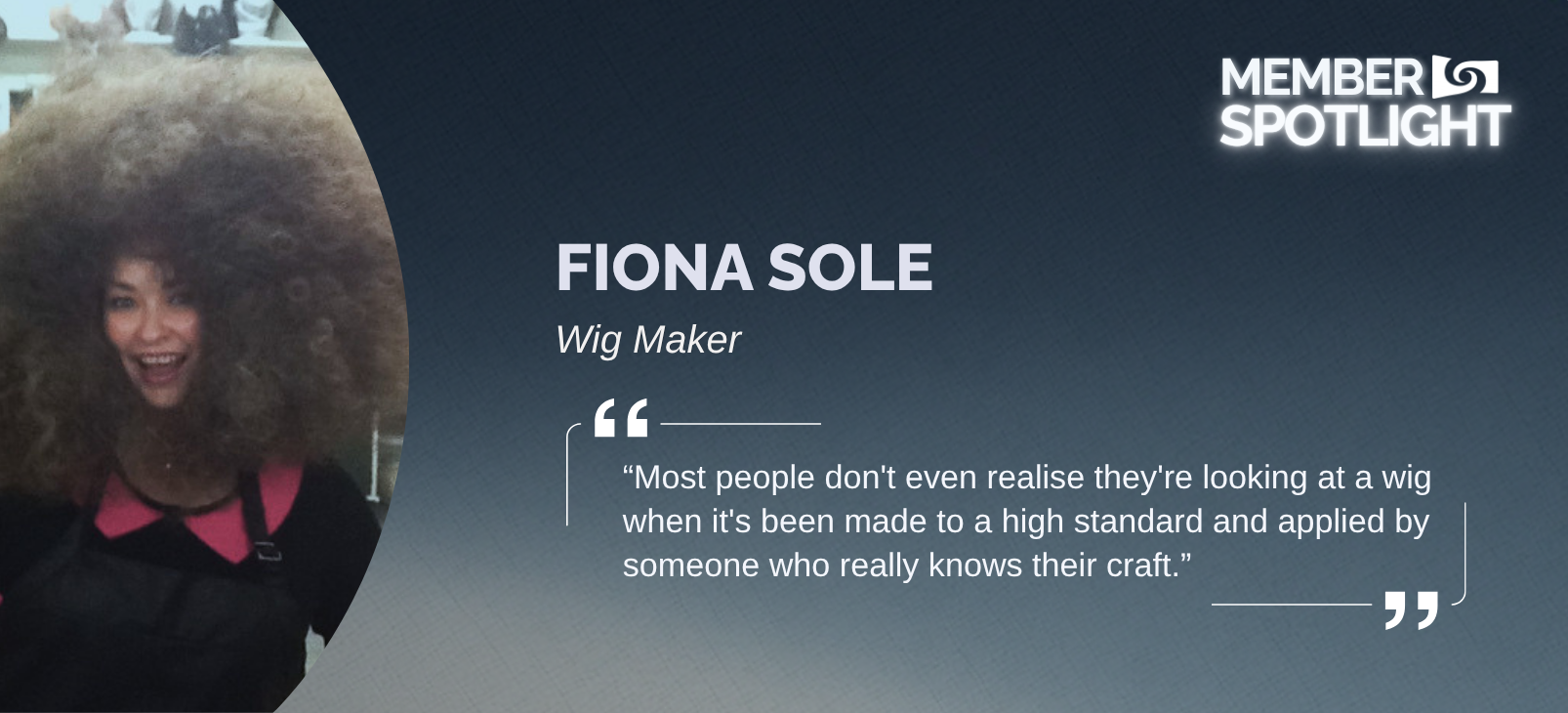
The same goes for wigs. Most people don't even realise they're looking at a wig when it's been made to a high standard and applied by someone who really knows their craft.
A good film wig is often a highly specialised, custom-made piece of work. There can be hundreds of hours involved in the research, construction, knotting, colouring, cutting, styling and fitting.
Another misconception is that once a wig looks good, the job is done. In film, it also needs to withstand the demands of production. It might need to be worn for weeks or months, survive action sequences, be removed and reapplied repeatedly, and look exactly the same from shot to shot.
Productions also need to plan for wig maintenance. Just like costumes, props and vehicles, wigs need maintenance, and sometimes multiples. They need to be looked after by people who understand how they're constructed and how to repair them properly.
There's also a lot of invisible work involved. The emails, meetings, fittings, research, repairs, maintenance and preparation don't always get seen, but they're all part of delivering the finished result.
I often compare wigs to cars. There are cheap, low-quality options, very expensive, high-quality bespoke ones, and everything in between. You can't judge an entire craft by the cheapest examples available.
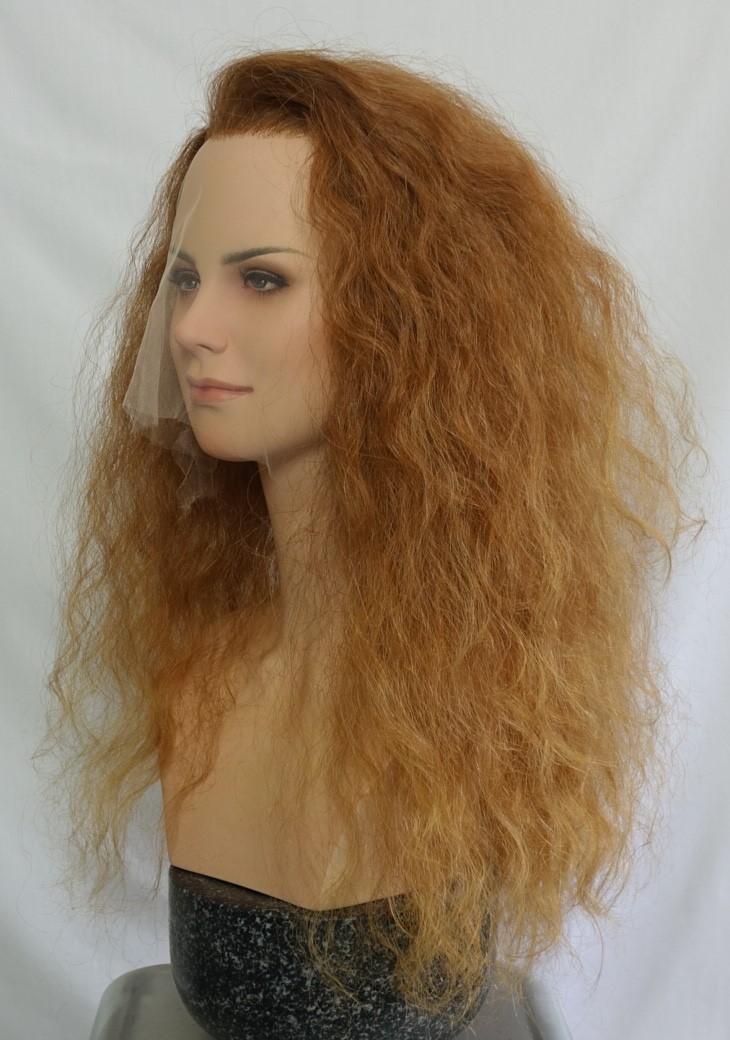
What do you think makes a truly great wig maker, beyond technical skills?
Patience is a big one! You need an incredible amount of it.
You also need curiosity, problem-solving skills and the ability to think outside the box. Every project is different, and sometimes the solution isn't in a textbook. You have to experiment, adapt and work out what is going to achieve the result.
You need to know your tools, know your materials and understand construction. You also need to know when to take your time and when to get something made quickly under pressure.
Speed is a particularly important skill in film wig making. Time is money, and if you don't have the speed, you can't be an effective production wig maker. If I can knot 20 more knots than you every 20 minutes, after three days I'm 1,800 knots ahead of you. That adds up very quickly!
A slow wig maker can cost a production days, sometimes weeks, of additional time and wages.
And there's a big difference between being able to knot hair and being able to make a wig. It's a bit like the difference between someone who can change a tyre and a mechanic. They are vastly different skill sets.
Ultimately, I think a great wig maker combines technical knowledge, speed, creativity, resourcefulness and pride in the details. A lot of the work we do will never be seen by the audience, but that doesn't mean it isn't important.
What has been your most challenging or unusual wig-making project, and what made it particularly memorable?
I've worked on some pretty unusual things over the years, but one of the things I love about wig making is that the challenges are often what make a project memorable.
Working on large-scale productions like The Lord of the Rings and The Hobbit was an incredible experience, particularly seeing the sheer volume of hair and prosthetic work required to bring those worlds to life.
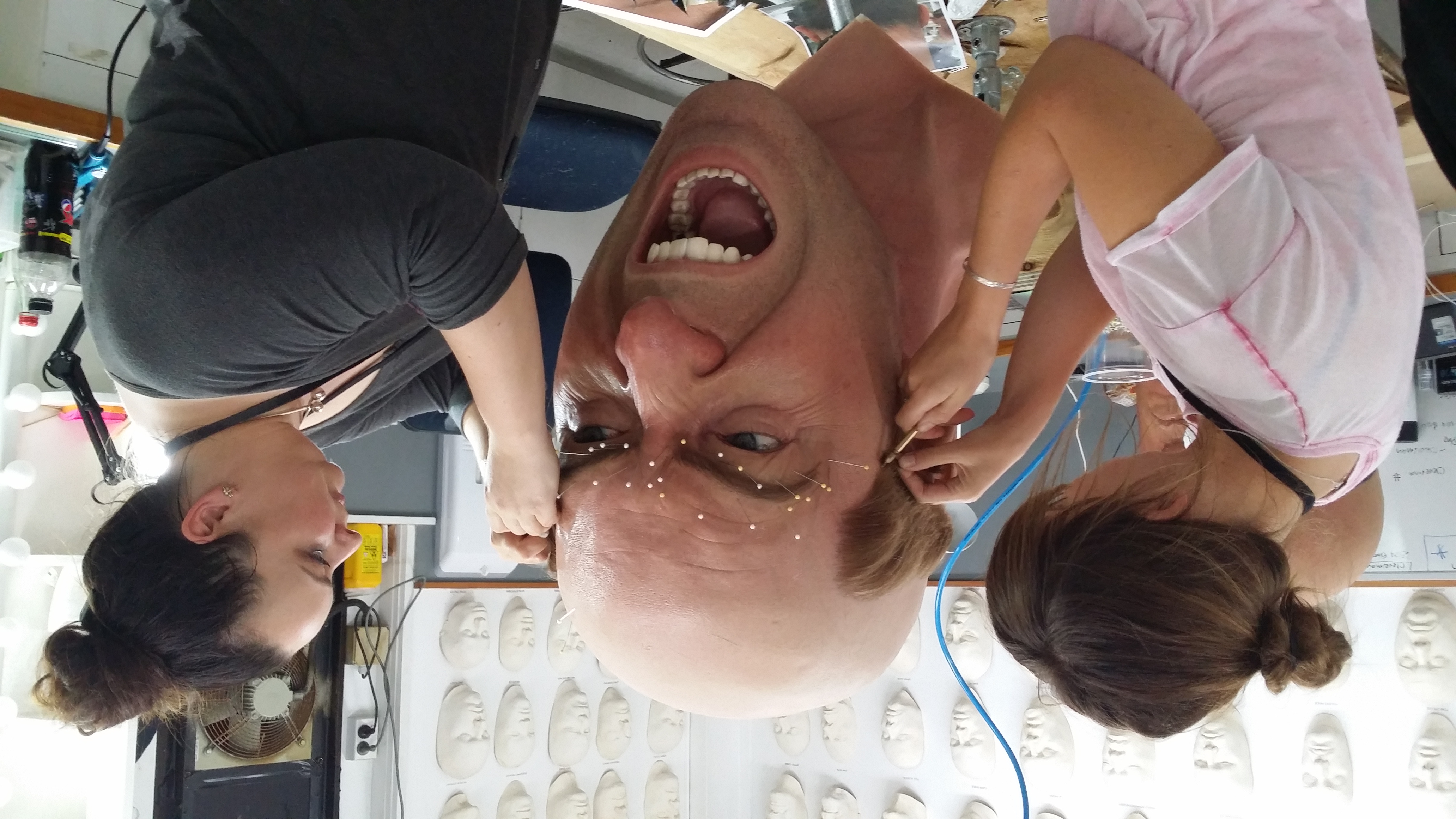
I learnt a huge amount on The Hobbit, as by then I had moved across into the makeup department. The Hobbits and Dwarves required an enormous amount of hair work and upkeep. It was probably the hairiest project I've ever worked on!
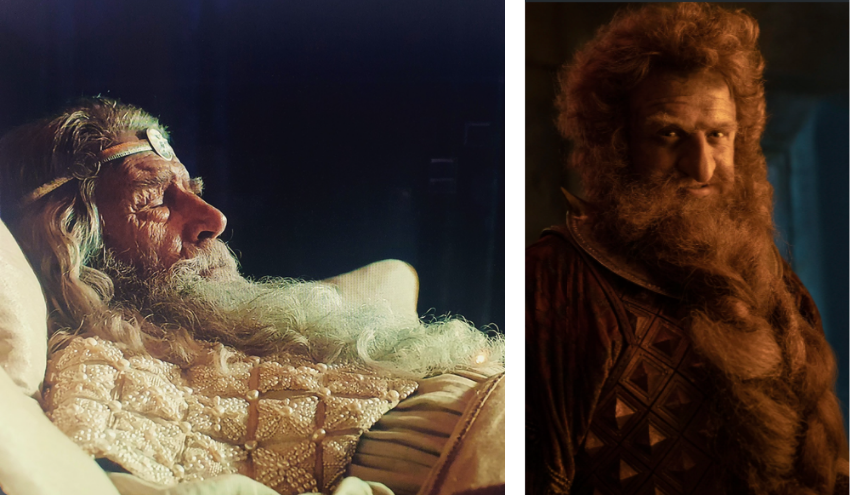
Prince Durin was a massive collaboration: Alex Rouse, Jane O'Kane, Vanya Pell, Aly Webby and me.
Mulan was another massive project for me, with a lot to achieve on a relatively tiny budget. Napes in wigs are always a bit of a nightmare, and with all the high topknots we had to create, we ended up making a lot of them. I met some great people on that production who I still work with today. You make fast friends in the trenches!
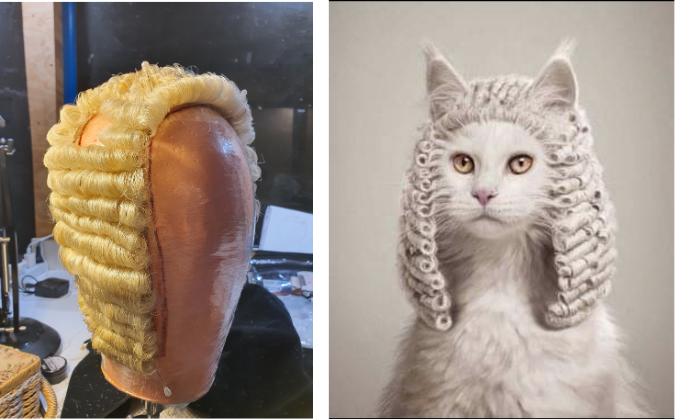
One of my more unusual projects was being asked to make a judge's wig for a cat for a cat food commercial. I had three days, no idea how I was going to do it, but I said yes and figured it out!
I had some horsehair in stock, and my friend Lisa came over to help. She even measured her cat's head for me. We made the wig at 1.5 times the scale so it could be scanned into a computer. The client absolutely loved it. Success!
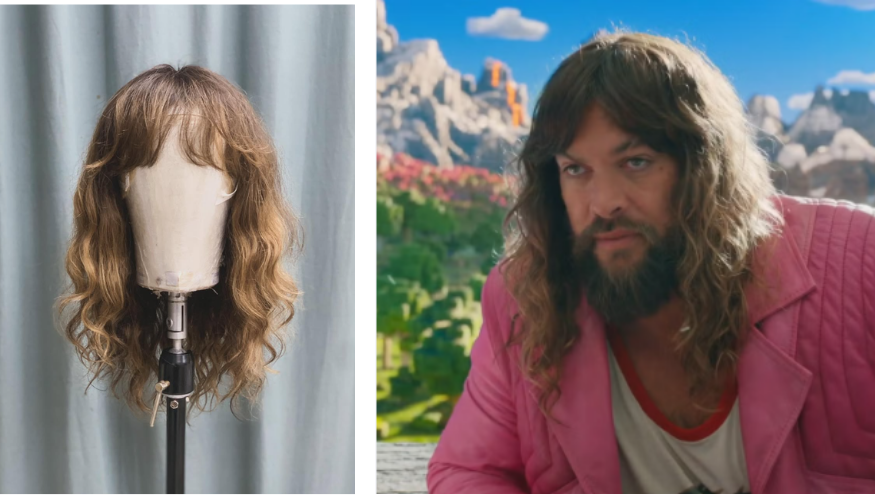
I also made multiple wigs for Jason Momoa for the Minecraft films. Jason (like many actors) does not love wigs Haha! So he requested a wig that could be put on at the last minute in Finals in front of the camera, and taken off easily as soon as they called cut. Meaning the wig could not be attached with any pins or the front lace glued down. I had to come up with a way that the foundation of the wig was flexible but also gripped his head on its own. In final fittings Jason did some vigorous air guitar head banging and the wig stayed on. As this was essentially an experimental project I was rightly nervous. But it was a huge success.
I think that's one of the things that keeps the job interesting. No two projects are quite the same, and sometimes the strangest briefs are the most fun.
What part of your job gives you the most satisfaction?
I love the actual making. There's something incredibly satisfying about taking a pile of hair and a piece of lace and slowly turning it into something that looks and behaves like real hair.
I also love the problem-solving side of the job. Working out how to create a particular hairline, achieve a specific shape or make something work within the limitations of a production.
I'm also an independent contractor and run my own business, so there's a real sense of satisfaction in having built something of my own.
Over the years I've learnt a lot about running a business, often through trial and error. I enjoy the variety of work I get to do: repairing wigs for clients in the alopecia community, making wigs for film, selling wigs online and working in additional makeup on productions.
It has taken many years, some scary moments and learning when to say no to get my business to where it is today. When things are going well, I'm genuinely proud of what I've built.
What keeps you passionate about working in film?
I love that every production is a completely different world, with different characters, challenges and creative opportunities.
I'm someone who enjoys making things with my hands and figuring out how to achieve something that might initially seem impossible. I really appreciate those same skills in other people, too.
I love being part of a team working towards creating something together. I love seeing the physical crafts of the other departments come to life: watching costumes come together, peeking behind the door of the props department to see the amazing things they're making, seeing the trees the greens department are constructing, the worlds being built by construction, and the storyboards the art department are pinning up on the walls.
After more than 30 years in the industry, I could almost do away with the actual filming part! Haha. I'd happily spend the rest of my career in continuous prep, wandering around workshops and seeing what everyone is making.
I still get genuinely excited about amazing sets and the worlds we build. That never gets old.
What's one lesson the screen industry has taught you?
Know your worth, value your skills and don't be afraid to advocate for yourself.
It's an industry built on collaboration, but it's also important to recognise that your time, experience and specialist knowledge have value.
I've learnt the hard way that being hardworking and accommodating doesn't mean you should undervalue what you bring to a production.
Nearly every production I've worked on in the last ten years has cited budget constraints as a reason they can't offer everyone the rates they'd like. I often wonder whether this is something happening equally across all departments, or whether some departments are expected to absorb more of the financial pressure than others.
I've also learnt that you should never stop learning. Even after decades in the industry, there is always something new to discover or a different way to approach a problem.
Upskilling in your own time is an important part of being an artist. There are fantastic short courses available online from all over the world, as well as generous senior artists who are willing to share their knowledge and give their time. But you have to be proactive.
Be curious. Pursue your craft, seek out knowledge and keep evolving.
What advice would you give to those starting out in the industry?
Be prepared to work hard, be curious and take every opportunity to learn.
When you're starting out, nobody expects you to know everything, but they do notice your attitude. Be reliable, turn up on time, listen, ask questions and pay attention to what's happening around you.
It took me a long time to realise that getting hired isn't always just about your skill set or what you can do. It's also about how much easier you make someone else's day!
The people above you are busy. They have a huge amount going on that you probably don't even know about. So think about how you can make yourself useful.
Can you work independently and show initiative? Do you make an effort to find the answers to questions yourself before asking someone else? Are you clear about the role you're filling within the team? Do your job and stay in your lane, because if you don't do your job, who will?
Remember that anyone on the team might be the person who recommends you for your next job. Be kind, be helpful and don't underestimate the importance of good working relationships.
Don't be precious about the jobs you're offered early on. Some of the smaller productions can be where you learn the most because you're often required to cover a much broader range of responsibilities.
Build relationships, be generous with other people and remember that the industry is smaller than you think. Your reputation matters.
How do you think the NZ screen industry could better support crew?
I think we need to put much more emphasis on recognising, supporting and retaining experienced crew, while making sure there are pathways for the next generation to come through.
There is a significant skills gap developing in the makeup department that doesn't get talked about enough. A lot of the older, highly experienced crew are leaving the industry, or trying to, and I don't think there are enough people coming through underneath them who are developing the leadership skills and broad range of experience required to become senior makeup artists.
It feels like we have a real generational gap. A lot of crews are made up of people around 45 and over, or people around 30 and under, with relatively few in between.
We also lost The Makeup School in Auckland a couple of years ago. It was the only independent makeup school teaching to industry standards. The schools that remain are tied to government-accredited teaching frameworks that, in my opinion, are out of date. They can spend a lot of time on modules that aren't particularly relevant to working in the screen industry while leaving out some critical practical skills.
There is an enormous amount of knowledge and practical experience within the New Zealand screen industry, but we need to make sure that knowledge is being passed on. Young people need time and opportunities to develop specialist skills and learn from experienced crew.
The problem is that production budgets and schedules are so tight there is often very little room to upskill people coming through the ranks.
Training and development need to be treated as an investment in the future of the industry, rather than something that gets squeezed out when budgets are tight.
I'd also love to see greater recognition of the time and labour involved in specialist work. Good production outcomes depend on experienced crew being given realistic schedules, appropriate budgets and fair rates.
Like many industries in New Zealand, screen industry pay rates have stagnated. When you combine that with the cost of living and the unpredictable nature of freelance work, it has become increasingly difficult for junior crew to sustain a living in the industry. Finding flexible work between productions that still allows you to be available when the next job comes along is another challenge.
We need to make the industry sustainable for the people who actually make the work happen, not just for the productions themselves.
What does being a Screen Guild member mean to you, and what role do you think the Guild can play in supporting crew?
For me, being part of the Screen Guild is about being connected to the wider screen industry and having a collective voice.
A lot of us work in very specialised areas, sometimes independently or in small departments, and it can be easy to feel a little disconnected from the bigger picture.
I think the Guild has an important role in advocating for crew, raising awareness of the skills and expertise behind the screen, and helping create opportunities for people to connect, learn and share knowledge.
My colleague Vanya and I have recently been teaching short upskilling modules for makeup artists working in the industry, particularly in wig application and styling. Skills that are not taught in makeup schools around the country!
One of the biggest challenges in getting these workshops off the ground has been finding a suitable teaching space that we can use for anything from five days to a couple of weeks. We've had enquiries about running the modules in Wellington and Queenstown, but finding a viable space has been a real roadblock.
If the Guild had access to a space that crew could use for training and workshops, we'd jump at the opportunity. It could be a really practical way of supporting professional development and helping specialist skills stay within the industry.
It's important that the people doing the work have a voice in conversations about the future of our industry.
What's one thing in your workshop you couldn't do without?
My ventilating needle!
It's the little tool I use to knot individual hairs into lace when making wigs. It's not particularly glamorous, but it's responsible for thousands upon thousands of tiny knots that eventually become a wig.
It's a very specialised little tool, and without it, nobody would be getting their wigs on time. If ever!

Is there a particular character or historical period you'd love to create a wig for?
I'd love to do more elaborate historical hair. I love the creativity and engineering involved in those big, sculptural styles, particularly 18th-century hairstyles with their towering shapes, intricate structures and embellishments.
I'd also love to explore some of the more outrageous hair eras of the 60s, 70s and 80s. Some of those hairstyles were absolutely wild!
There's so much opportunity to combine traditional wig-making techniques with a bit of creative madness.
I'm also still drawn to creature and animal wig work. I occasionally get asked to make hair pieces for creatures or animals, and these can be really interesting projects, often involving unusual combinations of fibres and techniques.
I'd love to work on something that really pushes the boundaries of what can be achieved with hair. The more unusual the brief, the better!