Regional Filmmaking Spotlight: HOLY DAYS
Filming across Canterbury meant more than locations, it required smart logistics, local crews, and creative problem solving.
Published on:
March 24, 2026

What does it actually take to run a feature production out of Canterbury?
Holy Days was produced in Christchurch and filmed across the wider region, from Akaroa to Aoraki. With a road-trip structure, a 1970s setting, and a co-production framework, the project relied on a mix of regional locations, local crew, and studio infrastructure to make it work on the ground.
Producer Emma Slade (Velvet Moss) outlines how the team approached logistics, worked across multiple locations, and delivered the film from a regional base, including integrating trainees into the production and making use of facilities like Kōawa Studios.
Why was Christchurch and wider Canterbury the right base for this production - creatively and logistically?
HOLY DAYS is a road trip movie. It was really important that we had multiple locations that could show off the various ‘looks’ of the New Zealand landscape. Canterbury offered us this in spades, which was one of the main reasons why we chose to film here. The other key component is that we needed to have a building that we could use as a convent for the nuns. We found the perfect location out at Okain’s Bay, which was one of the key locations for the film. Also, the volume stage at Kōawa Studios was another important aspect, as well as the filming incentive from Christchurch NZ.
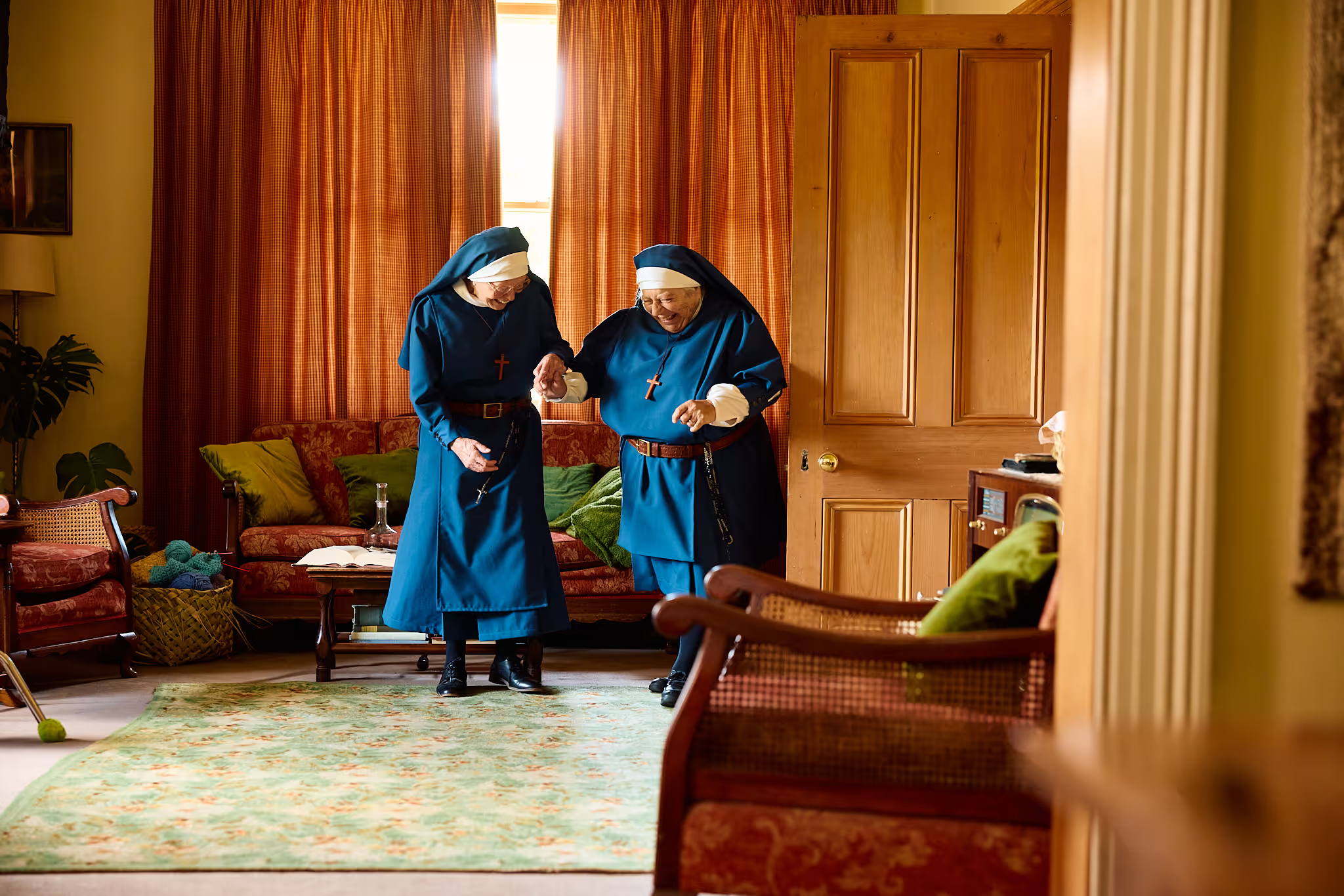
Holy Days filmed across Christchurch, Akaroa, and Aoraki. What did that geography mean for scheduling, transport, and crew movement?
Any project that shoots in multiple locations, particularly if those locations are a distance from a city centre, have to be well thought through to be able to move the unit with minimum impact on the shooting schedule. We filmed all around the Canterbury region. As we were filming multiple locations over multiple days around the Akaroa area, we opted to move the entire unit over to Akaroa for two weeks of the shooting schedule. This enabled us to maximise the locations without the travel time eating into our shooting day.
This was a 1970s-set film. What were the biggest practical challenges in making contemporary Canterbury read as that era?
Shooting a period film in Canterbury worked a treat. I cannot speak to the challenges of shooting in the city but in and around the greater Canterbury region, it was relatively straightforward to pull off a 1970s look.
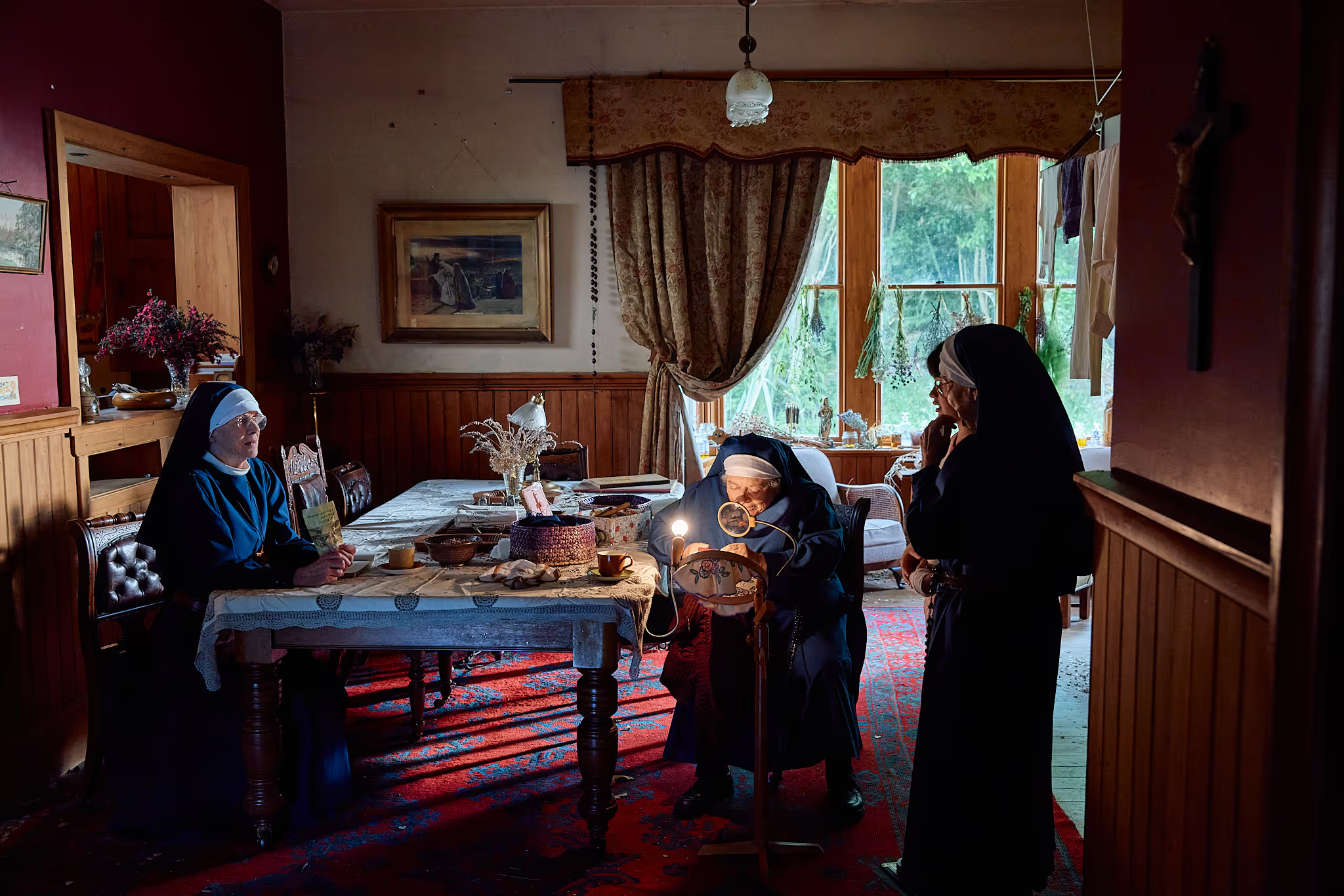
How did working with Kōawa Studios shape the production workflow? What did having that facility locally enable?
The state-of-the-art volume stage at Kōawa Studios was critical for the success of the film. As we had three elderly actors, as well as a young boy, it was not practical to shoot the actors travelling up and down New Zealand, so we used a mixture of techniques to sell the idea of travel, with drama in the car. By shooting the actors in the hero car up against the volume stage, which had plates of the area that were shot by our plate unit, combined with shots from our second unit, who traveled up and down the top of the South Island with the hero car and nun doubles, we managed to achieve the outcome we were wanting.
As a NZ/Canada co-production, what shifts operationally when you’re running a co-pro in a regional centre?
There were no operational shifts for us being in a regional centre, while in a co-production with Canada, as we had to be able to send the rushes from Christchurch to the transfer house, which was based in Auckland. The rushes were then transferred from Auckland to Canada.

What stood out about the Christchurch and Canterbury crew base on this project?
HOLY DAYS was fortunate to be the first project to be used for the National Screen Industry Training Programme, called Kahurangi Toi A tea. We had 27 trainees from the Canterbury region who received classroom training from industry professionals, some of whom were then brought onto the project for the prep and shoot. The participants from the programme were outstanding. Without these trainees, we would have struggled to make the film in the region. We also utilised established local crew, which was a huge bonus for the project.
From a producer’s perspective, what do you think this project contributed to the local screen ecosystem?
HOLY DAYS was a significant contributor to the local screen ecosystem. Not only did it show Christchurch and Canterbury in its best light, with the range of locations and diverse landscapes, but also consolidated and grew the local cast and crew base in a meaningful way. This will only attract other projects to the region, allowing further spend in the region over a relatively short time-frame. It also raised the profile of Christchurch and the region as a ‘place to film’ by having high-calibre cast who were all either BAFTA and/or Oscar nominated and/or award winning coming in to the region. This has been the third project that Velvet Moss (formerly Firefly Films) has shot in Christchurch/Canterbury, and we have always enjoyed working here.
No items found.
Related articles