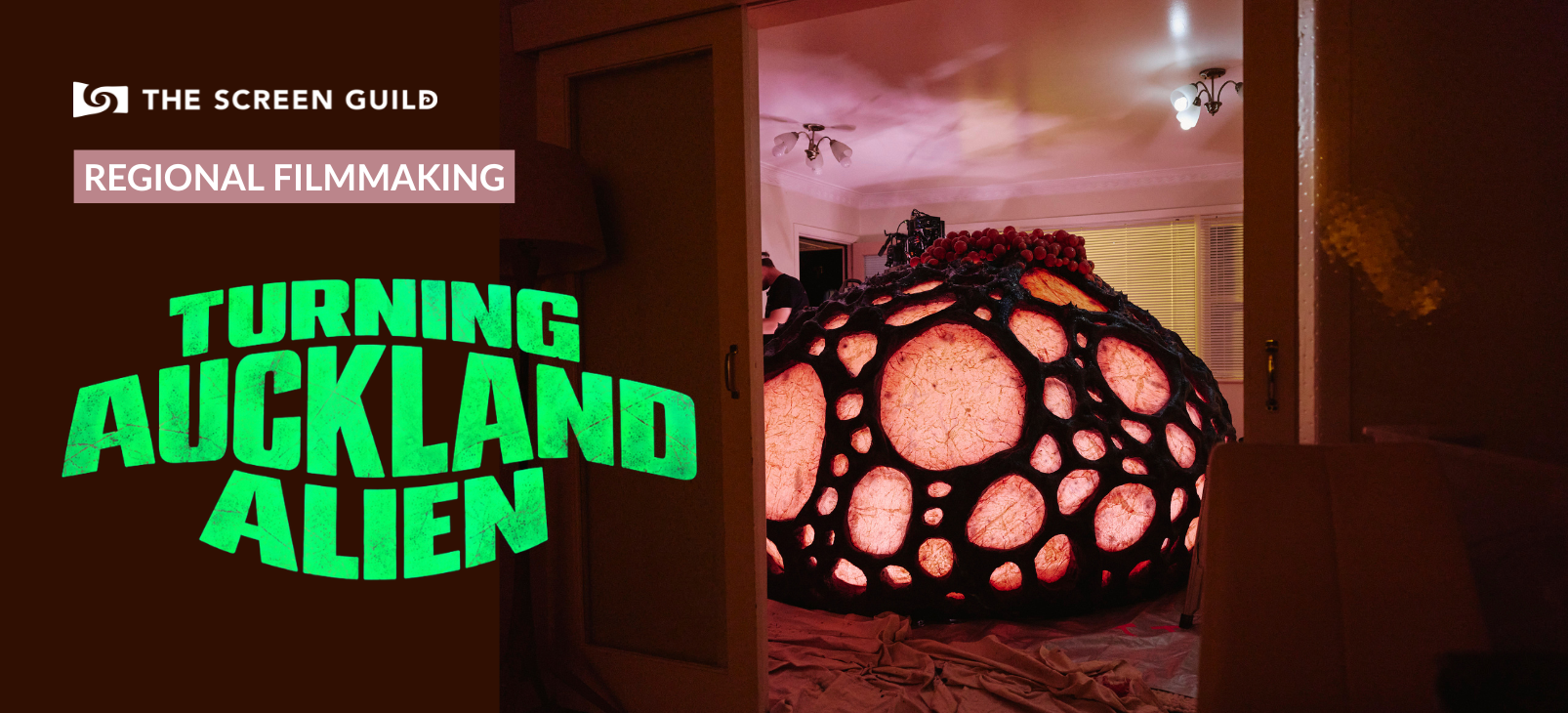
Regional Filmmaking Spotlight: Turning Auckland Alien

Before the slime, prosthetics and increasingly strange alien biology take over, Mum, I’m Alien Pregnant 👽 begins somewhere deliberately ordinary.
THUNDERLIPS’ body-horror comedy follows Mary, whose encounter with the partially alien Boo leaves her facing a rapidly developing and increasingly unusual pregnancy. Across Production Design, Art Direction, Costume, Hair & Makeup and prosthetics, creating that world meant finding different ways to bring its recognisable and increasingly extraordinary elements together.
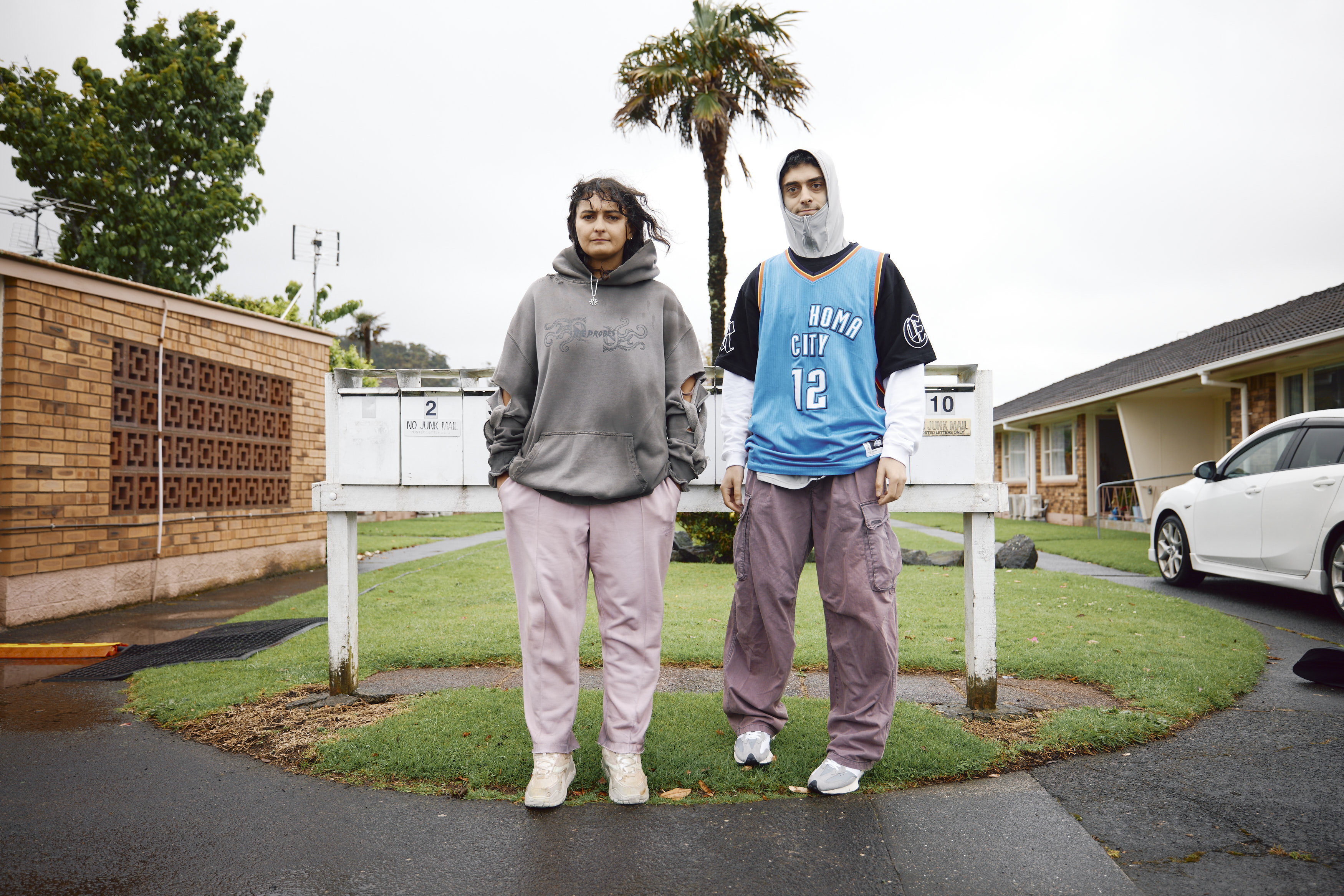
Production Designer Ash Turner began with a fictional mid-sized provincial New Zealand town. Costume, Hair & Makeup Designer Lissy Turner carried elements of the film’s alien visual language into Mary’s costumes. Scale Studios’ Sam Cotter-Dephoff and Joaquin Loyzaga approached the alien biology through the familiar experience of human pregnancy, while Art Director & Screen Guild Member Dion Boothby drew up the film’s set builds and managed the on set art department needs.
For Scale, keeping that connection to something recognisably human was fundamental:
“Pregnancy itself can already feel alien, so it didn’t take much to push that feeling into something fascinating and horrifying.”
Across the departments, that push from familiar to strange happened physically: ordinary Auckland locations were adapted, recognisable forms transformed into alien designs, and practical creatures and effects built to interact with the performers. As Mary’s pregnancy progresses, the world around her has to transform with it without losing the everyday New Zealand reality it started from.
Building Fingerton
For Production Designer Ash Turner, finding the ordinary world beneath the film’s alien chaos began with imagining where it might exist. Fingerton was conceived as a fictional mid-sized provincial New Zealand town, somewhere like Dargaville or Levin, with an everyday, recognisably New Zealand quality and a slightly backwater feel.
The directors and producers also introduced a weekly film club, where the crew watched films relevant to the lighting, narrative or body horror of the feature. The Fly, The Thing, Titane and Under the Skin were among the references, with beer and snacks helping bring the crew together around a shared visual language.
The fictional town itself emerged from those screenings.
“Fingerton came from a crew vote at one of these screenings.”
Ash and Dion had already worked together on the earlier short, Help, I’m Alien Pregnant, where a repurposed Shortland Street television set provided a budget-friendly hospital environment. While the short was largely shaped by that predefined set, the feature offered more scope to develop individual character worlds and make more specific design choices.
Physically creating Fingerton meant deciding what could be found in Auckland, what needed to be built and what the budget would allow. The elevator and bathroom were built with removable walls to accommodate crew and performers, while two flats in Mt Albert became key locations.
Working inside real residential properties brought another challenge: those spaces eventually had to accommodate a large alien nest and considerable quantities of bodily fluids. Building the house as a set wasn’t financially possible, so the production went into the location with a contingency for replacing the carpet.
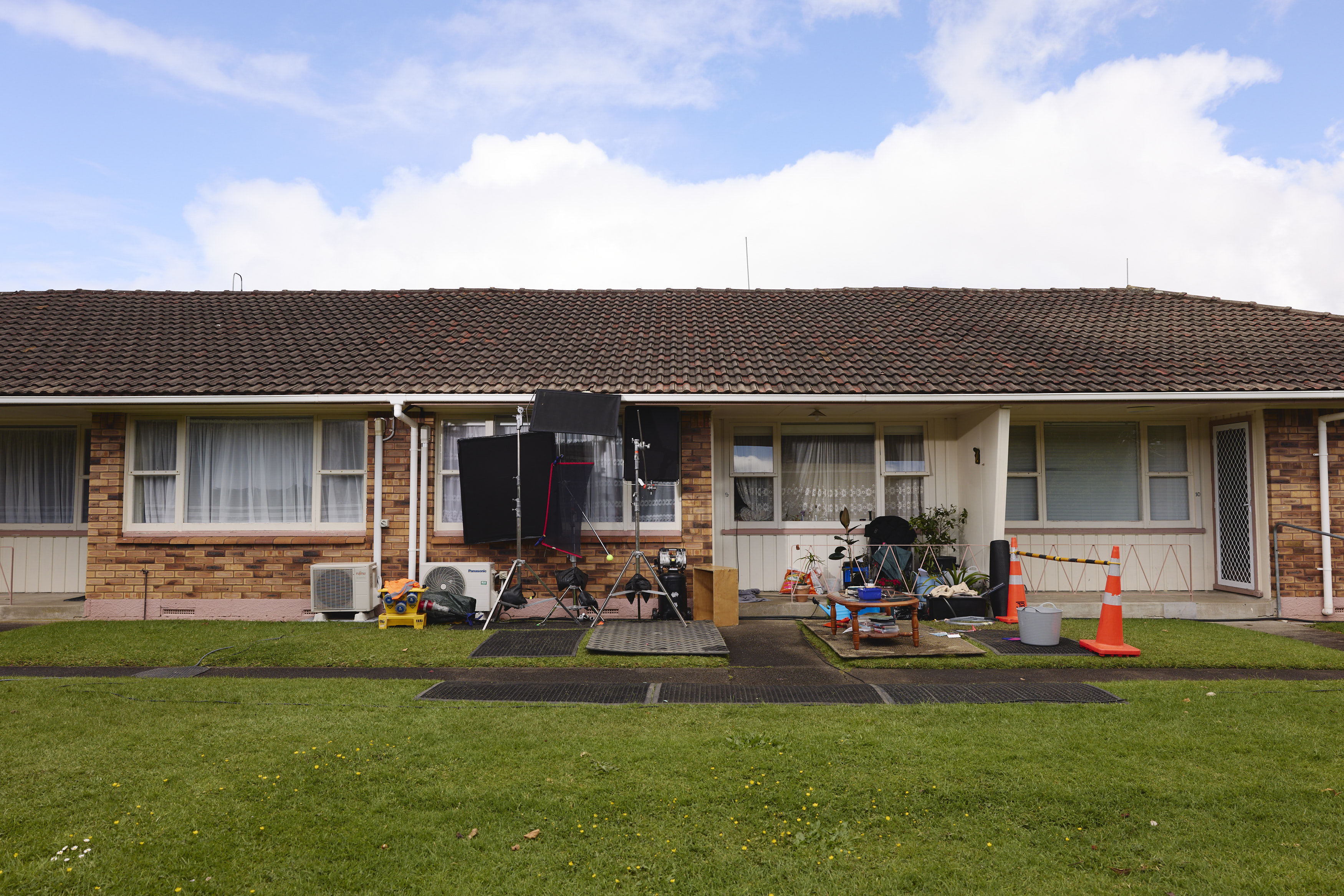
“We couldn’t afford to build the house as a set, so we went with a real location, with a contingency for relaying carpet…. which we had to do by the end.”
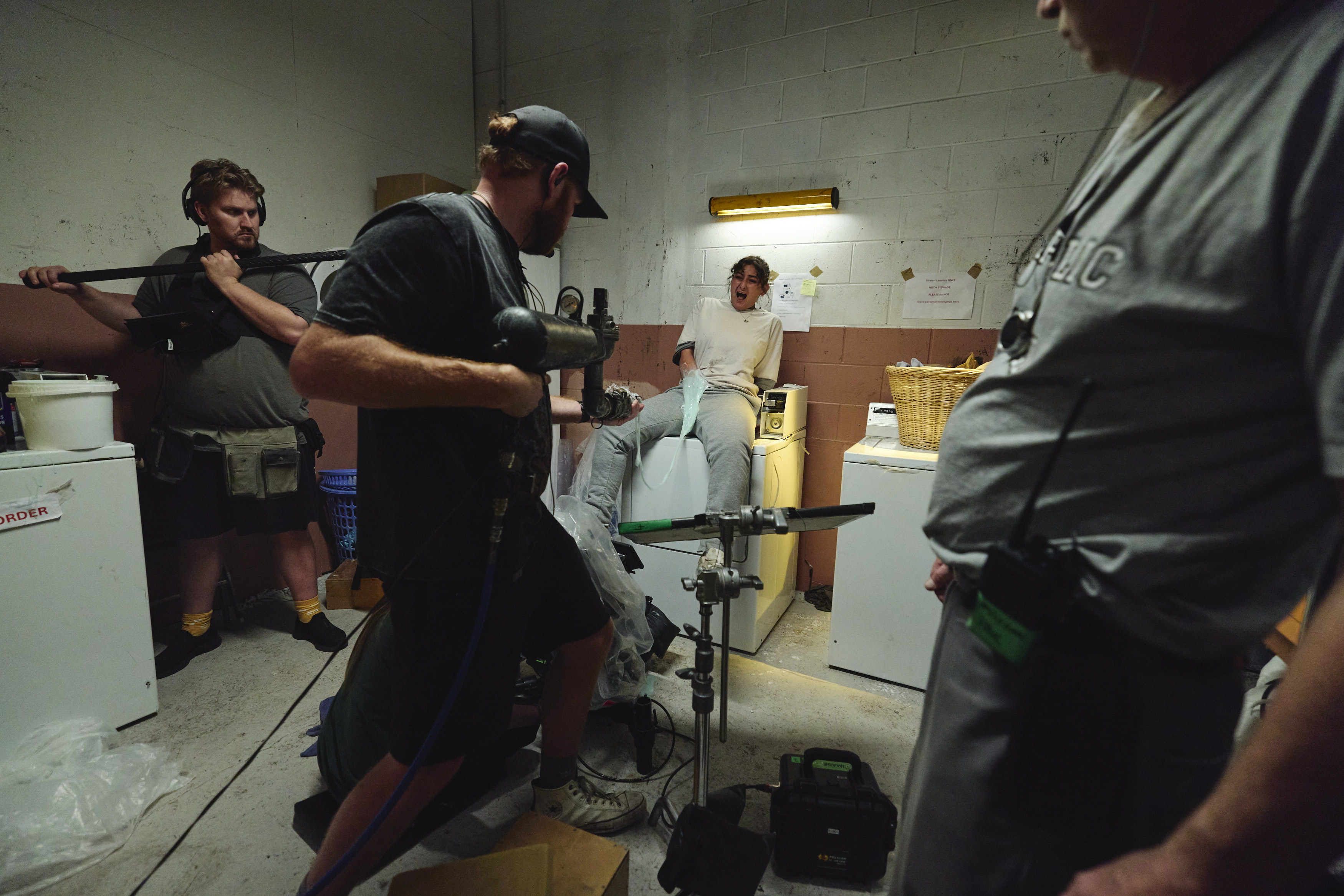
One space couldn’t be made to work within the location. The basement laundry where Mary and Boo’s encounter takes place was too small for the planned effects and the space the production needed, so it became a set build informed by the original location. That gave Ash the opportunity to make it darker, grimier and more run-down than the brighter brick-and-tile normality above.
“It helped us create the tonal shift for Boo and Mary’s encounter.”
Turning the Ordinary Alien
As Fingerton’s familiar world begins to give way to something stranger, the alien elements still needed to feel as though they belonged within it.
For Ash, grounding the film’s sci-fi elements meant starting with things that still felt tangible and recognisable. Slime became one link between the real and alien worlds.
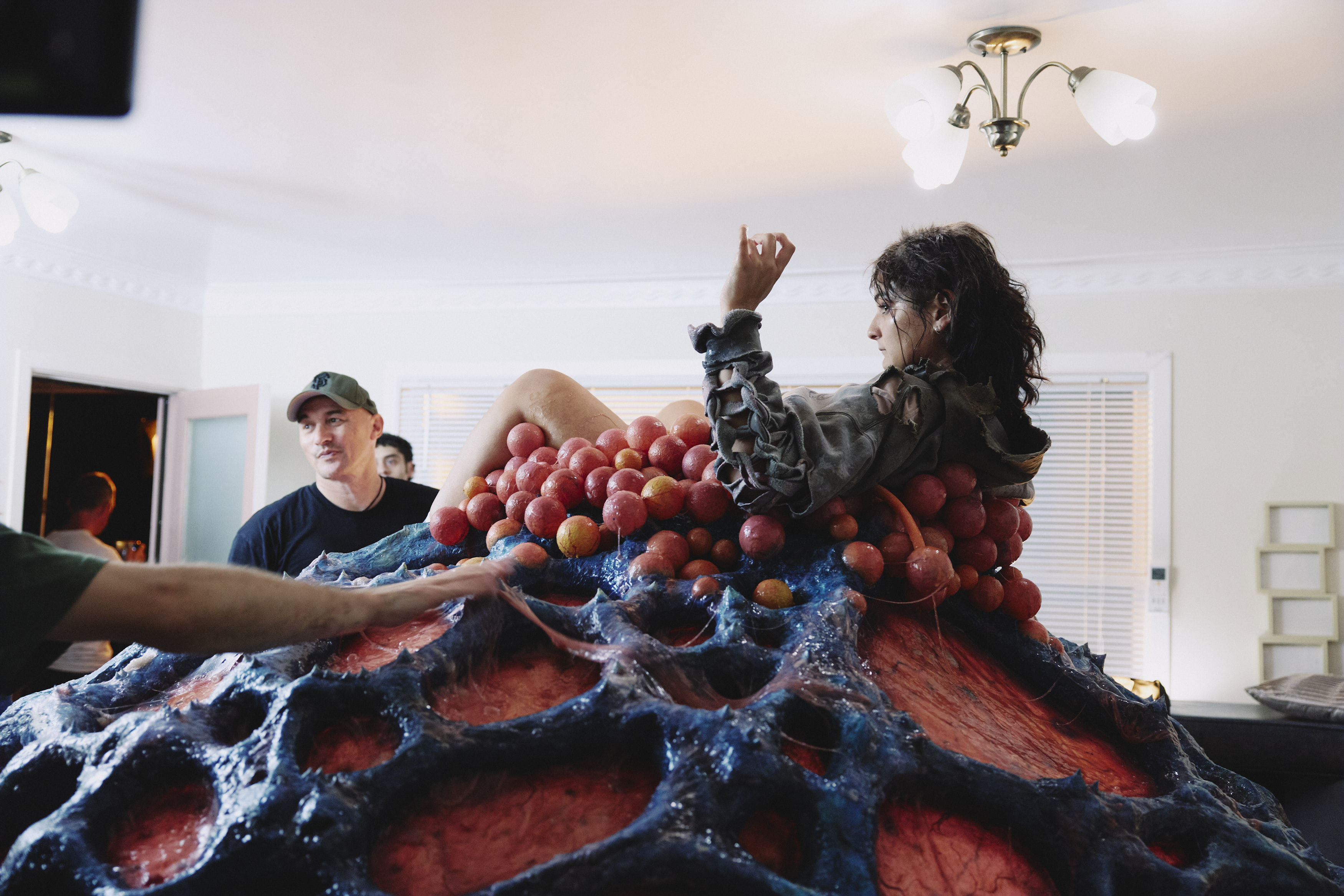
For Mary’s birthing nest, the design drew on fungi, eventually arriving at a basket fungus structure with membrane-like walls.
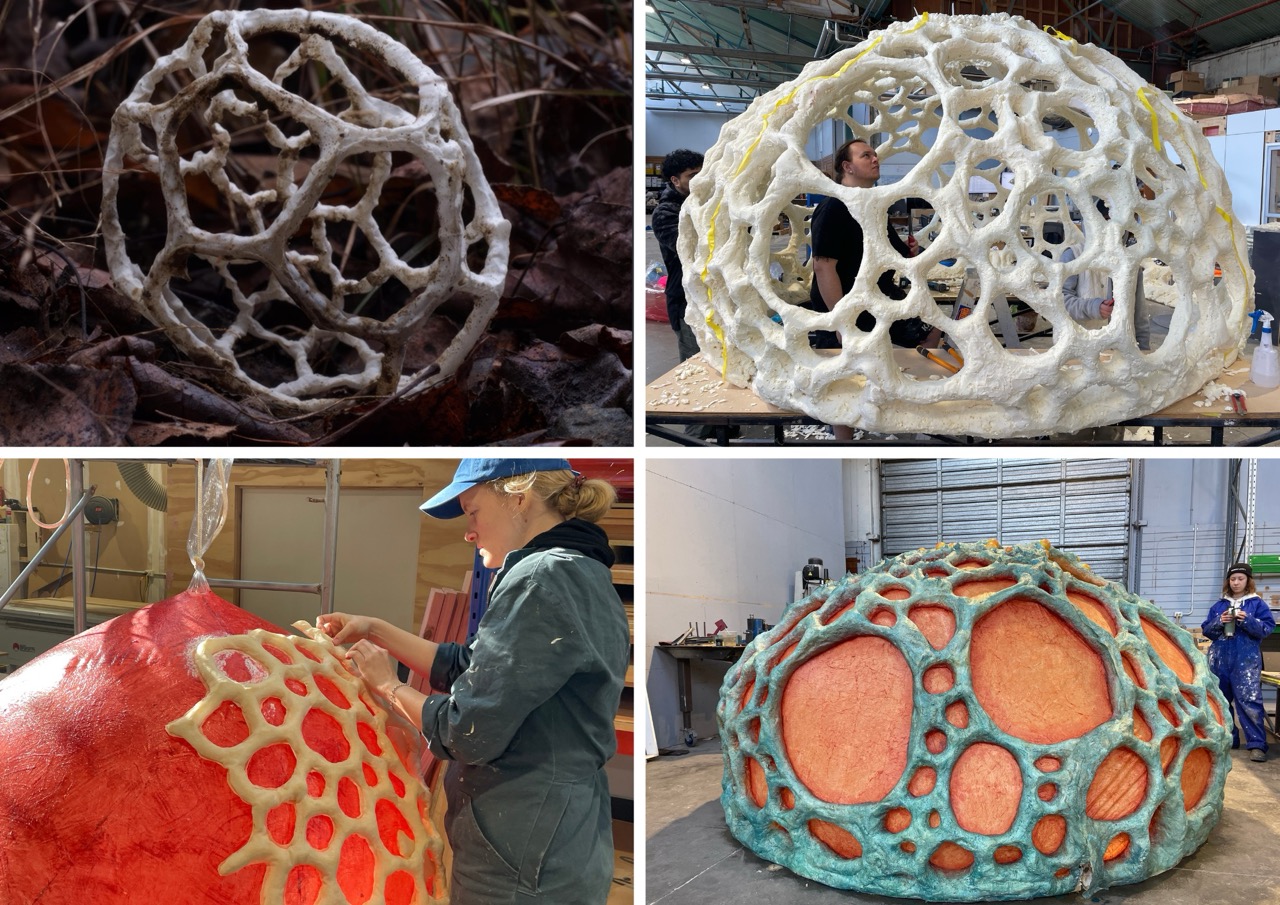
“The vivid and lurid colours exist in the real world, but supersizing them and making them slippery and slimy made it feel immersive and tangible.”
That visual language also found its way into much smaller details. Costume, Hair & Makeup Designer Lissy Turner wove references to octopuses, tentacles and suction cups through Mary’s look.
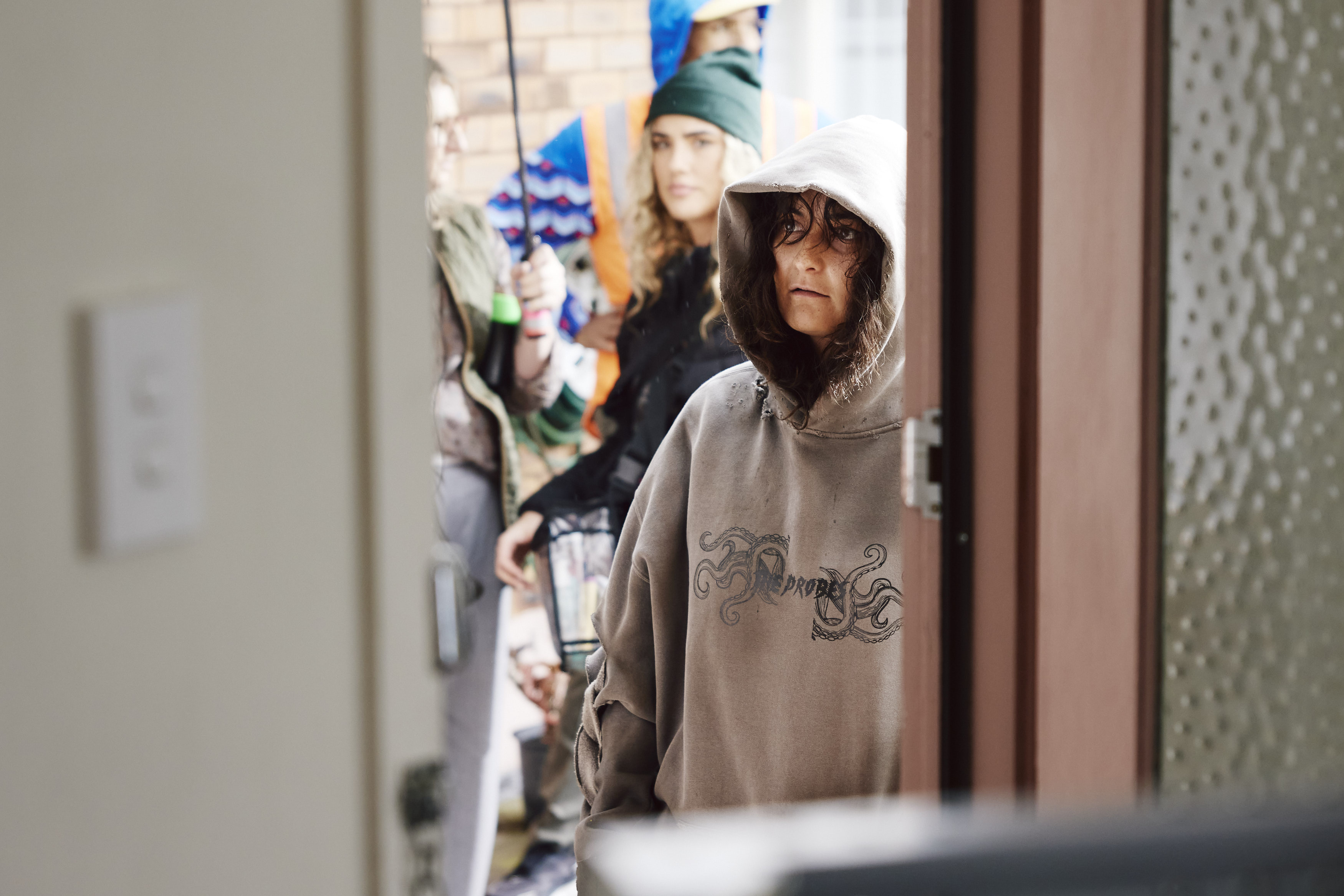
A delicate octopus necklace by New Zealand jewellery designer Nick Von K linked Mary visually to the alien baby, while a sterling-silver ring based on a DNA structure represented her humanity. The same imagery led to a fictional band, The Probes, created through a crew sweepstake for one of Mary’s key costumes.
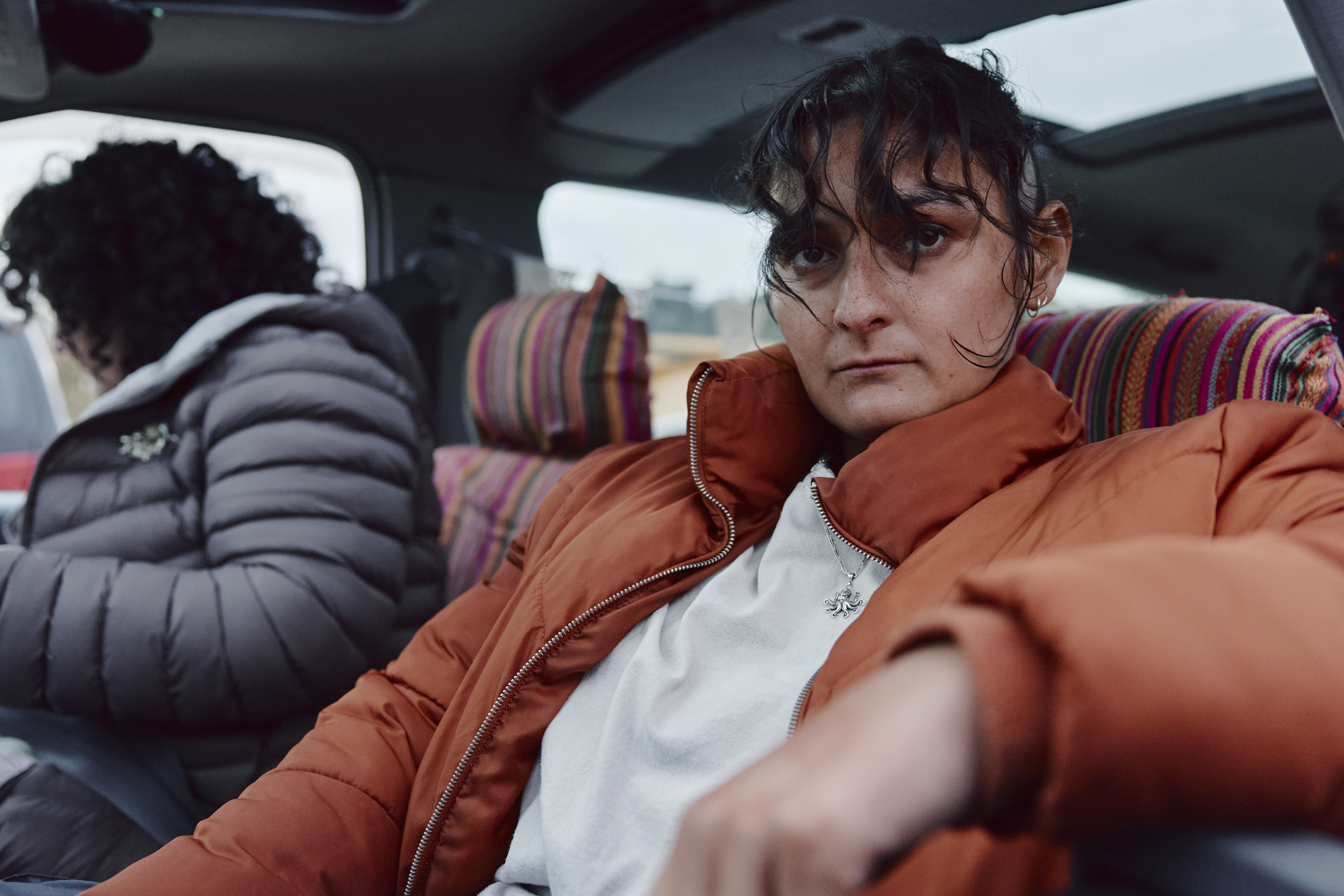
“The hoodie screen print has long tentacles, with artwork inspired by Hokusai’s The Dream of the Fisherman’s Wife - sensual, surreal and faintly alien.”
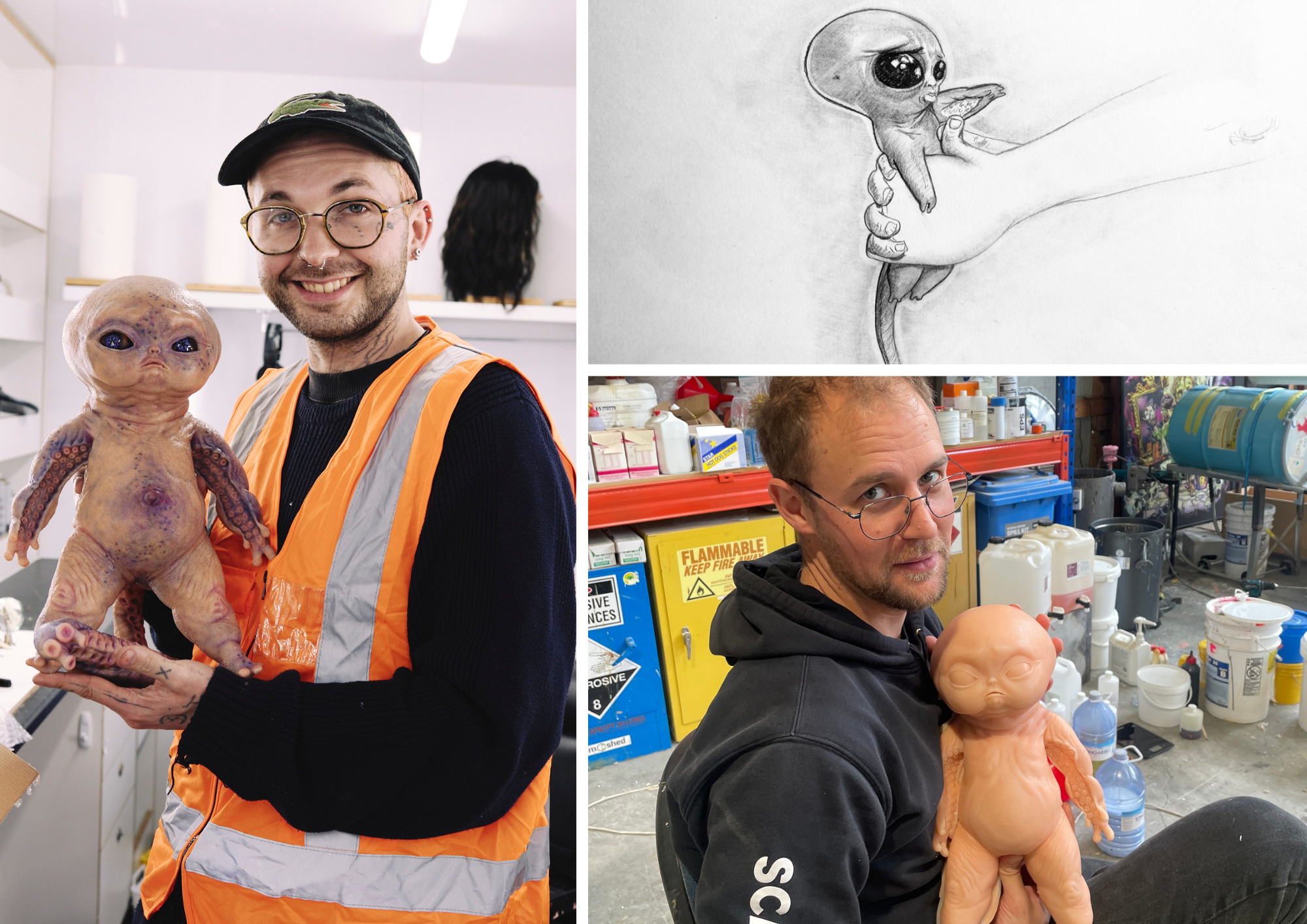
Scale Studios’ Sam Cotter-Dephoff and Joaquin Loyzaga approached the creatures with a similar interest in keeping the unfamiliar connected to recognisable biology. The alien baby was given a fairly human skin tone with blue and purple notes and a familiar number of limbs, apart from its tail.
“We wanted the audience to feel connected to it and protective of it, even while being disturbed by what they were looking at.”
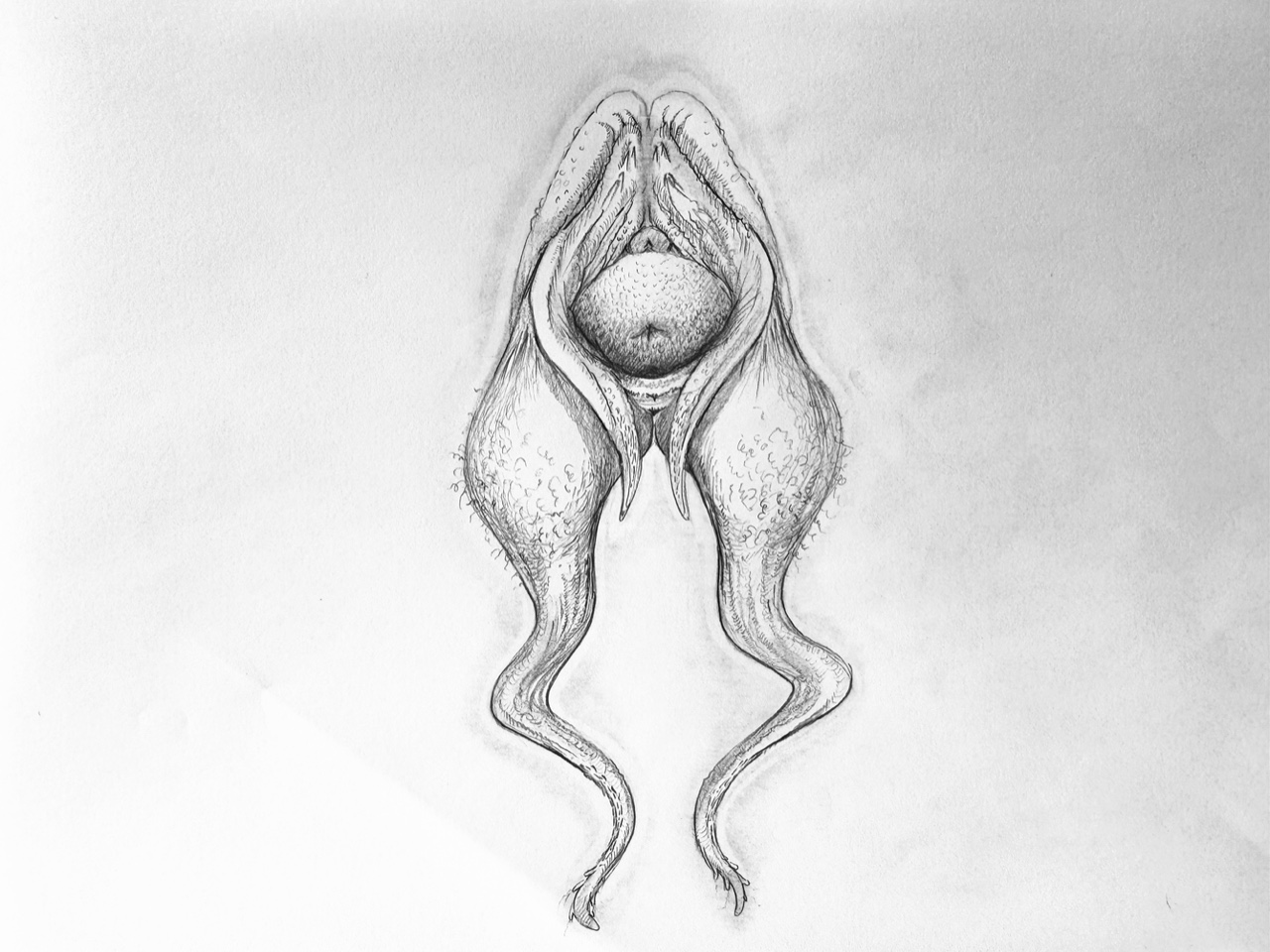
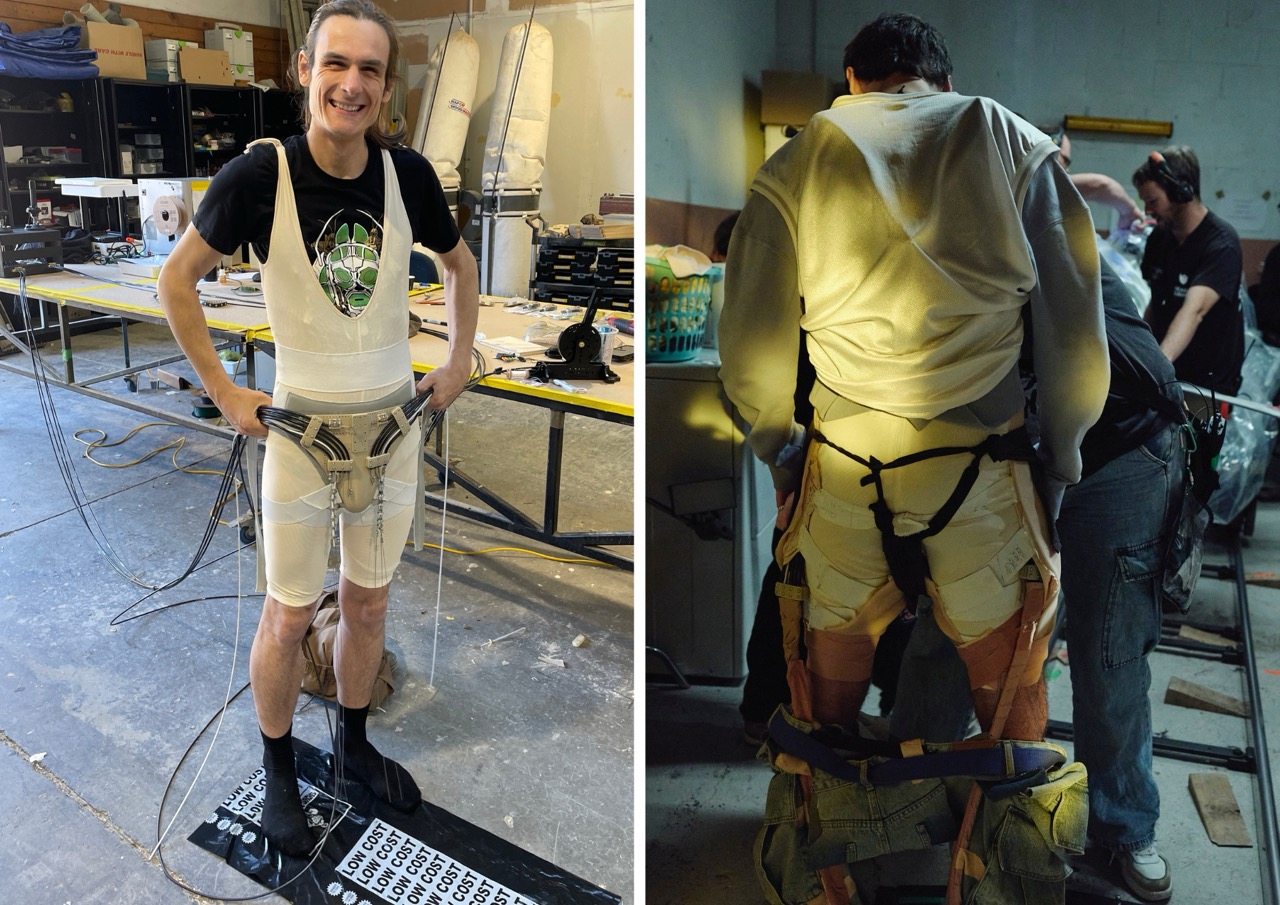
Boo’s alien anatomy required a different balance. One of THUNDERLIPS’ key notes was that his appendage should be “underwhelming”: shocking, but not scary or aggressive. Scale made it small, with petal-like folds that hide and protect it, giving it a delicacy and vulnerability that reflected Boo himself.
Male, female and non-human elements were combined so the anatomy felt simultaneously recognisable and unfamiliar - with its full appearance deliberately held back.
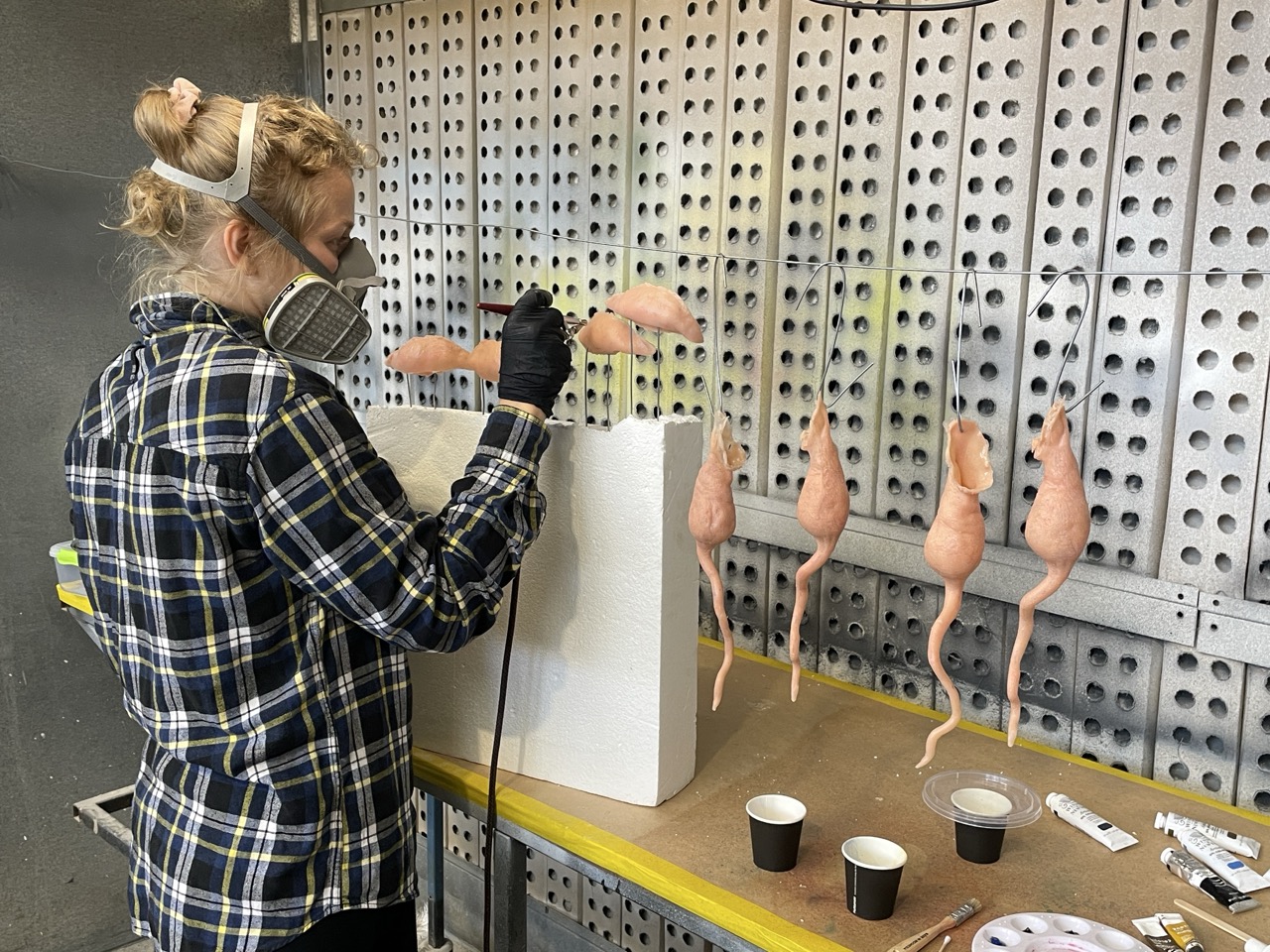
“There’s the reveal and then there’s THE REVEAL.”
The design was intended to do more than simply reveal itself. As Scale recalls:
“We confidently said the alien penis could inflate dramatically. It immediately popped. Sorry THUNDERLIPS!”
Making It Work for Real
Designing the alien world was only part of the challenge. Much of it had to physically move, expand, survive stunts and resets, interact with performers, and do it repeatedly in front of the camera.
As Mary’s transformation progressed, Lissy worked with Hannah Rose, Scale Studios and on-set prosthetics maker McGregor Allen to map her physical degradation alongside her psychological breakdown, stage by stage. Her main costume had to accommodate stunts, prosthetics, practical effects and concealed underlayers. Multiple performers and resets meant repeat costumes for the four leads, stunt doubles and driving doubles.
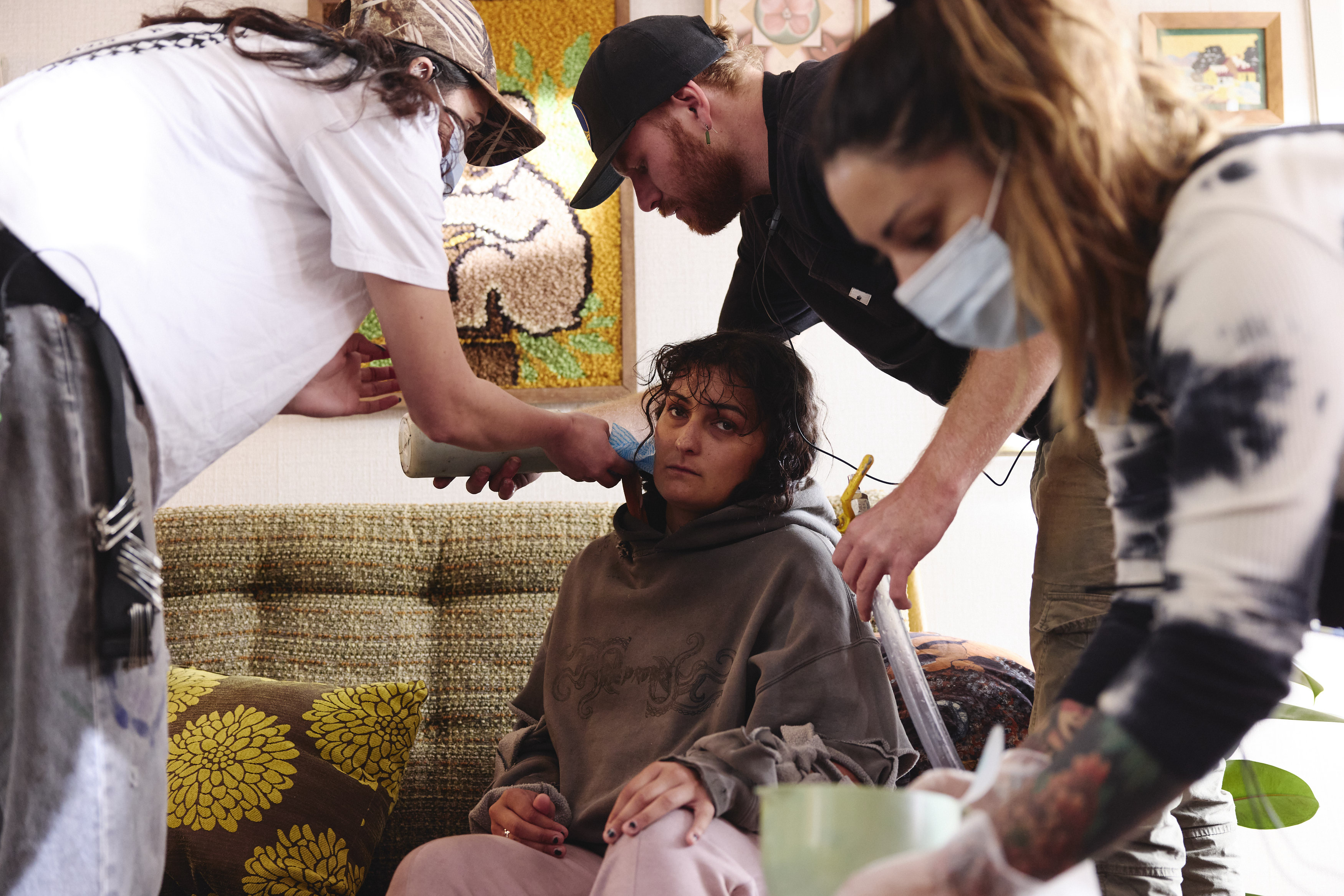
“The Costume & these Elements are a dance & REPEATS is the name of the game! All Four of our leads had repeat costumes / stunt dubs / Driving dubes. REPEATS are king in this type of film.”
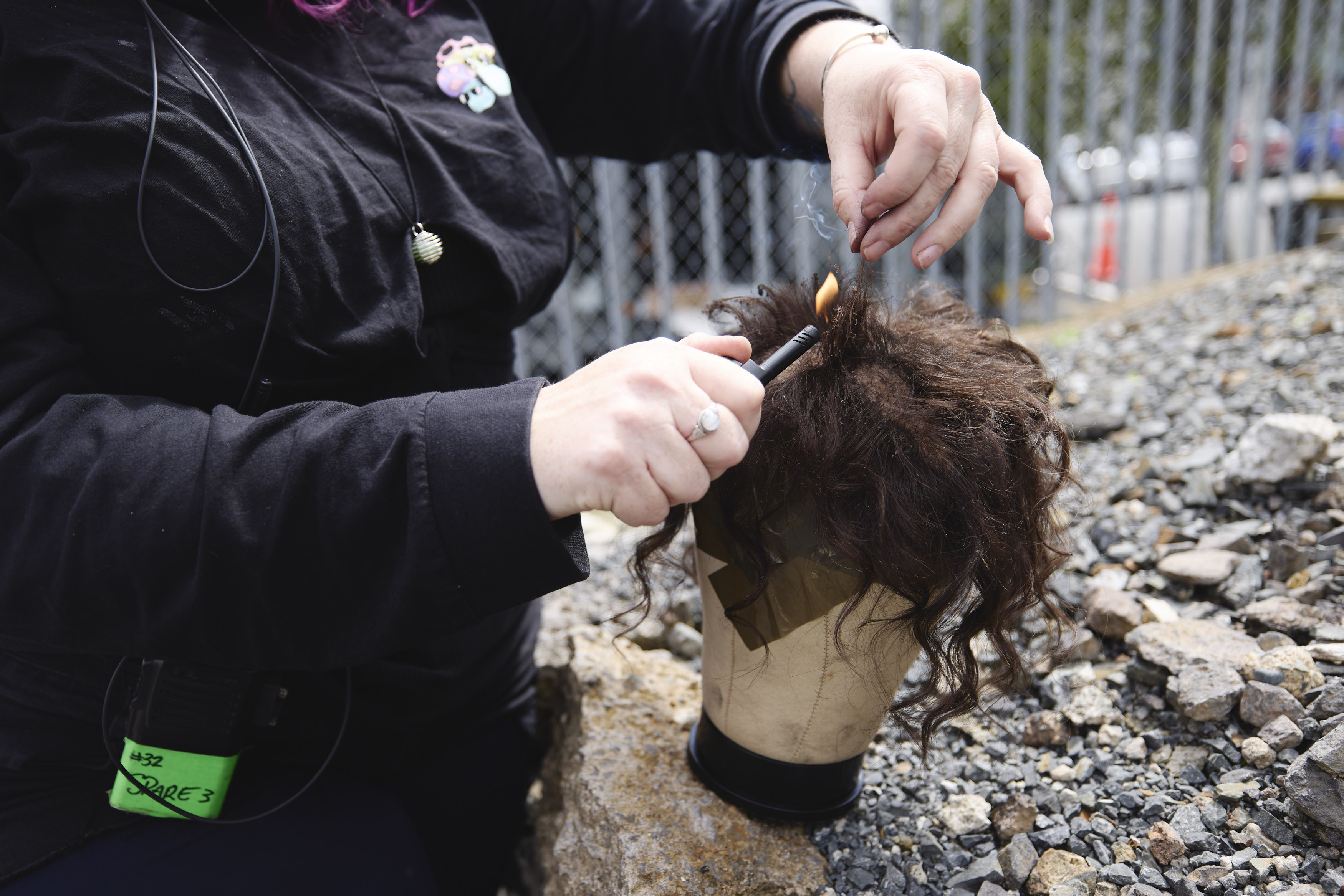
One major burning sequence required a bespoke wig for both the lead and stunt double. The wig contained hair donated by the producer, members of the department and Lissy herself.
For Scale Studios, the practical requirements of an effect had to be considered from the beginning.
“Practical design starts with the required action.”
Mary’s mucus plug, for example, had to progress from something small into the giant birthing chamber, requiring three different versions. The growing version presented a particular challenge: Mary needed to be visibly sitting on it while every element expanded on camera. Scale eventually used a moon ball covered with latex patterning that could stretch as it inflated - the result of considerable R&D.
The alien baby required a different kind of engineering. Rather than relying on a single puppet, Scale created multiple builds for different movements. The tail was operated by cables running out the front, while the arms and legs used rods and cables, and a hand inserted through the body controlled the head. Its small head and facial features made hand operation particularly difficult.
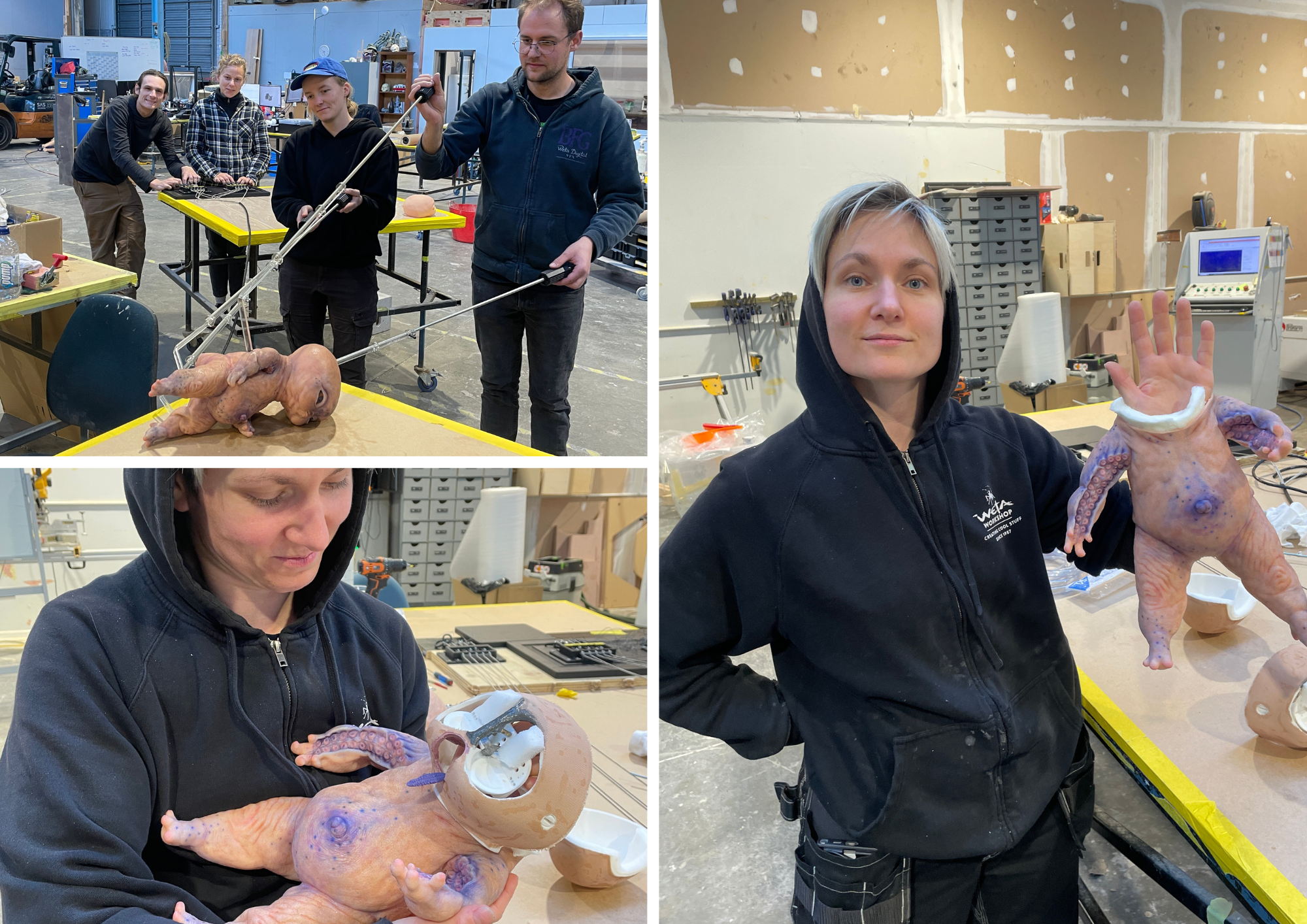
Digital work could then be used selectively to add extra movement without making the physical creation feel artificial.
Once those creations reached the set, their operation became another part of the collaboration. Scale credits McGregor Allen, their on-set technician, with operating the practical creations in front of camera.
Not everything, however, could be solved before the shoot. As Lissy explains:
“Some prosthetic elements were created or adapted in situ, and there was very little time to rehearse puppetry or test mechanisms, so on-set problem-solving was really important.”
For Lissy, that commitment to creating so much of the film physically is part of the appeal of practical effects.
“Practical effects are a genuine passion of mine. They can sometimes feel like a lost art in a world where audiences are so used to digital trickery, but I think there’s a new appreciation for the craftsmanship involved and the absolute banana scenarios that go into making something like a spew rig or a squirting boob work.”
More Slime!
As the story progressed, the practical effects became increasingly messy. The Art Department’s work shifted from dressing the Mt Albert flats to managing an increasingly sticky environment.
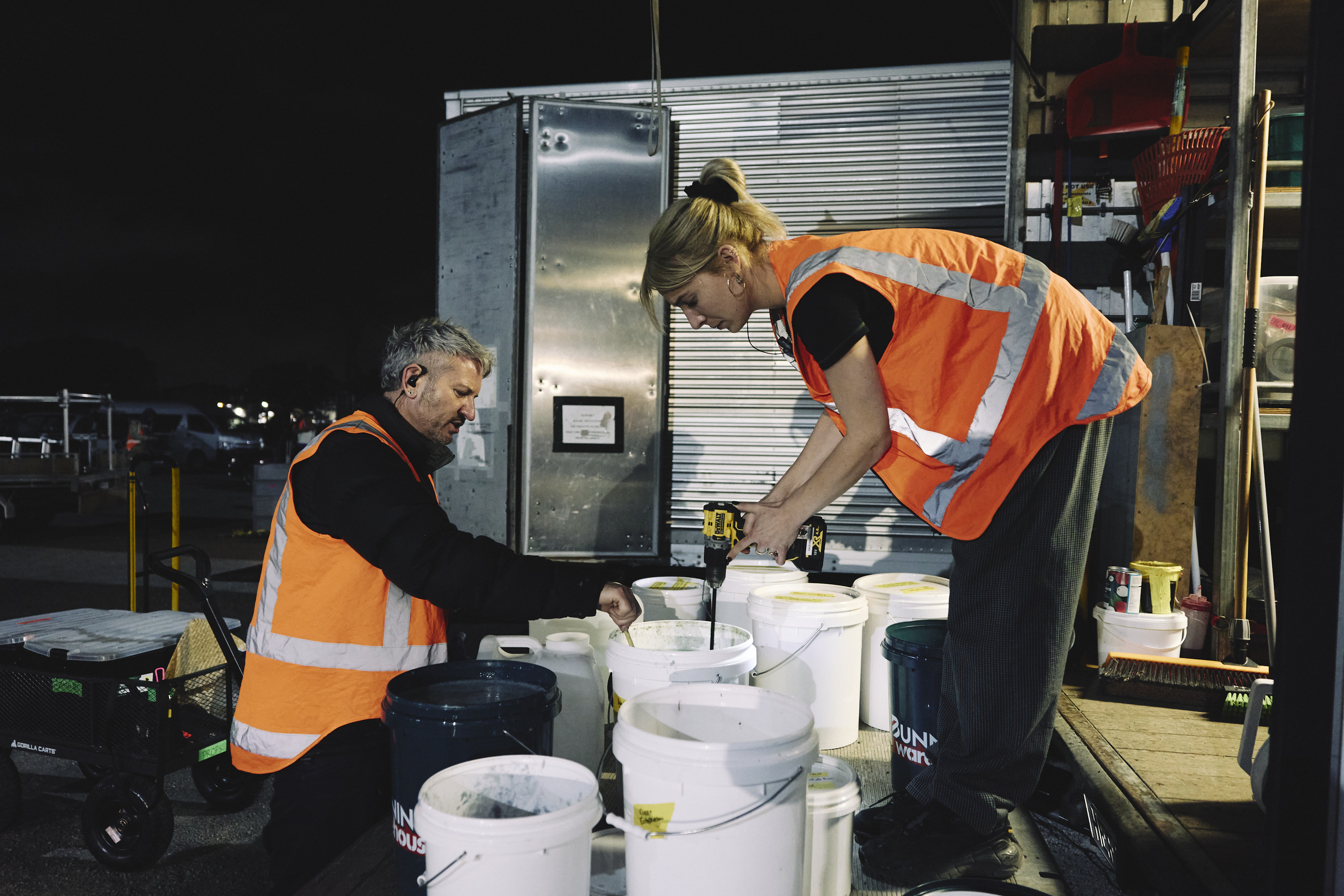
Fluid rigs and different consistencies were tested ahead of shooting, but much of the mess still had to happen inside the locations. Litres of alien vomit were pumped through pipes hidden beneath a sofa, while the birthing nest had to remain suitably goopy and glistening between takes.
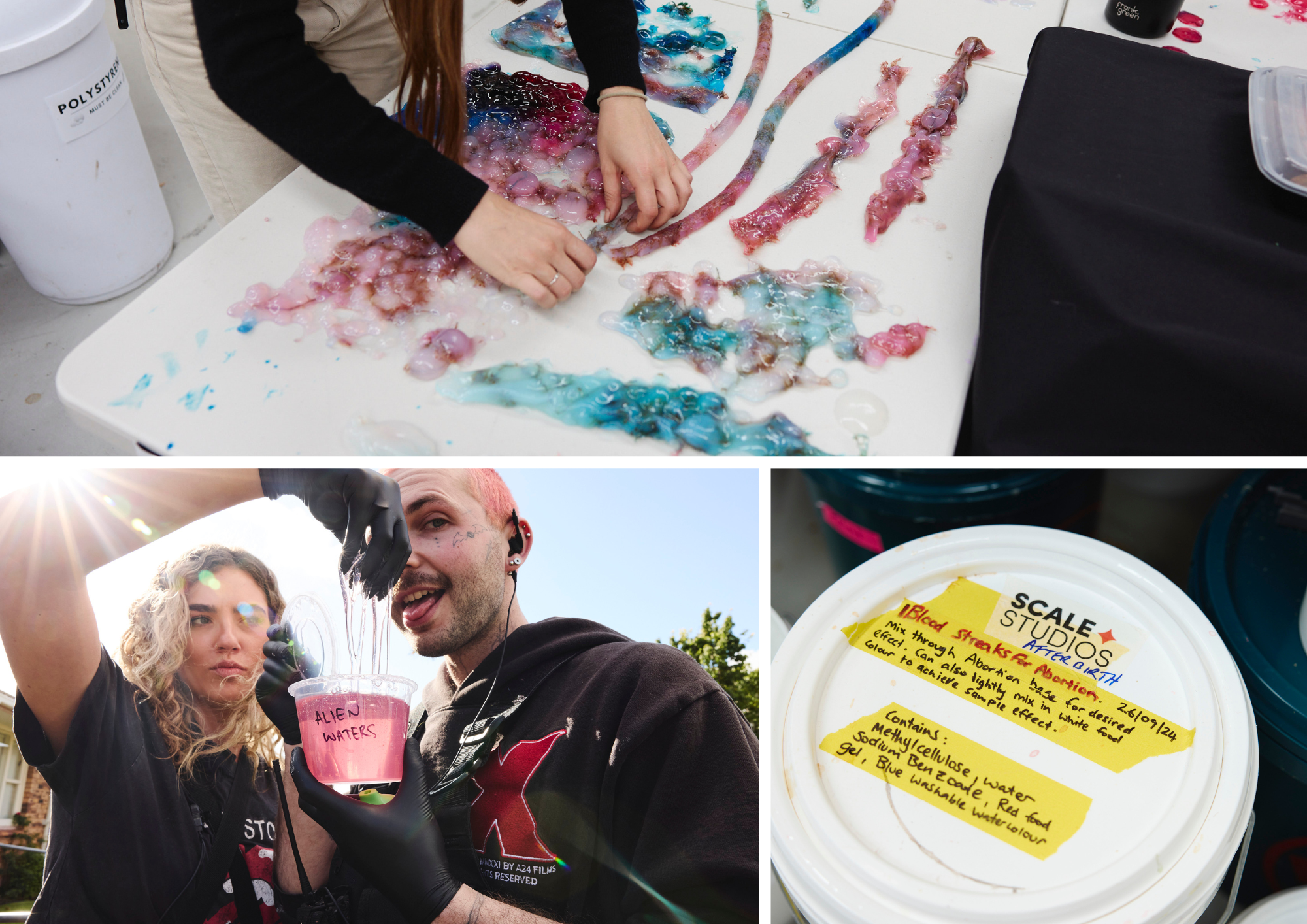
The production even had a dedicated slime room, and Dion and Dave Rodewyk would regularly finish the day covered in goop.
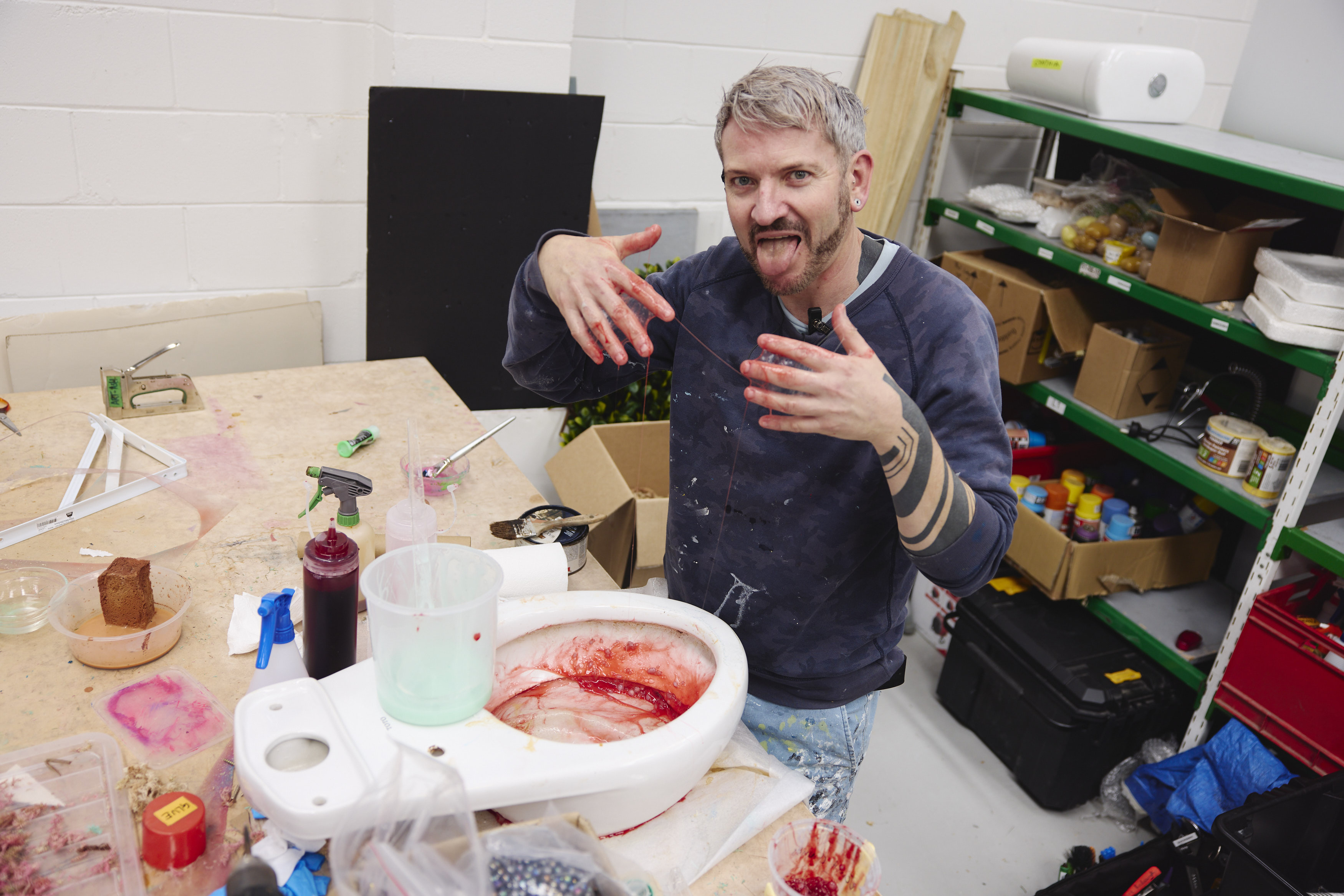
“Our job was to make a total mess… and then clean it up! Then repeat.”
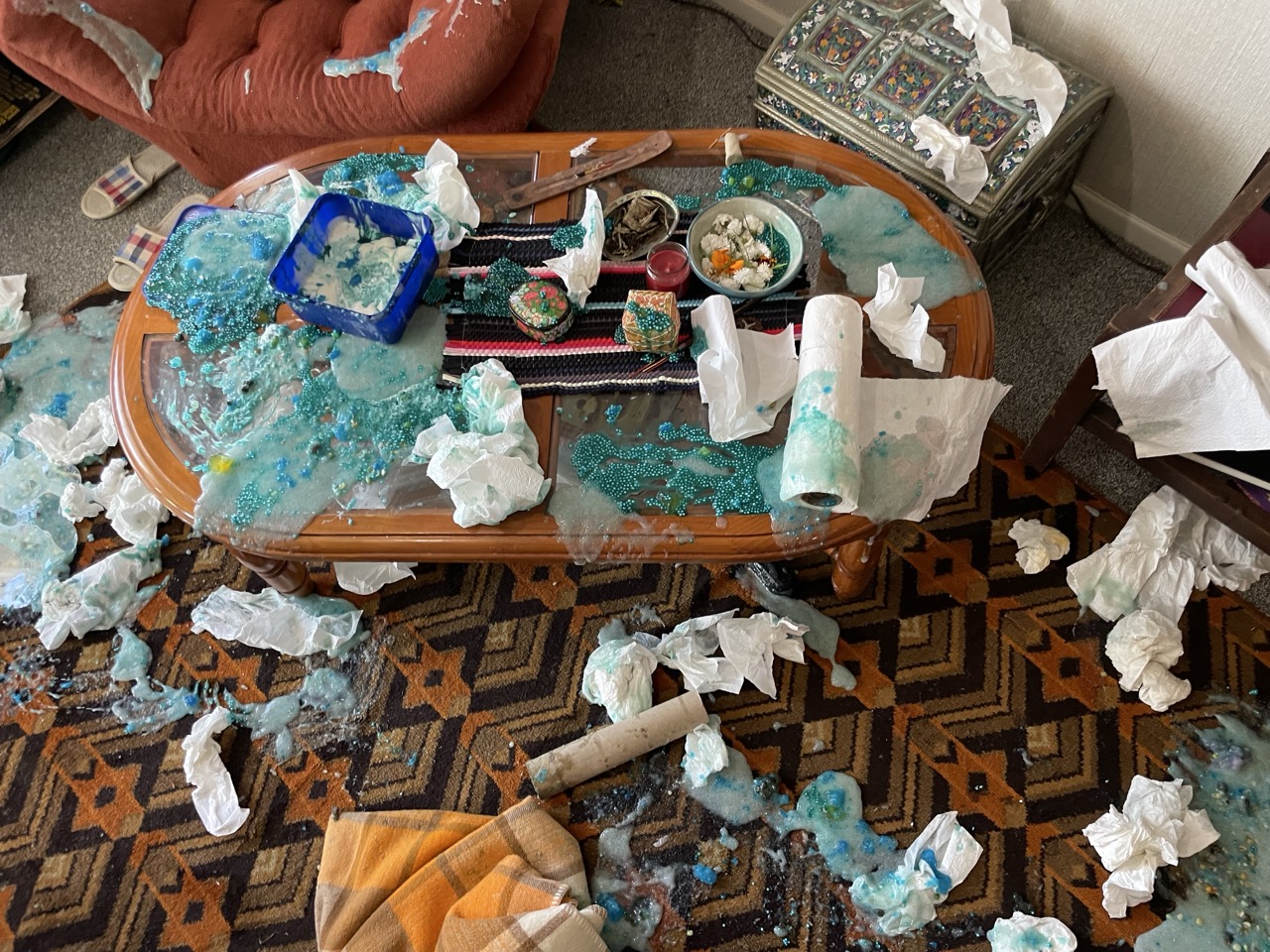
The fluids weren’t simply different colours of the same slime. Co-director Jordan Mark Windsor described the brief as “hyper-productive alien biology” grounded in recognisable human biology, but exaggerated enough to push the film into body horror without becoming completely detached from something an audience might recognise.
Most were supplied by Scale Studios, with the Art Department testing how each would behave on set. Some needed to travel through tube rigs; others had to remain visibly globby and slow.
“We opened the buckets and started playing (I mean researching) with them.”
As the nest deteriorated, the approach became increasingly improvised. By its decaying stage, Dion says they were essentially painting the living-room floor with whatever alien material remained.
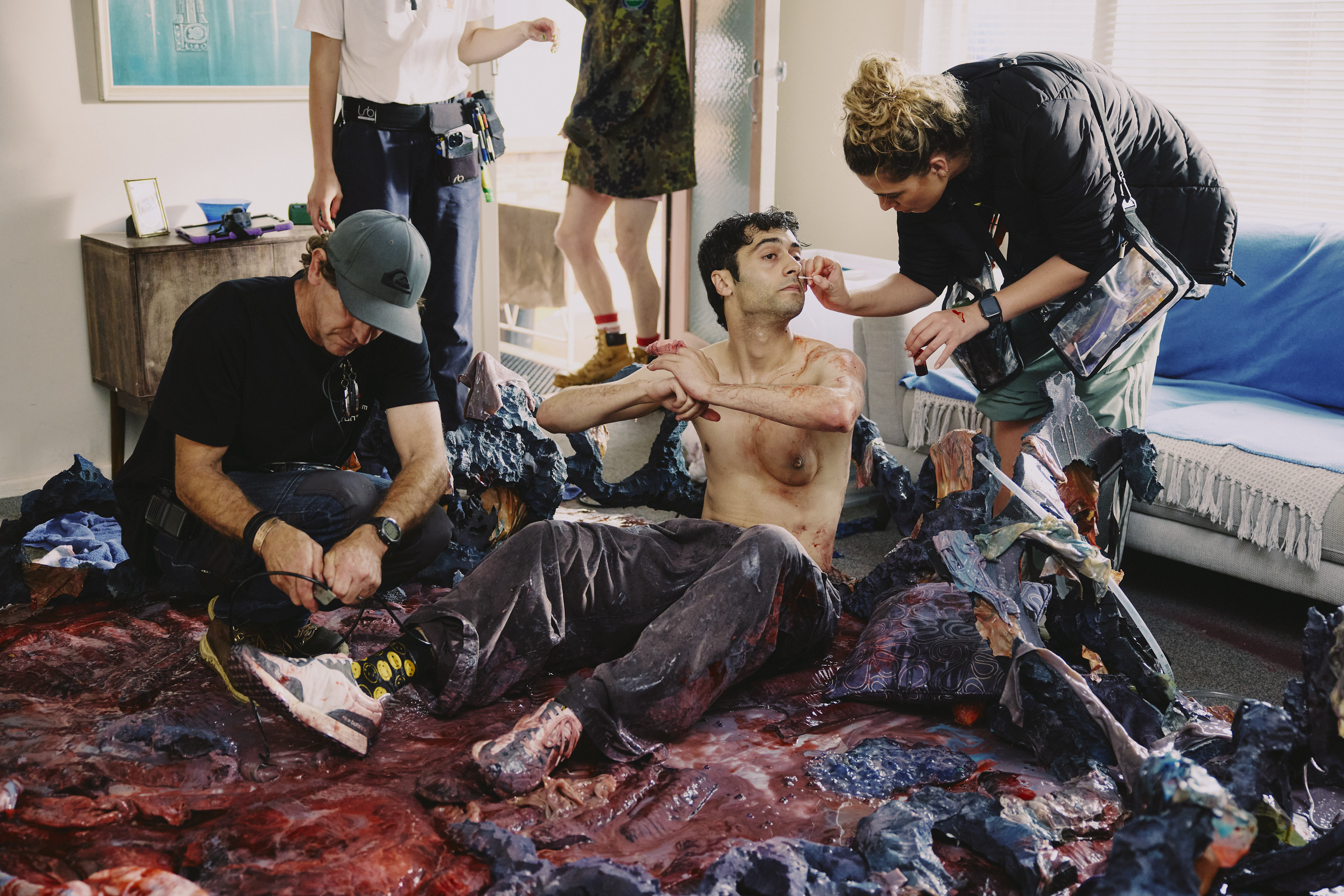
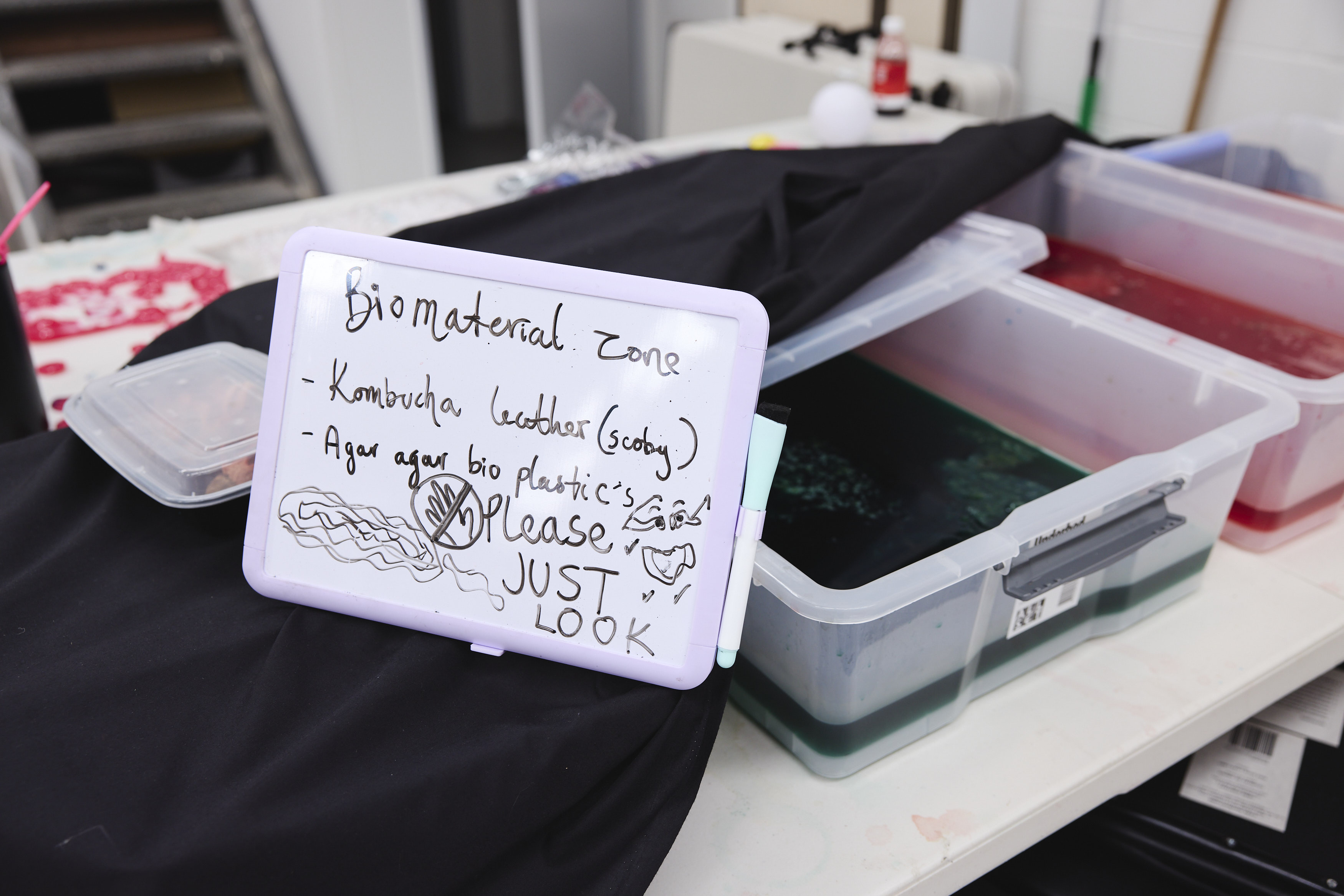
Some of the stranger ingredients were grown rather than mixed. Art Department member Hannah-Lee Turner cultivated kombucha SCOBYs, which looked great, were compostable - and made the Art Department office particularly fragrant.
And the quantities quickly added up.
The slime breakdown
Alien semen - 10L
Alien breastmilk - 40L
Alien vomit - 50L
Reshoots vomit - 60L
Alien miscarriage - 20L
Alien Waters - 40L
Afterbirth - 10L
Mucus plug - 6L
Birthing nest slime - approximately 100L
Total: approximately 336 litres
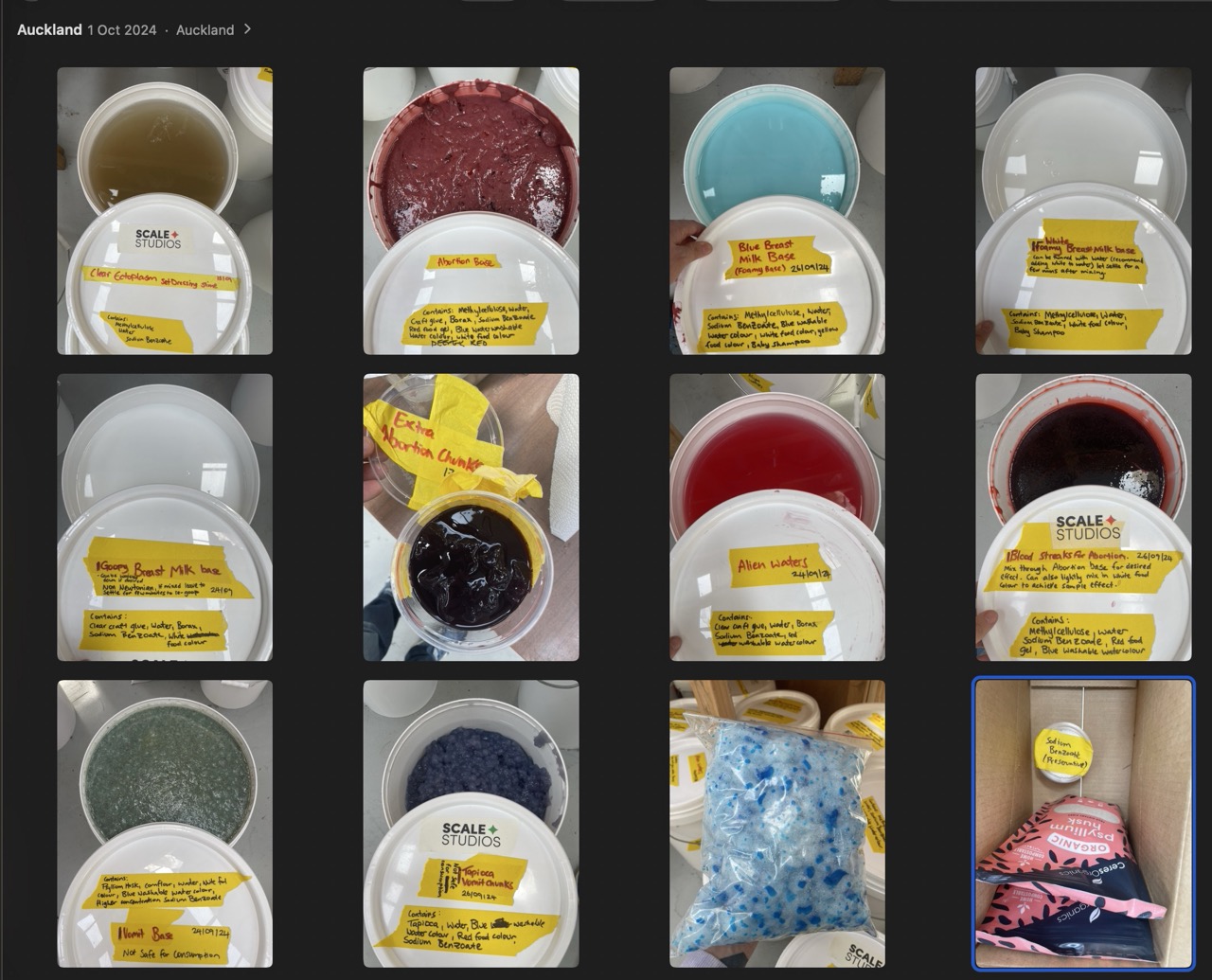
But making the fluids work through rigs and look convincing on camera was only part of the challenge. They also had to be safe for the performers spending long periods covered in them.
Lissy’s department worked with Scale Studios to favour biodegradable and organically based ingredients wherever possible, particularly to protect lead actor Hannah Lynch’s skin through repeated exposure to slime, ectoplasm and alien fluids.
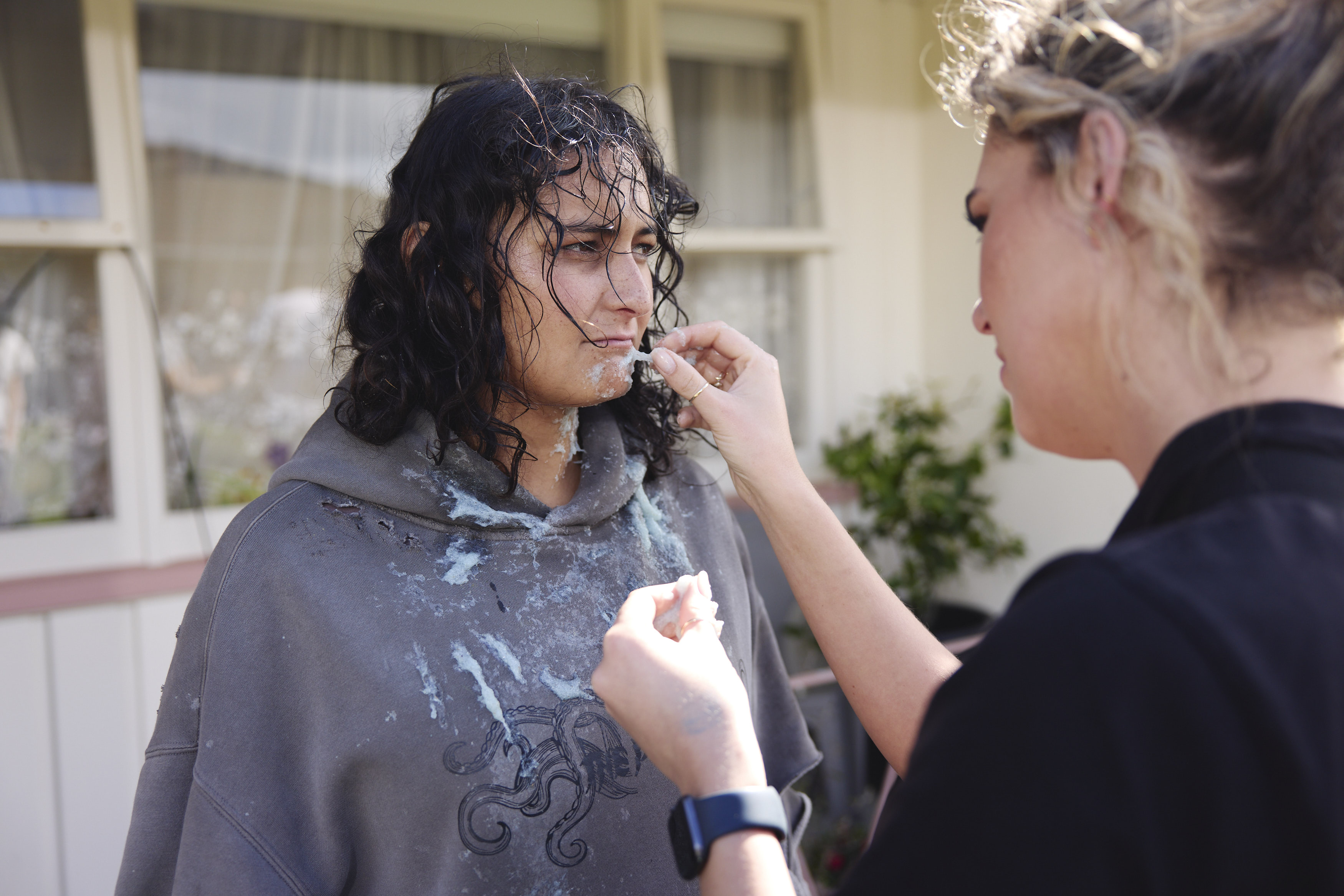
Those organic materials occasionally became a little more alien than intended.
“In the warm weather one of the alien substances started growing out of its storage container and attempted to escape from the truck.”
And whenever it seemed there might already be enough of it, THUNDERLIPS had a familiar response:
“More slime!”
What emerged from that process was a world built across departments. Production Design and Art Direction transformed Auckland locations and selective set builds into Fingerton; Costume, Hair & Makeup carried its increasingly alien visual language onto the performers; while Scale Studios gave its creatures and biology physical form.
Each department approached a different part of the transformation, but together they took the film from the deliberately ordinary New Zealand world it begins into somewhere altogether stranger.
Photo Credits:
Scale Studios
Dion Boothby
BTS Photos by Frances Carter
Related articles