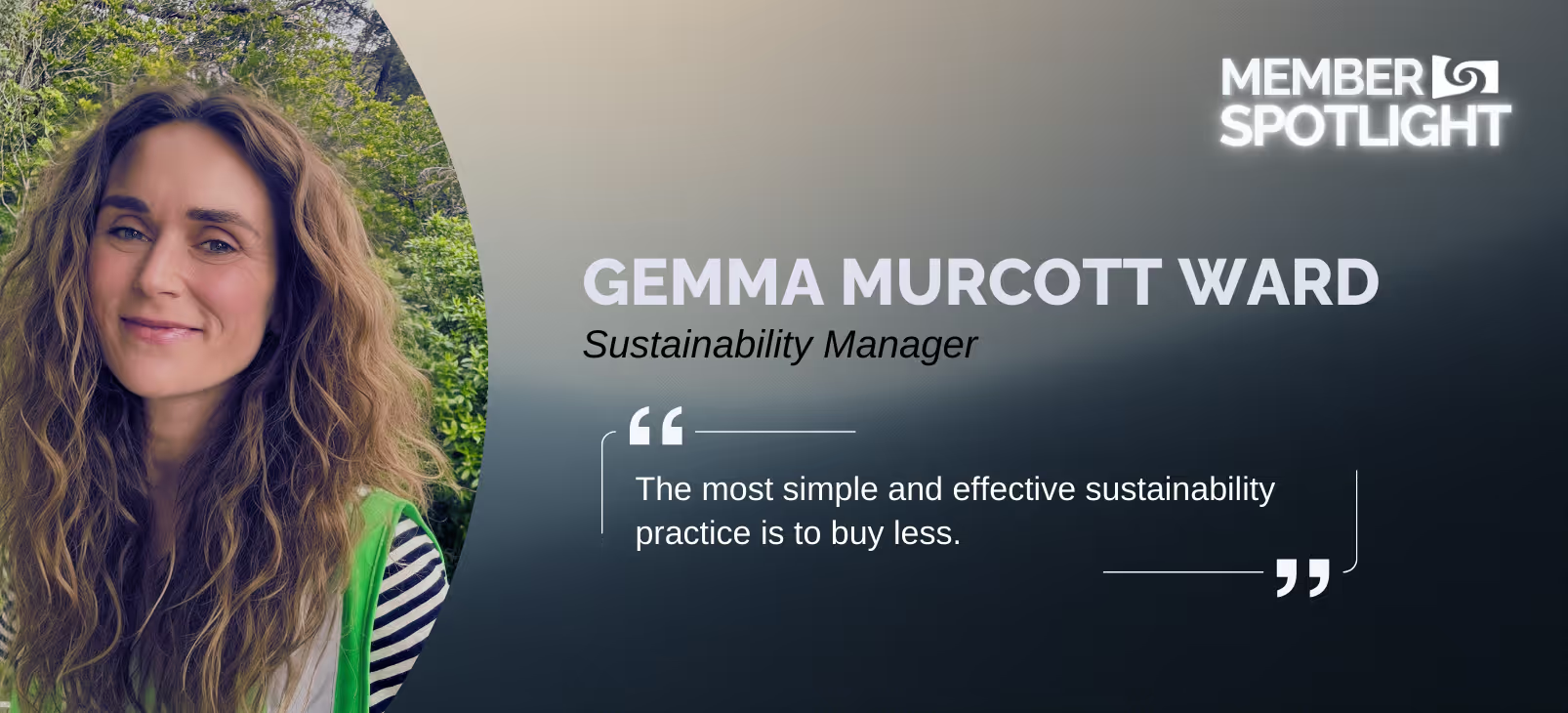
Member Spotlight: Gemma Murcott Ward
From documentary producer to Sustainability Manager, Gemma Murcott Ward talks about the growing role of sustainability in screen production.
Published on:
December 15, 2025

What first drew you into sustainability work, and how did you find your way into the screen industry?
I had a hugely fulfilling career in local documentary and factual TV as a researcher and later as a producer but industry changes made it increasingly hard to sustain this mahi. I hated the idea that I might have to look for a “normal” job. A friend suggested getting into corporate sustainability, which at least aligned with my values, but that sparked a question: was there similar work within the screen sector? That led me to the then-emerging Greenlit organisation and connections with a few sustainability managers. I discovered a burgeoning field that aligned with my passions and allowed me to use my skills in a meaningful way.
For those who haven’t met you on set yet, how would you describe your role as a Sustainability Manager in a couple of sentences?
Sustainability managers are a core part of the screen sector, charged with making the industry more sustainable and in line with outcomes for te taiao we expect from Aotearoa’s most celebrated industries. Just as the health and safety department ensures everyone gets home safely at the end of the day, we work with producers, HODs and crew to minimise our production's impact on the environment, ensuring sustainable futures for the next generation.
Could you walk us through what a “typical day” looks like for you on a production?
Each production’s needs are different, but on a large production I might monitor waste minimisation and diversion efforts, look for ways to shrink our environmental footprint and chat with crew about any trials we’ve got underway. I’Il also gather data for the carbon emissions calculator, share written updates and research new technologies, circular solutions, and bespoke solutions for the production. I also work with smaller companies and agencies tailoring my support to suit their scale and goals.
Your work sits at the intersection of creativity, logistics, and environmental stewardship. What part of the job energises you the most?
The creativity in the screen sector is truly incredible. From a prop maker using a material in a new way to create a perfect texture, to producers manipulating schedules and budgets to get the most out of the available time and money, creativity really is our superpower and it's no different in the sustainability department. Finding creative ways to minimise our impact on the environment and communicate sustainability really floats my boat.
Sustainability can sometimes feel overwhelming for busy crews. What are the small, practical changes you see make the biggest difference on set?
The most simple and effective sustainability practice is to buy less. What would happen if the lighting team were given a certain number of corflute sheets that had to last them for the whole production? What if unit had good quality wooden brush and shovels that would last not only this production, but for years and years? What if facilities rent that piece of equipment rather than buy the cheapest one they can find? Also, involve your sustainability manager! We’re always happy to cast a sustainability lens over decisions and this can drive costs down too. Hiring local crews is better for the environment and costs less (not to mention being good for industry growth). Donating fabric scraps to local kindies is free (and is usually met by squeals of delight!)
Is there a particular sustainability you’re proud of - where you saw real changes, measurable impact, or a shift in mindset? What happened?
I love being able to report back on measurable impacts. A couple of facts I was able to share on a recent production were, “by switching suppliers to a dairy company that collects and re-fills their milk bottles we’ve saved enough plastic milk bottles to span the Cook Strait” and “by bringing our own coffee cups and water bottles we’ve saved an estimated 50kg of single use coffee cups from being thrown out every week.” I’m proud of these achievements but I’m most proud when I hear crew have taken those learnings on to future productions.
Greenlit is grounded in te ao Māori principles like Raupī, Raupā, Rauora. How do these values influence the way you approach your work?
The screen industry moves so fast that it’s easy to overlook the environment, but I’m driven by the belief that we’re all kaitiaki, responsible for caring for and restoring our world for future generations. Sustainability isn’t isolated, it fosters connection and whanaungatanga. Carpooling, sharing resources between departments, and partnering with local environmental trusts or food banks all create opportunities to connect.
What’s the most common misconception about sustainability in film, and how do you usually tackle it?
There’s murmurings (quiet and loud) that sustainability is just a box ticking exercise. In time, the collective data sustainability managers collect will reveal patterns and show where the screen industry as a whole needs support to live up to our clean, green reputation. But improvements to sustainability are instant too. I once discovered a supplier was being dishonest in their environmental claims and after I challenged their greenwashing they pulled the service from their portfolio. Sustainability managers are making real, measurable differences on every production.
For crew who are curious about joining the sustainability pathway - what core skills or personality traits make someone good at this work?
Sustainability crew come from all different backgrounds, our strength is our diversity and shared knowledge. I came to the department with strong communication, research and analytical skills. I’ve just hired someone with an art department background and a deep understanding of materials and processes so I’m really excited to see what we can achieve together. The one critical trait all sustainability crew share is a passion for sustainability… and a touch of dogged determination!
No items found.