Industry Insight: DVANZ
DVANZ founder Nigel Burton looks at changing data demands, smarter workflows and why planning early matters on modern shoots
Published on:
September 1, 2026

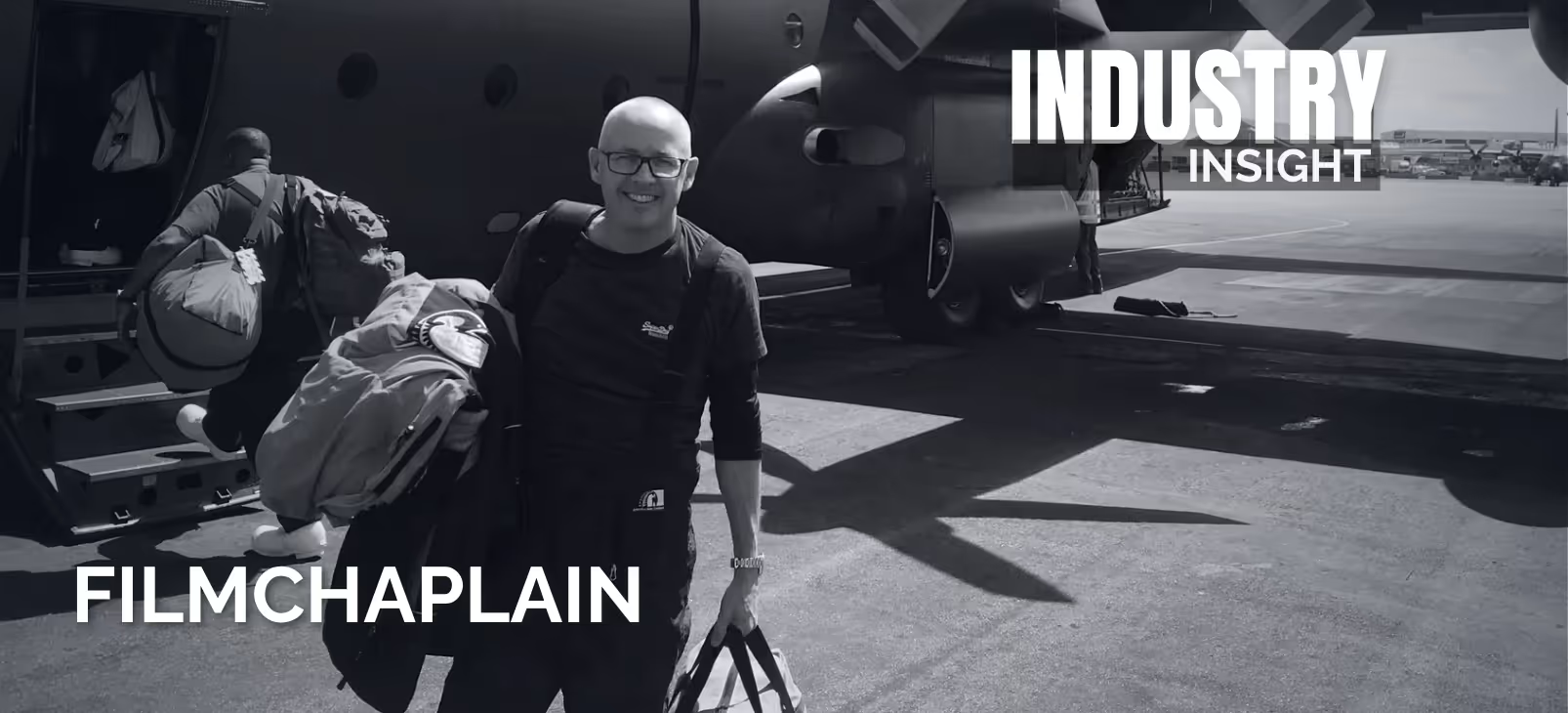
Nigel Burton is the founder of DVANZ that supports the industry with rental and sales services, covering video assist, DIT and other on-set technologies.
How did your company get started, and how has it evolved alongside the New Zealand screen industry?
Before setting up Digital Video Assist New Zealand, I worked on films in Australia, New Zealand, UK and Ireland, which gave me an appreciation of how I could benefit New Zealand with my services. DVANZ started in 2003 on the set of Master and Commander, and the catalyst for a rental service was then offered to win our first contract - that of the video assist supplier for three months' work on The Lord of the Rings: The Return of the King in 2003. On future projects, we expanded our video services to offer timelapse solutions, a 24-frame playback system, and later DIT and data services. With these evolutions in technology, we found a place to benefit others with hardware sales to support many other New Zealand rental companies.
We have sold to many of the country's busiest technicians, rental companies and production companies. Products such as SmallHD focus monitors, wireless video solutions, solid-state and large-capacity hard drives, EcoFlow battery generators and Hollyland wireless intercoms. It is such a pleasure to support many I have worked with for many years and to keep a personal, trusted relationship with these businesses as we support each other. For a few years I stepped away from a lot of on-set work, and it was this film family that helped me support my family as I supported their investments in these rented technologies.
On TV commercial projects, back in the days of film, we as the video assist operators were in charge of playback and monitors on set. Now with digital cameras, we have become the "DIT". This new job description is not 100% defined, and so our duties involve the copy and verification of data, the transcode of files for editorial, managing wireless video from the fast-moving camera with an operator and at times 1st and 2nd assistants, while we also provide playback and at times on-set VFX, on-set edits and then there is streaming to remote clients, often without paid prep. We cover a lot these days on commercial projects. No two jobs are the same. Films at least separate these roles and often add assistants and prep time.
What key trends or changes have you noticed in demand from productions in recent years?
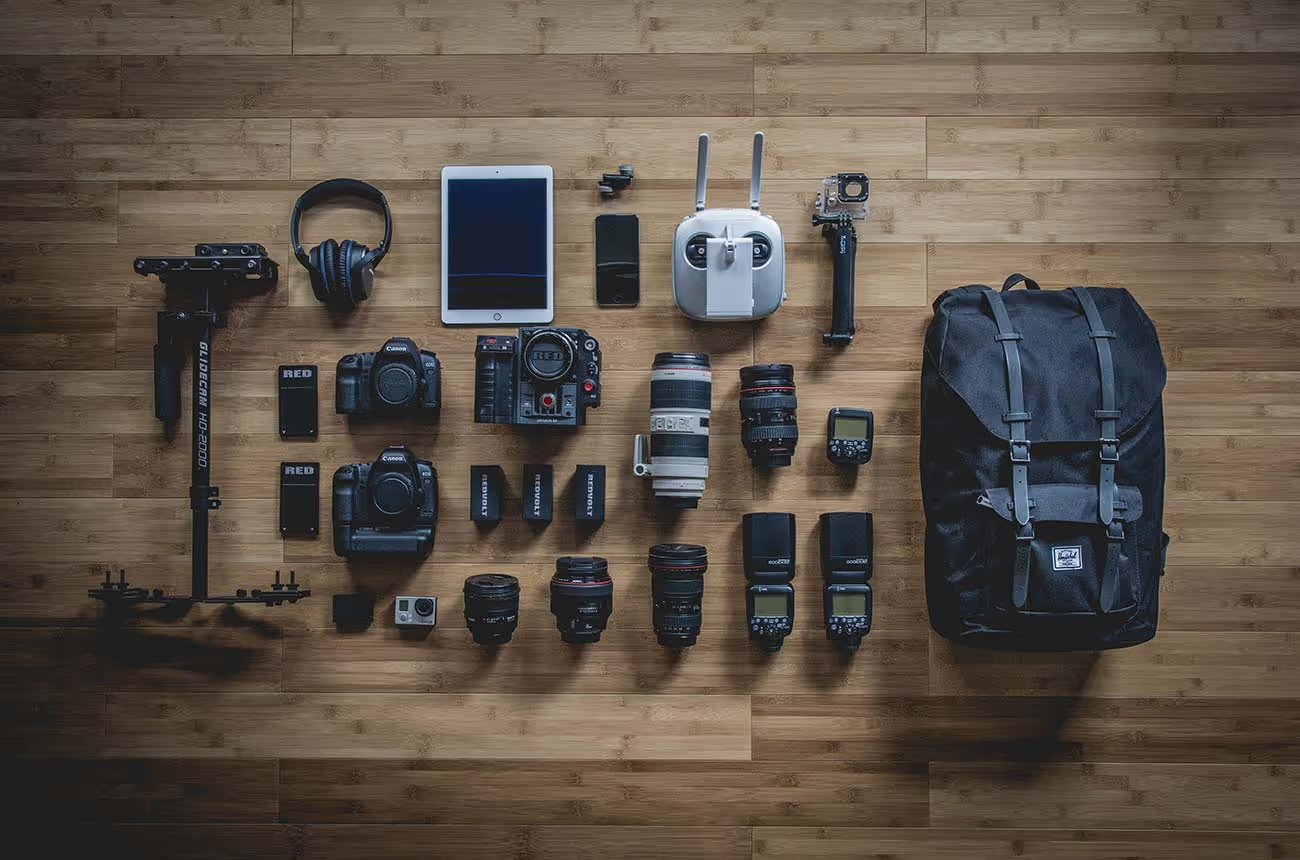
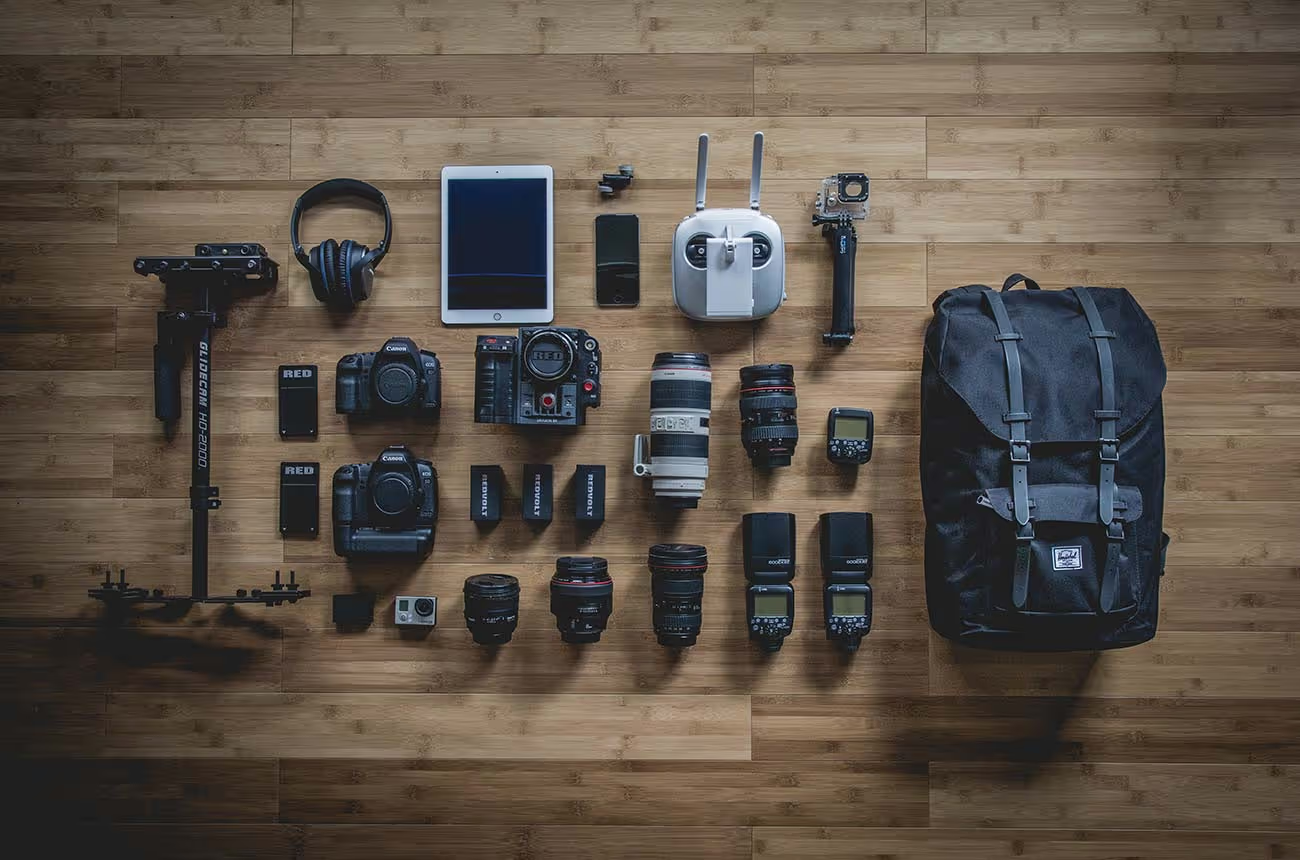
One of the biggest shifts has been the expectation on short-form projects that one person covers multiple technical roles on set, namely video assist and DIT. Modern cameras produce enormous amounts of data - far more than even a few years ago - and productions are often fast-paced and add extras like additional cameras or drone shots with little notice. It's become more than a one-person job in many cases, but often we have to make it work. Good planning and open communication with production, post and the camera team before a shoot begins makes a huge difference.

How are new technologies influencing the services you provide?
Our kit has become lighter and more flexible, which means we can adapt quickly when a small job suddenly grows. We've also expanded into live streaming and online content production, having supported three Hollywood productions with masterclass content using five-camera workflows. On these projects, we now handle everything from concept to delivery: cameras, lighting, sound, editing and streaming, and have begun incorporating AI into parts of that workflow.
What do productions often underestimate when planning a shoot?
Data storage is consistently underestimated. We always have conversations before a job starts to avoid surprises, and we maintain a shortlist of reliable drives based on real-world experience. Some drives that look fine on paper perform poorly under pressure. It's also worth noting that in 2026, AI-driven demand has caused significant hard drive shortages and huge price increases, so planning ahead matters more than ever.
What makes New Zealand a strong environment for screen suppliers?
We’re a resourceful, can-do industry. Visiting crews regularly comment on the quality of our people, our work ethic, and of course our locations. That reputation is something the whole industry can be proud of.
What gives you optimism for the future?
Even in an era of rapid AI development, there’s real hope that human stories will continue to be worth investing in. Understanding and embracing new technology, rather than fearing it, will be what keeps creative businesses relevant and opens up new kinds of projects.
How do you see the production landscape evolving over the next few years?
International productions will keep coming as long as New Zealand remains an appealing destination. My hope is that funding for local content is maintained and grown, because those uniquely New Zealand stories are something everyone in the industry feels privileged to be part of. I’d also love to see incentives extended to international commercial productions, not just large-scale features, to bring more of that work back to our shores.
No items found.