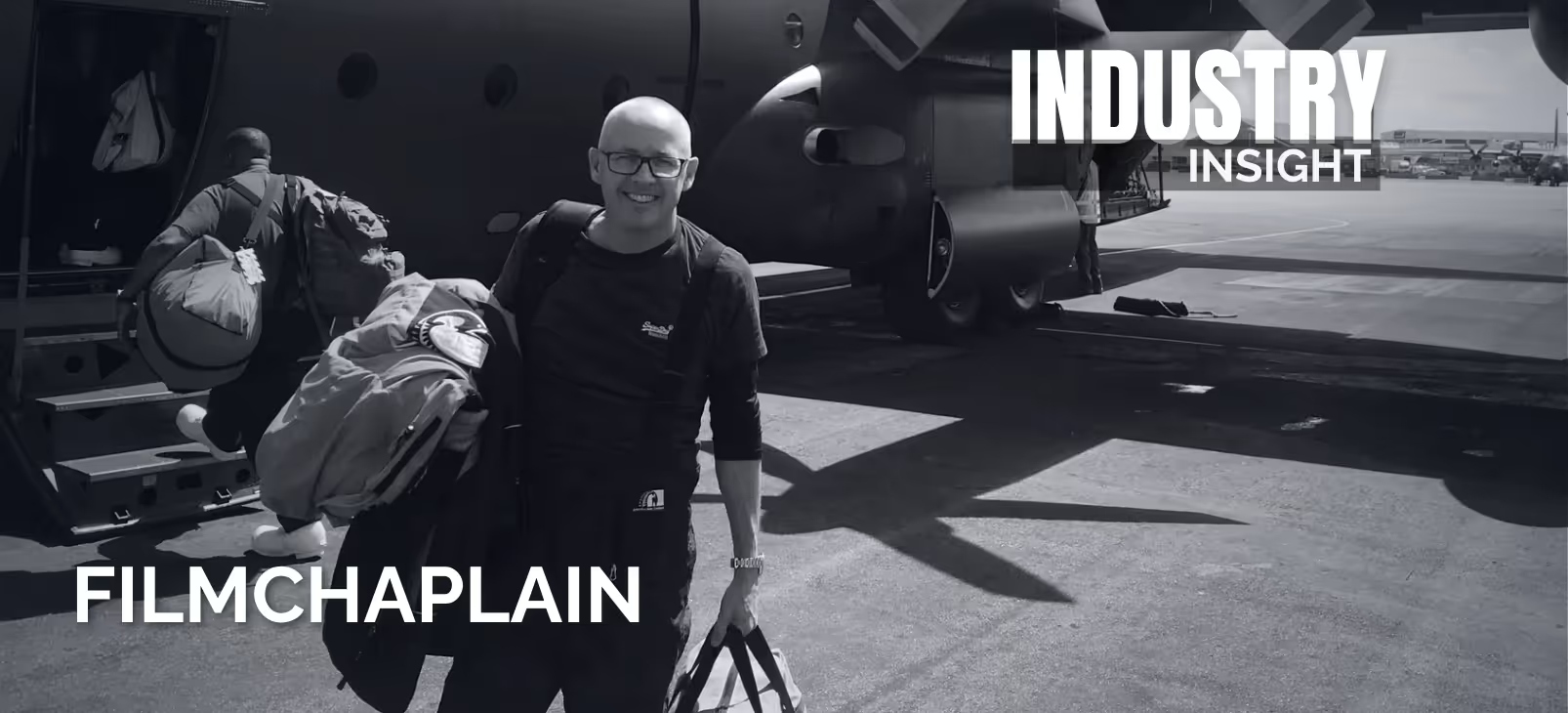
Industry Insight: FilmChaplain

For more than 30 years Kevin Denholm has worked across the New Zealand screen industry as a director and film company owner, creating television commercials, short- and long-form content, and humanitarian documentaries - often in some of the world’s most challenging environments. Alongside this work, he’s trained and practised as a chaplain.
FilmChaplain exists at the intersection of those worlds. It is a dedicated on-set support service created specifically for the screen industry, offering confidential, safe, and inclusive support to cast, crew, and productions. The work is practical, relational, and grounded in presence - showing up where pressure is highest, when people are most exposed, and quietly helping teams stay human within a demanding, high-pressure environment.
How did your company get started, and how has it evolved alongside the New Zealand screen industry?
FilmChaplain began during COVID, though not as a formal business. At the time, after 30 years running our production company Exposure (www.exposure.org), I was watching fatigue, anxiety, stress, and emotional overload surface in ways I hadn’t seen so clearly before. Already embedded in film culture, I began offering informal support - conversations, check-ins between calls, and walking alongside people struggling to hold things together during a very challenging season.
It quickly became clear this wasn’t a pandemic-only issue. Many pressures were structural and specific to the demands of working in our industry. FilmChaplain formalised in response to a genuine gap - not for counselling or health and safety - but for a dedicated role focused on care, presence, and support for people working under unique intense creative, ethical, and time pressures.
What key trends or changes have you noticed in demand from productions in recent years?
There’s growing recognition that wellbeing isn’t something you can retrofit after things go wrong. Productions are increasingly aware that people are working with challenging material - violence, intimacy, trauma - while also navigating long hours, time pressure, and job uncertainty. It takes a toll.
I’m seeing a clear shift from reactive crisis management toward proactive care. Producers are asking better questions - and earlier: How do we keep people emotionally safe? How do we support cast who are living inside characters that don’t switch off at wrap? How do we care for crew repeatedly exposed to distressing content or sustained pressure?
This points to the need for roles that explicitly recognise and address the demands unique to our industry - roles like chaplaincy that are relational rather than clinical, trusted, independent of performance assessment, and solely focused on supporting cast and crew.
What do productions often underestimate when planning a shoot, and how can your business help address those challenges?
What’s most often underestimated is the cumulative human cost of production.
One of the things I love about our industry is that people don’t just bring their skills to set - they bring their whole lives. But that comes at a cost. Long days compress family time, financial insecurity heightens stress, and creating difficult content can be deeply confronting. When communication breaks down or values feel compromised, that strain can harden into shame, a sense of betrayal, or even loss of identity.
FilmChaplain helps by being embedded and available - not to fix everything, but to notice early when something is shifting, to listen before issues escalate, and to offer a steady, confidential presence people can land with. Often, that early support can change the entire tone of a production.
What factors make New Zealand a strong - or challenging - environment for screen suppliers right now?
New Zealand remains exceptionally strong creatively. The talent here is world-class, and our crews are internationally respected for their skill, adaptability, and commitment.
The challenge is sustainability. Budget pressure, shorter prep periods, and international expectations can collide with our deeply relational working culture. There’s a real risk of asking people to carry more, faster, for longer - without sufficient support.
That tension is exactly where FilmChaplain sits: supporting the people who make the work possible, so the industry remains not just productive, but viable and humane over the long term.
Looking ahead, how do you see the production landscape evolving?
I expect continued normalisation of on-set wellbeing roles - not as a luxury, but as part of good production practice. Just as intimacy coordinators and safety officers moved from “nice to have” to essential, care-focused roles will follow a similar trajectory.
The future I’m hopeful for is one where creative excellence and human wellbeing aren’t competing priorities, but deeply connected. When people feel safe, seen, and supported, the work is better. FilmChaplain exists to help make that future real - one production at a time.