Industry Insight: Low Key Lighting
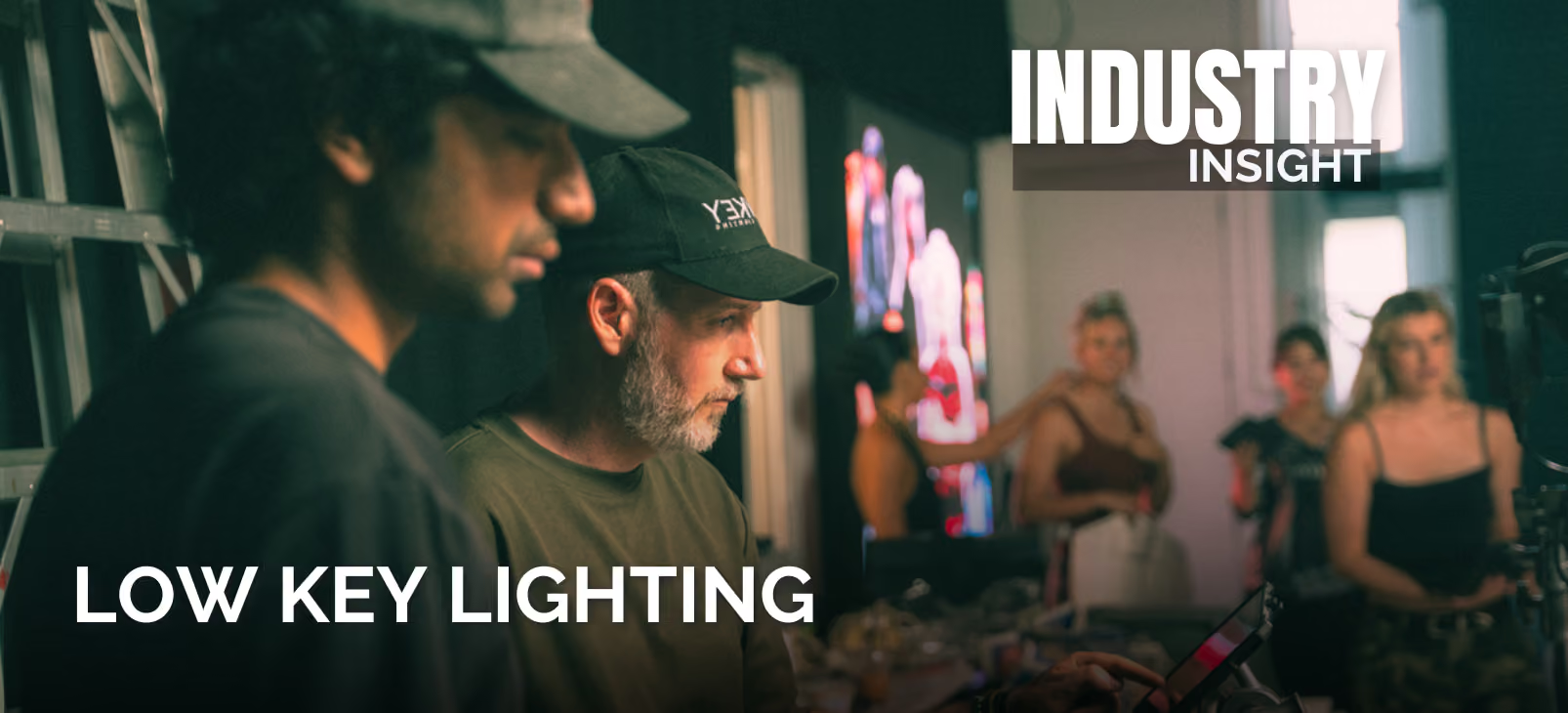
In this Industry Insight, Kyle from Low Key Lighting talks about modern lighting and grip work, changing production demands, and what can get overlooked in planning.
Published on:
June 11, 2026

Founded by Kyle van Tonder, Low Key Lighting grew from a self-built lighting van into a compact lighting and grip operation servicing commercial and screen productions. Over the years, the company has evolved alongside changing technology and the creative demands of modern production in Aotearoa.
How did your company get started, and how has it evolved alongside the New Zealand screen industry?
I first picked up a camera at around 14, shooting short films with friends. I taught myself over the years by working on short films, music videos, local drama web series, and corporate productions.
After a brief stint assisting in lighting departments, I bought an $800 van and fitted it out with second-hand Kino Flos, blondes, and old HMI PARs. Low Key Lighting grew quickly, eventually evolving into the lighting and grip package I operate today.
Over the years, the package has evolved alongside the industry, particularly with the rise of LED technology. What was once a mix of traditional fixtures is now a fully LED-based system. For the past eight years, I’ve primarily serviced commercial productions and mid-tier advertising work as a compact lighting and grip operation.
What key trends or changes have you noticed in demand from productions in recent years?
Budgets continue to tighten while expectations increase, so efficiency has become more important than ever. Productions increasingly rely on smaller crews, which means crew members are often expected to bring broader skill sets. For example, a gaffer may now be expected to manage wireless lighting control and DMX programming on set, tasks that may previously have been handled by dedicated technicians.
How are new technologies or shifts in production styles influencing the services you provide?
LED technology has accelerated rapidly over the last few years. Most modern fixtures are fully colour-tuneable, dimmable, and capable of wireless control, which has dramatically changed how sets operate.
Gels rarely leave the van these days, as colour adjustments can often be made instantly from the fixture itself or via wireless control systems. At the same time, productions are increasingly operating on tighter schedules, making flexibility and responsiveness essential across all departments.
What do productions often underestimate when planning a shoot, and how can your business help address those challenges?
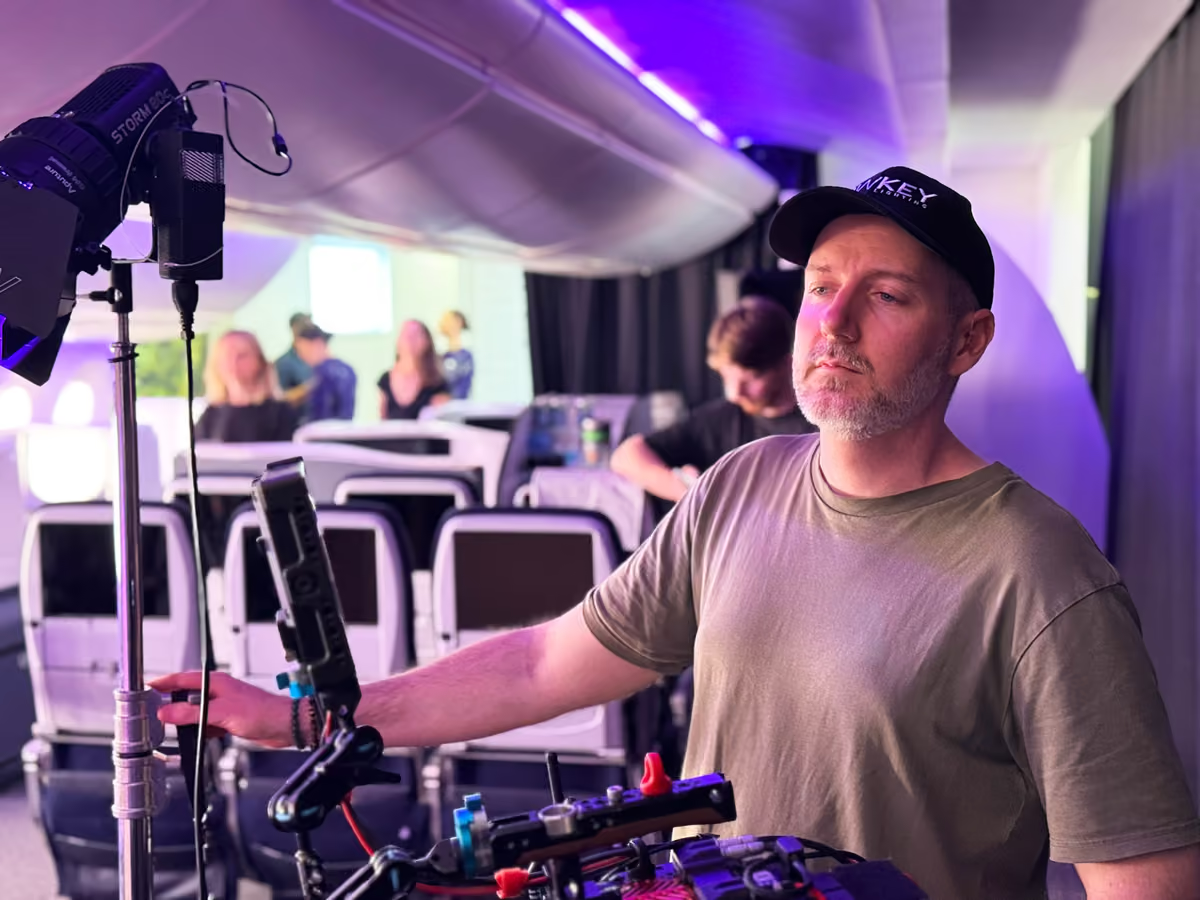
One challenge is that the practical requirements of lighting are sometimes underestimated during planning. While modern equipment is becoming smaller and more efficient, most productions still benefit from having an appropriately sized lighting team.
Beyond the time required for setup and company moves, crew welfare and health and safety considerations remain important factors. Part of our role is helping productions understand those requirements early so schedules and expectations remain realistic.
What factors do you think make New Zealand a strong or challenging environment for screen suppliers right now?
Commercial production is relatively slow at present, something that many suppliers experience during election years. Combined with an already competitive market, that creates challenges across the industry.
Media consumption habits are also changing rapidly. Social platforms increasingly influence marketing strategies, which in turn affects production budgets, formats, and delivery requirements.
AI remains the biggest unknown. While its long-term impact is still unclear, lower-budget content creation is likely to feel the effects first as video generation tools continue to improve. For suppliers who primarily operate outside of drama production, adaptability will be essential.
Despite these challenges, New Zealand crews are widely respected for their work ethic, technical capability, and access to modern equipment. Combined with our relative affordability for international clients, New Zealand remains well positioned as a production destination.
What collaborations or innovations have you seen recently that give you optimism for the future of the industry?
Advances in LED technology have been particularly encouraging. Fixtures such as the Aputure XT52 and 1200X are increasingly capable of replacing larger HMIs at a fraction of the operating cost, making high-end lighting more accessible to smaller operators and productions.
At the same time, changes in how audiences consume content continue to create new opportunities. As streaming platforms expand advertising-supported tiers, we may see further growth in commercial content tailored specifically for those environments.
I’m also seeing a rise in higher-end vertical content for platforms such as Instagram and TikTok. Rather than being viewed as purely mobile-first content, many brands are now investing in vertical productions with the same production values expected of traditional advertising.
Looking ahead, how do you see the regional or national production landscape evolving over the next few years?
Social media has significantly reduced geographic barriers to reaching audiences, which may create more opportunities for operators working outside the main production centres.
That said, I expect Auckland to remain the country’s primary commercial production hub, given the concentration of agencies, production companies, and crew. While new opportunities may emerge in regional markets, the overall structure of the industry is likely to remain relatively stable over the next few years.
No items found.