Industry Insight: Toothfish
Brendan Dee and Rohan Satyanand on digital workflows, on-set tech, and modern production demands in Aotearoa.
Published on:
April 7, 2026

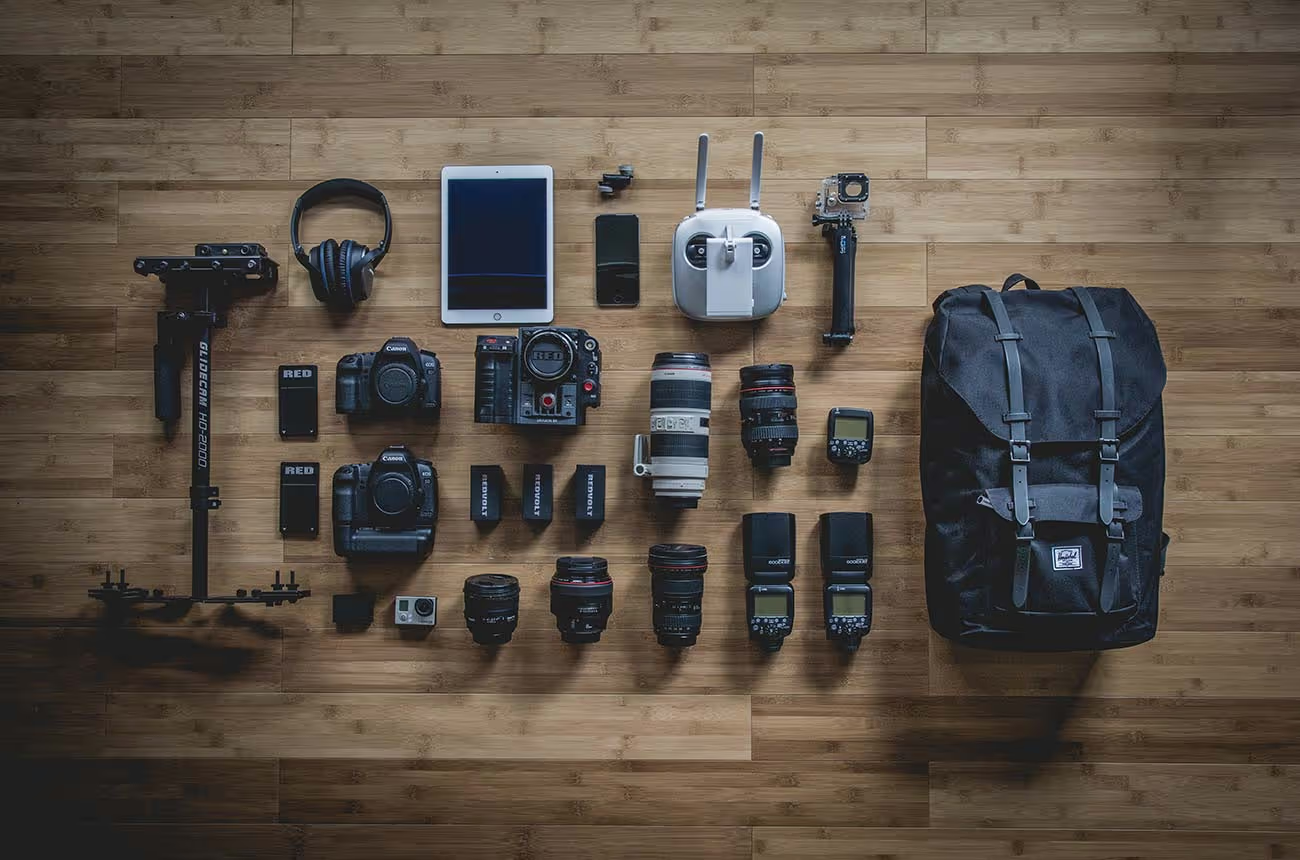
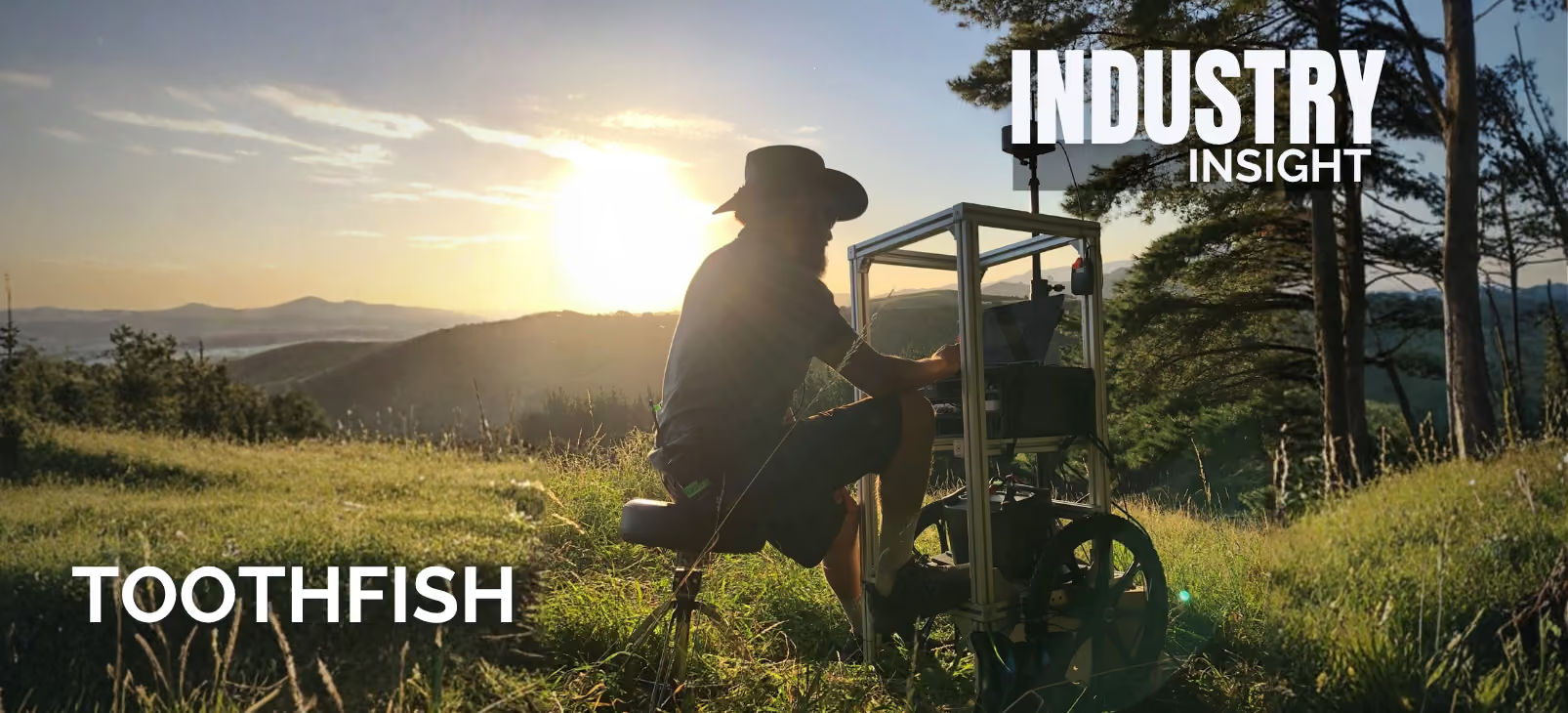
Toothfish is a digital workflow company based in the Wellington region with workshops in Trentham, Avalon and Miramar. They offer solutions for IT, DIT, Video, Data Management and Dailies. This week, we found a moment in their busy schedule to catch up with founders Brendan Dee and Rohan Satyanand.
How did your company get started, and how has it evolved alongside the New Zealand screen industry?
Toothfish started during an unusual time in our industry, and our country. The Covid19 pandemic had disrupted world markets, including the screen sector.We were both working on one of the first productions worldwide to resume filming in 2020 (the Avatar sequels), and later that same year we decided to join forces as Toothfish. Since then, our industry has seen major industrial action, as well as other geopolitical and economic headwinds, but Toothfish has managed to continue to grow, prosper and solidify our reputation as the benchmark in our field.
What key trends or changes have you noticed in demand from productions in recent years?
Each production is unique, with different visions, requirements, budgets and problems to solve. However they are all the same in that they want to push boundaries to get the best possible result. Toothfish was the first in the world to develop a 3D 4K HDR HFR onset workflow (for the Avatar sequels). Not every project has an Avatar-scale budget, but all are motivated to exploit the best technology available, and they have found Toothfish reliable partners to help them achieve that.
How are new technologies or shifts in production styles influencing the services you provide?
Large, encrypted online storage services and fast WAN connection services including satellite have eliminated friction and delay between the film set and the post house. Editorial transcodes, sound files, rich metadata files and even RAW camera originals can now be uploaded directly and immediately from even the most remote filming location so that post teams and other stakeholders anywhere in the world can have instant access to what has been shot.
But really, there is constant technical evolution in most areas under our jurisdiction. New 6GHz wireless tech means that we can distribute higher quality SDI signals with less interference. New screen technologies like HDR, 4K and higher resolutions brings ever-increasing levels of detail to those scrutinising image quality on set. And keeping in step with all of this new data, drives have had to become faster: Toothfish has a suite of the fastest drives available meaning that our data managers do not rack up bloated overtime bills. And even more crucially, as they are well-rested, they are far less likely to make mistakes with critical media.
What do productions often underestimate when planning a shoot, and how can your business help address those challenges?
Productions can underestimate how much value our team can bring to the planning stages of a shoot. The earlier in the process that we are engaged, the more efficiently we can design a workflow document that meets the specific requirements and budget of that project. Extra time in pre-production can have hugely beneficial results creatively, technically and financially.
From the very start, Toothfish can take care of getting the production office connected and humming with all the necessary IT infrastructure. From there, we can collaborate with the Post Supervisor, the Director of Photography, the Sound Recordist and others to agree on parameters like colour pipeline, editorial metadata requirements and so on so that we end up with a strong workflow plan well before cameras start rolling.
What factors do you think make New Zealand a strong (or challenging) environment for screen suppliers right now?
Like most other businesses and contractors in our industry, we think that stronger rebate incentives are needed to boost growth in our sector. The changes made to the NZSPR at the end of last year were a small but important step in the right direction, making it more attractive for projects with modest to medium budgets to choose to shoot in Aotearoa. We remain optimistic that the government will continue to understand the huge economic potential of the film industry and act accordingly.
No items found.